
Share:

Student Move-Out: Choosing Removal Boxes That Last
Books go in small, strong boxes, laid flat or spine down, never loose. For a full shelf of textbooks, double-wall cardboard boxes are worth the extra. Plenty of boxes for moving house have handle cut-outs on the sides, which make dense loads far easier to carry down three flights of stairs.
Plates should stand on their edges, like records in a rack, with mugs and tea towels wedged between. Electronics travel best in their original packaging if you’ve kept them. If you haven’t, use a snug box, wrap each item in a towel and pad the corners.
Clothes and the Case for Wardrobe Storage Boxes
Not every student owns a suit. Plenty own one good coat, a graduation outfit or something smart for a placement interview that they’d hate to see creased. Wardrobe storage boxes let you move those on their hangers, which beats folding them into a suitcase and ironing at 11pm.
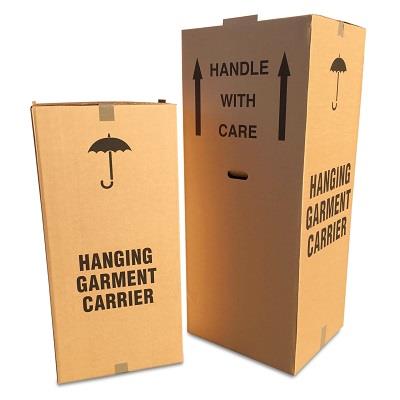
Wardrobe storage boxes are less useful for t-shirts and jeans, as a regular box is sufficient and more cost-effective for those items. Be selective about what earns a hanging spot.
Fragile, awkward and tall items
Posters, lamps, mirror frames and clothes airers are what ruin a neat load. Tall, narrow boxes suit lamps and rolled posters. Mirrors should travel upright with cardboard on both faces.
Don’t squeeze an awkward item into a box that’s too small. A crushed lampshade costs more than a second carton.
Should You Reuse, Borrow or Buy Your Boxes?
A mix usually works best. Reuse boxes that are dry and square for light loads, borrow from housemates who’ve just moved, and buy a few strong new ones for heavy items. Free boxes are fine until they split, so judge each one by its corners and base.
Free boxes from shops are tempting, and they’re fine for a single trip across town. The catch is that they’re often damp, odd-sized or already worn out because they were never meant to be reloaded. Boxes for moving house and halls alike should stack evenly, and that’s challenging when nothing matches.
The Case for Buying Once and Reusing
A properly made box can often survive two or three moves if you treat it kindly. Flatten it carefully, store it somewhere dry and tape along the old seams rather than over a fresh patch. Retire any box with soft corners or a sagging base. It’s not worth the risk to your crockery.
A sensible starter set for one room is four or five removal boxes for books and kitchen items, a few larger ones for bedding, one or two wardrobe storage boxes for the clothes you care about, and a useful roll of tape. If four housemates pool a shared stack, everyone’s covered and nobody’s left with a garage full of spares.
When Buying Isn’t the Right Move
If you’re moving two streets away with a rucksack and a lamp, you don’t need a box order. Bin bags and a borrowed trolley will do. Be honest about the distance, the weight and how long things will sit in storage before deciding.
Good packaging materials are like a decent rucksack: worth buying when you’ll use them repeatedly, wasteful when you won’t.
Frequently Asked Questions
1. How many boxes does a student need?
Most students manage with eight to ten boxes for a big single room, plus a couple of bags for bedding. Boxes for moving house are easiest to judge by contents: two or three for books and desk items, three or four for kitchen and bathroom things, and the rest for clothes and bedding. Count what you own before you buy.
2. Can you reuse moving boxes next year?
Yes, if they’re dry, square and still rigid. Flatten them carefully, keep them off the floor and away from damp, and re-tape the base before loading. Boxes that have gone soft at the corners or flexed repeatedly should be retired, because a failed base is how plates and laptops get damaged.
Share:
More in Business
View categoryLatin America’s Expanding Need for Reliable Power Solutions
Explore how infrastructure investments, industrial expansion, and rising power reliability needs are driving generator adoption across Latin America.
READ ARTICLEComplete Guide to GAMCA Medical Examination and Wafid Appointment Services
GAMCA Guide is a trusted resource for Gulf visa medical applicants, helping users book Wafid appointments, locate approved medical centers, check medical status, and understand the complete GAMCA/Wafid process with ease.
READ ARTICLE