
Share:

Student Move-Out: Choosing Removal Boxes That Last
Student move-out is easier with removal boxes that last. Learn how to choose strong sizes and grades for books, kitchen gear, and safe packing.
Every summer, student halls from university campuses fill with bin bags, split carrier bags and a few collapsed supermarket cartons. The problem isn’t laziness but packing for one trip when you’ll need the same kit again in September. The solution is straightforward: choose packaging materials that can withstand multiple moves, ensure the box’s strength matches its contents, and avoid purchasing sizes that are too heavy to lift.
This guide covers what makes a box last, when a stronger board earns its keep, how to pack a student room properly, and whether to reuse, borrow or buy.
What Makes a Moving Box Last Beyond One Move?
A box lasts when its board suits the load, its base is taped properly and it stays dry. Strength comes from corrugation, the rippled layer between flat sheets of card. Thicker or doubled corrugation resists crushing, while effective tape and sensible loading stop the bottom giving way.
Think of a box as kit. Students usually judge boxes by size, yet strength matters more. A carton that holds a duvet for a weekend won’t cope with a term’s worth of textbooks.
Removal boxes are built with the move in mind. They’re sized, graded and shaped to be stacked and carried, which is a different job from the one a supermarket tray was designed for.
Corrugation and Wall Strength
Corrugated cardboard is a sandwich: a rippled middle layer, called fluting, held between flat outer sheets known as liners. A single wallboard has one layer of fluting. The stronger board has two, separated by a liner, so it resists crushing and corner damage far better.
The fluting absorbs knocks. Once it’s flattened by dampness or by a heavy box stacked on top, it never fully recovers.
Tape, Handles and the Base
Most failures happen at the base, not the walls. Run tape along the centre seam, then along both edges, so the flaps can’t peel apart under weight. Handholds help, but a cut-out is also a weak point, so don’t overload a box just because it has them.
Are Double Wall Cardboard Boxes Worth It for Students?
Yes, for heavy or valuable items you’ll move more than once, such as books, kitchenware and a small television. Not for everything, though. Light loads like bedding and clothes don’t need the extra strength, and paying for it means spending money on cardboard that never undergoes testing.
When Stronger Board Pays Off
Take examples of items like books, pans, speakers, a desktop PC tower, and that crate of tinned food your parents sent. These are the types of loads that can cause bases to burst and bow walls to bend. If a box feels heavy before it’s full, that’s a sign.
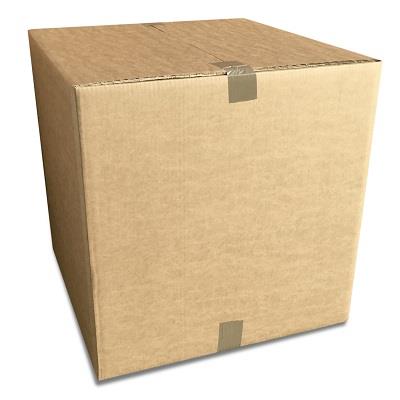
Double wall cardboard boxes also cope better when you stack three high in a parent’s estate car or a Transit van, where the bottom box carries everything above it.
When Single Wall Is Perfectly Fine
Bedding, towels, shoes, soft toys and lampshades are light but bulky. Strength is wasted on them, and size and shape matter more. Spend where the weight is and save everywhere else.
There’s a limit worth admitting, too. Even the strongest board won’t survive a winter in a damp shed or an unheated garage, so don’t treat any box as indestructible.
How Do You Pack a Student Room Without Crushing Anything?
Pack heavy items in small boxes and light ones in large boxes, fill gaps so nothing shifts, and keep each box to a weight you can lift comfortably. Start with what you use least, label the sides, and leave the kettle, chargers and bedding until last.
A typical student room works out at roughly eight to ten boxes plus a couple of bags, though your count will depend on how many books, shoes and kitchen gadgets you own. The right packaging materials make the job quicker, because a box sized for its contents never needs wrestling shut. Wasted space is what causes rattling, and rattling is what causes breakage.
Books, Kitchenware and Electronics
Share:
More in Business
View categoryLatin America’s Expanding Need for Reliable Power Solutions
Explore how infrastructure investments, industrial expansion, and rising power reliability needs are driving generator adoption across Latin America.
READ ARTICLEComplete Guide to GAMCA Medical Examination and Wafid Appointment Services
GAMCA Guide is a trusted resource for Gulf visa medical applicants, helping users book Wafid appointments, locate approved medical centers, check medical status, and understand the complete GAMCA/Wafid process with ease.
READ ARTICLE