Dr. Sharat Chandra: Top Oncologist in Hyderabad for Stomach Cancer Care
Dr. Sharat Chandra, a top oncologist in Hyderabad, guides on stomach cancer: digestive cancer types, rare names, aggressive forms, and symptoms like lower abdomen pain and adenocarcinoma details. Book expert care at CancerCare today!
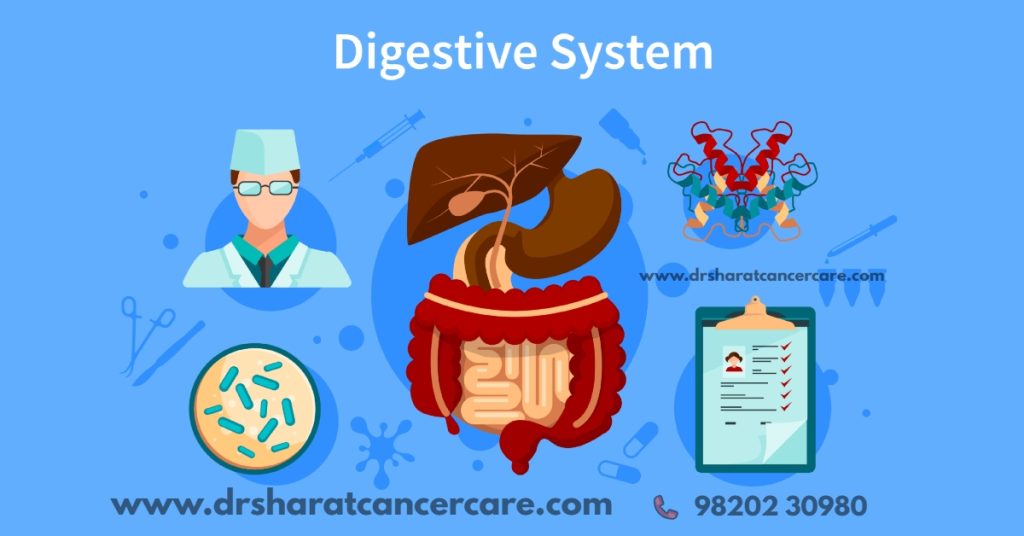
Digestive System Infographic - Dr. Sharat Chandra
Stomach Cancer: Causes, Symptoms, Diagnosis & Advanced Treatment Options—By Dr. Sharat Chandra, Medical Oncologist in Hyderabad
Stomach cancer (gastric cancer) is a deadly but increasingly treatable disease when identified early and treated by a qualified professional. Dr. Sharat Chandra, a top medical oncologist in Hyderabad who practices in Banjara Hills, is known for providing innovative, patient-centered cancer care. He specializes in gastrointestinal, breast, lung, and blood malignancies and offers each patient a full evaluation, a precise diagnosis, and tailored treatment programs.
This article covers all you need to know about stomach cancer, including symptoms, causes, stages, diagnostics, and treatment options, as well as how skilled oncology care can significantly improve outcomes.

After 40, your digestive system deserves extra care! Learn the common causes behind gas, gastric issues, and indigestion—and how to keep your gut healthy.
What Is Stomach Cancer?
Stomach cancer begins when abnormal cells in the stomach lining start growing uncontrollably, forming tumors. Most stomach cancers are adenocarcinomas, which develop from the glandular cells of the stomach’s inner lining. As the disease progresses, these cancerous cells may invade deeper tissues and spread to other organs.
While adenocarcinoma is the most common type, other rare forms include
- Neuroendocrine tumors
- Lymphomas
- Small cell carcinomas
- Gastrointestinal stromal tumors (GIST)
Stomach cancer commonly affects individuals above 60, with men being nearly twice as likely to develop it. However, it can occur at any age, making awareness crucial.
Types of Stomach Cancer
Stomach cancer can arise from different cell types. The main classifications include
1. Adenocarcinomas (Most Common)
- Intestinal type Structured tumors, usually detected earlier, are more common in older adults.
- Diffuse type More aggressive, fast-growing, and often affecting younger individuals.
2. Gastrointestinal Stromal Tumors (GIST)
These rare tumors originate in interstitial cells of Cajal located in the stomach wall.
3. Neuroendocrine Tumors
Arise from hormone-producing cells found across the digestive system.
4. Lymphomas
Cancers that develop in the lymphatic tissues present in the stomach lining.
Understanding the tumor type helps your oncologist determine the most effective treatment plan.
Stages of Stomach Cancer
Stomach cancer is staged using the TNM system, which focuses on tumor size, lymph node involvement, and spread to distant organs.
Stage 1
Cancer is limited to the inner lining (mucosa). Early-stage cancers have the best treatment outcomes.
Stage 2 & Stage 3
Cancer spreads deeper into stomach tissues and nearby lymph nodes. Treatment becomes more intensive but still offers a good prognosis with timely care.
Stage 4
The cancer has spread (metastasized) to other organs such as the liver, lungs, or distant lymph nodes. Symptoms at this stage can include weight loss, nausea, abdominal pain, fatigue, and weakness.
Early detection remains the key to improving survival rates.
Symptoms of Stomach Cancer
The symptoms of stomach cancer are often vague and can resemble common gastrointestinal issues like acidity, ulcers, or gastritis. However, persistent or worsening symptoms should never be ignored.
Common Warning Signs
- Persistent abdominal pain or discomfort
- Feeling full after eating small meals
- Heartburn or indigestion
- Nausea or vomiting
- Unexplained weight loss
- Loss of appetite
- Black or tarry stools
- Blood in vomit
- Difficulty swallowing
- Extreme fatigue or weakness
- Abdominal swelling (ascites)
If any of these symptoms persist for more than two weeks, it’s essential to consult an oncologist for evaluation.
Top Causes & Risk Factors of Stomach Cancer
While the exact cause is not always identifiable, several risk factors significantly increase the chances of developing gastric cancer:
1. Helicobacter pylori Infection
A major cause of chronic inflammation and ulcers, leading to cancer in some cases.
2. Tobacco Smoking
Smokers are at much higher risk. Quitting drastically reduces the risk.
3. Poor Dietary Habits
High consumption of:
- Pickled foods
- Smoked meats
- Excessively salted foods And a low intake of fruits and vegetables increases risk.
4. Alcohol Consumption
Especially dangerous when combined with smoking.
5. Age Factor
Most common in individuals above 60.
6. Obesity
Linked to inflammation and hormonal imbalance that increases cancer risk.
7. Occupational Exposure
Workers in coal, metal, or rubber industries are more prone.
8. Medical Conditions
- Chronic gastritis
- Pernicious anemia
- Autoimmune atrophic gastritis
9. Family History & Genetic Disorders
Genetic predispositions like
- Lynch syndrome
- Hereditary diffuse gastric cancer (HDGC)
- Familial adenomatous polyposis (FAP) increase the likelihood.
Knowing your risk factors helps in taking preventive measures and scheduling timely screenings.
How Stomach Cancer Is Diagnosed
Dr. Sharat Chandra follows a structured and advanced diagnostic approach to accurately detect stomach cancer and its stage.
1. Endoscopic Examination
This is the primary tool for diagnosis.
- Esophagogastroduodenoscopy (EGD): A flexible tube with a camera is inserted to examine the esophagus, stomach, and duodenum.
- Endoscopic Ultrasound (EUS): Provides detailed images of stomach layers and nearby organs.
2. Biopsy
During endoscopy, tissue samples are collected for microscopic evaluation. Biopsy confirms:
- Cancer presence
- Type
- Grade
- Aggressiveness
3. Laboratory Tests
- CBC to check for anemia
- Liver function tests to detect possible spread
- Genomic testing to identify mutations guiding personalized treatment
4. Imaging Tests
To evaluate spread and staging:
- CT Scan
- MRI
- PET-CT Scan
- Abdominal Ultrasound
- Chest X-ray
Advanced diagnostics help determine the most effective treatment approach.
Treatment Options for Stomach Cancer

The treatment plan depends on the cancer’s stage, type, location, and the patient’s overall health. At CancerCare, Dr. Sharat Chandra adopts a multidisciplinary approach combining surgery, chemotherapy, radiation, molecular therapies, and supportive care.
| Treatment Type | Best For | Key Perk |
|---|---|---|
| Surgery (Gastrectomy) | Early-local | Removes source |
| Chemotherapy | All stages | Shrinks, prevents return |
| Immunotherapy (PD-1 inhibitors) | Advanced/HER2+ | Boosts immunity |
| Radiation | Post-surgery | Targets remnants |
| Targeted Therapy | Specific mutations | Pinpoint kills |
1. Surgery
Primary and most effective treatment in early- to mid-stage cancer:
- Subtotal Gastrectomy: Removal of a portion of the stomach
- Total Gastrectomy: Complete removal when cancer has spread widely
Lymph nodes are also removed to reduce recurrence.
2. Endoscopic Mucosal Resection (EMR)
Used in very early cancers to remove abnormal tissues without major surgery.
3. Chemotherapy
Given before (neoadjuvant) or after (adjuvant) surgery:
- Shrinks tumors
- Prevents recurrence
- Controls advanced-stage cancer
4. Radiation Therapy
High-energy rays are used to destroy cancer cells, often combined with chemotherapy (chemoradiation).
5. Targeted Therapy
Used when specific genetic mutations (HER2, MSI-H, VEGF) are present.
6. Immunotherapy
Helps the immune system recognize and attack cancer cells; effective in select cases.
7. HIPEC (Hyperthermic Intraperitoneal Chemotherapy)
A highly advanced procedure combining surgery with heated chemotherapy, used when cancer spreads within the abdomen.
8. Palliative Care
Supports advanced-stage patients by:
- Reducing pain
- Improving appetite
- Relieving symptoms like nausea & discomfort
- Improving quality of life

Living After a Diagnosis
A stomach cancer diagnosis can be emotionally overwhelming. Patients may experience fear, confusion, and anxiety. Dr. Chandra emphasizes open communication so patients understand their options clearly and feel empowered in decision-making.
Family support, counseling, and early intervention contribute significantly to recovery and quality of life.
Can Stomach Cancer Be Prevented?
While not all cases are preventable, you can reduce your risk significantly by:
- Quitting smoking
- Maintaining a healthy weight
- Treating H. pylori infections early
- Consuming fresh fruits & vegetables
- Reducing pickled, smoked & salty foods
- Limiting alcohol
- Getting regular health checkups
- Monitoring family history
Early detection is the strongest tool in fighting stomach cancer.
Conclusion
Stomach cancer is a complex disease, but with advanced medical technologies and timely intervention, successful treatment is absolutely achievable. Dr. Sharat Chandra, one of Hyderabad’s leading oncologists, provides world-class diagnostic tools, personalized treatment plans, and compassionate care to help patients navigate their treatment journey with confidence.
Whether you’re experiencing symptoms or seeking a second opinion, consulting an experienced specialist ensures you receive the right guidance at the right time.