
Share:

Why Straight Teeth Boost Confidence | The Psychology of a Smile
Straight teeth change how you smile, speak and show up at work. Here’s the psychology, plus what affordable Invisalign in Richmond, VA involves.
Watch someone who dislikes their teeth laugh at a joke. Their hand drifts up to cover their mouth, or the laugh gets cut short. It’s a tiny habit, and it says a lot.
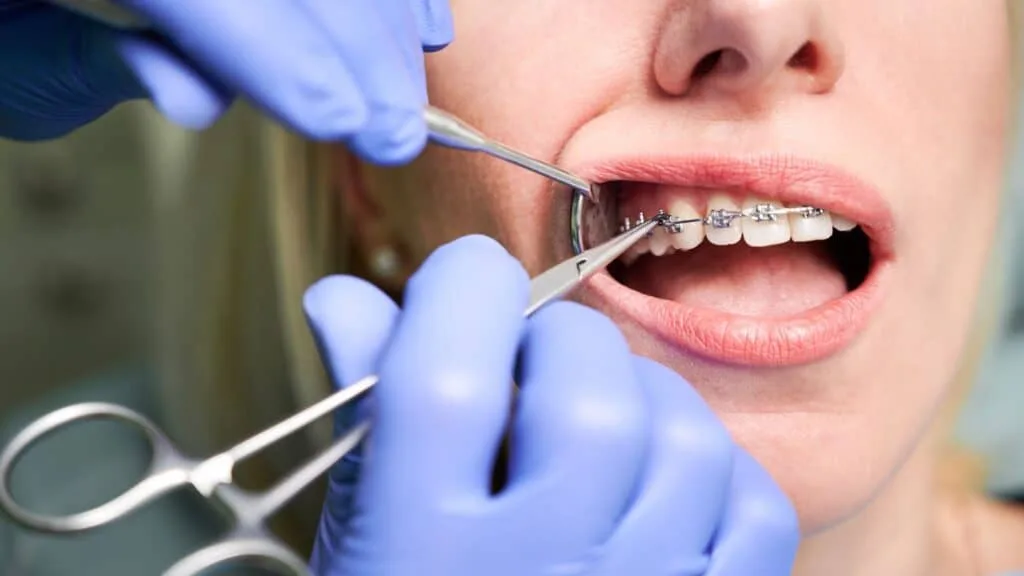
That habit is why so many adults in Henrico and Chesterfield start looking for affordable Invisalign in Richmond, VA after years of putting it off. They aren’t chasing a perfect smile. They want to stop thinking about their teeth in photos, meetings and first dates.
Do straight teeth really boost confidence?
For many people, yes. Straight teeth won’t fix self-esteem on their own, but they remove one specific source of self-consciousness. Once you stop monitoring your mouth, your attention goes back to the conversation.
Survey data shows how much weight people put on a smile. An American Academy of Cosmetic Dentistry survey found that 99.7% of adults see a smile as an important social asset, and 74% said an unattractive smile could hurt someone’s career chances. That’s opinion, not proof of cause. Still, it explains why one crooked tooth can feel bigger than it is.
What happens in your head when you hide your smile
Self-consciousness runs in a loop. You worry about how your teeth look, so you smile less. People then read you as more reserved than you are, and that feeds the worry. Straightening the teeth breaks the loop at the start.
Smiling also seems to work in both directions. Some studies suggest the act of smiling nudges mood slightly, though researchers still debate how large the effect is. What’s less debated is the social side: people tend to respond warmly to a smile, and warm responses build confidence.
Crowded, rotated or gapped teeth fall under what orthodontists call malocclusion. It isn’t only cosmetic. Overlapping teeth are harder to clean, and a bite that doesn’t meet evenly can wear enamel unevenly over the years.
First impressions happen fast
People form a view of someone within seconds of meeting them, and the face does most of the work. A relaxed, open smile signals warmth and ease. A tight or hidden one can get misread as shyness, boredom or even disapproval, none of which you intended.
That mismatch is what bothers many adults. They feel friendly on the inside and worry they look guarded on the outside. Fixing the teeth doesn’t change your personality, but it can close that gap between how you feel and how you come across. For anyone who meets clients, interviews candidates or teaches a room full of people, that matters more than it sounds.
Where patients notice the difference
The changes patients describe most are small and daily. Photos stop being an exercise in finding the “good side”, and people start smiling with teeth instead of a closed-lip half smile. On video calls and in presentations, the mouth-covering stops. Laughing at dinner no longer needs a hand as cover. Even the post-meal mirror check, that quick scan for anything stuck between crowded teeth, tends to fade. It varies from person to person, of course.
Confidence builds during treatment, not just after
Here’s something people don’t expect. The boost often starts well before the last tray. Once teeth begin shifting, many patients say they feel more in control of how they look, and that shows up in how they carry themselves.
A practical tip: take a photo of your smile on day one and again every couple of months. Progress is slow enough that you stop noticing it in the mirror. Side-by-side photos make it obvious, and they keep motivation up during the stretch when it feels like nothing is happening.
Why Invisalign suits adults who dread “metal mouth”
A lot of adults skip treatment because they can’t picture themselves in visible brackets at a client meeting. Clear aligners get around that. The trays are nearly invisible, you take them out to eat, and you brush and floss as usual. The catch is wear time: 20 to 22 hours a day, and most treatment delays trace back to missed hours.
Braces still have a place. Because they’re fixed in place, they don’t depend on your discipline, and they’re often the better tool for complex bite corrections. Aligners handle many cases, but not all, which is why an orthodontist should decide, not a price list.
How long it takes depends on the case. Simple crowding can finish in around six months, while more involved cases often run 12 to 18 months or longer.
What “affordable” should mean for Invisalign in Richmond
Be wary of a headline price quoted before anyone has looked at your teeth. The final cost follows your case: how much movement is needed, how long it takes, and whether refinements are likely. A properly planned case usually costs less overall than a cheap start that needs rework.
Share:
More in Health
View categoryAutomated CPR Devices Market Set for 5.41% CAGR Through 2034
Automated CPR devices are medical devices that automatically perform chest compressions on a person experiencing cardiac arrest.
READ ARTICLEMexico’s Human Embryo Research Faces Ethical and Regulatory Challenges Amid Scientific Advancements
Mexico’s Human Embryo Research Faces Ethical and Regulatory Challenges Amid Scientific Advancements
READ ARTICLEVigRX Plus USA Complete Guide to Ingredients and Product Benefits
Explore VigRX Plus USA, including product ingredients, reviews, pricing, special offers, purchasing options, and essential information for informed supplement decisions.
READ ARTICLE