
Share:

Why Does Sand Gradation Matter in Concrete and Mortar?
Sand gradation plays an important role in concrete and mortar quality, affecting workability, strength, water demand, and finishing. Learn how to choose the right sand by checking particle size, cleanliness, and consistency when searching for a sand supplier near me in California.
Ever mixed concrete that looked perfect in the beginning but turned out rough, weak, or difficult to work with? The problem might not be the cement at all. Sometimes, the sand is the part that needs a closer look. When we search for a sand supplier near me in California, we usually think about price, quality, and delivery. But there is another thing worth checking before placing an order... sand gradation.
It may sound like a technical term, but the idea is quite simple. Sand gradation refers to the different sizes of sand particles in a mix. And yes, those tiny differences can change how concrete and mortar behave on the job.
What Exactly Is Sand Gradation?
Imagine filling a bucket with stones that are all the same size. You will notice plenty of gaps between them. Now, add some smaller stones to fill those spaces. The arrangement becomes tighter, right?
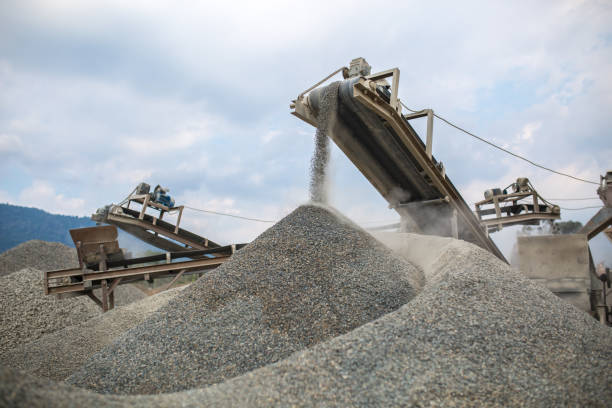
Sand works in a similar way. A well-graded sand contains a suitable mix of particle sizes, from finer grains to coarser ones. These particles fit together more effectively when used in concrete and mortar. If the sand contains too many large grains or too many fine particles, the mix may not behave as expected.
That is why choosing sand based only on its appearance can be a mistake. Two piles might look almost identical, but their particle sizes can be quite different.
How Does Sand Gradation Affect Concrete?
Concrete needs a good balance of cement, water, sand, and coarse aggregate. Sand fills the spaces between larger aggregate particles and helps create a more uniform mix.
When the gradation is suitable, concrete is generally easier to place, spread, and finish. The mix can hold together well without becoming too harsh or difficult to handle.
Poor gradation can cause a few headaches. If the sand is too coarse, the concrete may feel rough and be harder to finish smoothly. If it contains too many fine particles, the mix may need more water to reach the desired workability, depending on the sand's shape and moisture content.
Adding extra water without checking the mix is not a good fix. It can affect the final strength and durability of concrete.
Getting the sand selection right from the start makes the whole process easier.
Why Does Sand Gradation Matter in Mortar?
Mortar might seem simpler than concrete, but sand still plays a big part in how well it performs. Think about laying bricks or blocks. You want the mortar to spread easily, fill the joints properly, and hold the masonry units together. If the sand is too coarse, the mortar can feel gritty and become difficult to apply in thin, even layers.
On the other hand, sand with too many fine particles may make the mix feel sticky or increase its water demand. The right gradation helps create a workable mortar that is easier to spread and finish.
Whether we are working on a garden wall, a brick pathway, or a larger building project, a consistent mortar mix can make a real difference.
What Happens When the Sand Gradation Is Wrong?
The trouble often starts during mixing. The concrete may need extra water, the mortar may be difficult to spread, or the finished surface may not look as smooth as expected.
Poorly matched particle sizes can also leave more empty spaces in the mix. Cement paste then has to fill those spaces, which can affect the amount of paste needed and the overall performance of the material.
Of course, sand gradation is not the only thing that matters. Cement content, water ratio, sand cleanliness, particle shape, and proper curing all affect the result. Still, choosing suitable sand gives us a better starting point.
How Can You Choose the Right Sand?
Share:
More in Business
View categoryWater-activated vs kraft paper tape: Which eco packing tape should you use?
Water-activated tape vs kraft paper tape compared. Find the best eco-friendly, recyclable and compostable packing tape for your organisation's shipping in Australia.
READ ARTICLEWhat Business Trends Are Reshaping Industries Today?
Businesses are changing faster than many people expected. New technology, changing customer behavior, and different ways of working are influencing how companies operate.
READ ARTICLEDialysis Market is projected to reach US$ 181.21 Billion by 2033
The Dialysis Market size was valued at US$ 108.19 Billion in 2025 and is projected to reach US$ 181.21 Billion by 2033, growing at a CAGR of 6.66% during 2026–2033
READ ARTICLEPackaging Inks Market growing at a CAGR of 8.93% during 2026–2033
The Packaging Inks Market size was valued at US$ 10.98 Billion in 2025 and is projected to reach US$ 21.76 Billion by 2033, growing at a CAGR of 8.93% during 2026–2033
READ ARTICLE