
Share:

When Is a Deviated Septum More Than Just a Breathing Problem?
Learn when a deviated septum is more than a breathing problem, including symptoms, causes, complications, and treatment options from Dr. Raj Bhayani, MD.
Deviated septum symptoms often start subtly, showing up as mild breathing difficulty that many people simply learn to live with over months or even years. Over time, what seems like a minor nuisance can point to a structural issue that affects sleep, sinus health, and even facial comfort in ways that are easy to overlook. This guide explains what is deviated septum symptoms, when they signal something more serious, and what treatment options are available to help you breathe and feel better.
What Is a Deviated Septum, Exactly?
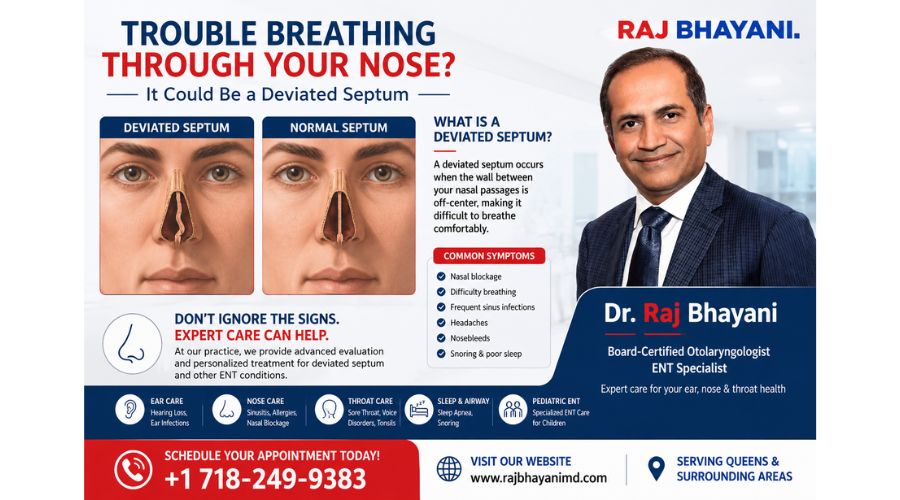
A deviated septum occurs when the thin wall of cartilage and bone separating the two nasal passages is shifted to one side. This can happen from birth, injury, or gradual changes in nasal structure over time. Understanding this basic anatomy makes it easier to recognize why deviated septum symptoms can affect so many different aspects of daily comfort.
Common Symptoms of Deviated Septum
Symptoms of deviated septum range from mild to significant, depending on how much the nasal passage is affected and how long the condition has been present. Many people notice these symptoms gradually, often mistaking them for seasonal allergies or a series of unusually frequent colds. Recognizing the full pattern of deviated septum symptoms, rather than treating each one separately, is the first step toward getting an accurate diagnosis.
- Difficulty breathing through one or both nostrils
- Frequent nosebleeds or nasal dryness
- Chronic sinus infections or congestion
- Loud snoring or noisy breathing during sleep
- Facial pain or pressure around the nose and eyes
What Is Deviated Septum Symptoms Beyond Breathing Trouble
What is deviated septum symptoms beyond simple breathing trouble is a question many patients do not think to ask until symptoms worsen. A deviated septum can disrupt sleep quality, contribute to headaches, and even affect your sense of smell. These broader effects are often overlooked because they do not seem directly connected to the nose.
Deviated Nose Septum Symptoms That Signal a Bigger Problem
Deviated nose septum symptoms sometimes point to more than just an inconvenience, especially when they interfere with daily functioning. Persistent one sided nasal blockage, chronic mouth breathing, and repeated sinus infections are signs the condition may be progressing. Identifying these signals early helps prevent complications down the road.
How a Deviated Septum Affects Sleep Quality
Sleep is one of the most commonly affected areas when deviated septum symptoms go untreated for years. Restricted airflow through the nose forces many people to breathe through their mouth at night, which can worsen snoring and fragment sleep. Poor sleep quality from this cause often goes unrecognized until a proper nasal evaluation identifies the underlying structural issue.
When Deviated Septum Symptoms Require Medical Attention
Not every case of a deviated septum requires treatment, but certain symptoms of deviated septum should prompt a visit to a specialist. Worsening nasal obstruction, recurring sinus infections, or nosebleeds that happen more than occasionally are all reasons to seek evaluation. Waiting too long can allow secondary issues, like chronic sinusitis, to develop alongside the original structural problem.
The Connection Between Deviated Septum Symptoms and Chronic Fatigue
Many patients do not immediately connect deviated septum symptoms with daytime fatigue, yet the two are closely linked through disrupted sleep quality. When nasal breathing is restricted at night, the body often does not reach the deeper stages of restorative sleep, leaving patients tired despite spending adequate hours in bed. Addressing the underlying nasal obstruction frequently leads to noticeable improvements in daytime energy levels.
Why Early Evaluation Leads to Simpler Treatment
Patients who seek evaluation for deviated septum symptoms early, before secondary complications develop, often have access to simpler and less invasive treatment options. Waiting years to address noticeable symptoms can allow related issues, such as chronic sinus inflammation, to become established alongside the structural problem. Addressing concerns as soon as they become noticeable tends to shorten the overall path to relief.
How Dr. Raj Bhayani Diagnoses a Deviated Septum
Dr. Raj Bhayani, known to many patients as Raj Bhayani ENT, uses a combination of physical examination and, when needed, imaging to confirm a deviated septum diagnosis. As Rajendra Bhayani ENT patients often note, his exams are thorough but efficient, minimizing unnecessary steps while still gathering complete information. This approach ensures that treatment recommendations are based on an accurate picture of each patient’s nasal anatomy.
Treatment Options for Deviated Septum Symptoms
Treatment for deviated septum symptoms depends on severity, ranging from conservative management to surgical correction depending on how much the deviation affects daily life. Mild cases are often managed with nasal sprays, allergy treatment, or breathing strips that reduce airflow resistance without requiring a procedure. More significant cases may require a septoplasty, a procedure that repositions the septum to restore normal airflow and long term comfort.
- Nasal corticosteroid sprays to reduce inflammation
- Antihistamines for allergy related nasal congestion
- Breathing strips or nasal dilators for mild obstruction
- Septoplasty surgery for significant structural deviation
- Follow up care to confirm long term symptom improvement
Share:
More in Health
View categoryHow Fast Does Vidalista Tablet Work?
Vidalista contains tadalafil, which commonly begins working within 30–60 minutes and may support erectile function for up to 36 hours. The exact response depends on the person, the prescribed regimen, sexual stimulation and other health factors.
Modafinil Tablet Guide for Salt Lake City, Utah: Uses, Dosage & Safety
Modafinil can help improve wakefulness in adults with certain diagnosed sleep disorders. However, its benefits depend on appropriate prescribing, correct use and continued management of the underlying condition. It is not a replacement for sleep and should not be treated as a general-purpose productivity medicine.
Aspadol Tablet and Menstrual Cramp Treatment
Aspadol contains tapentadol, an opioid medicine used for certain pain conditions when other options are inadequate. However, it is not a routine treatment for menstrual cramps, and its serious risks make self-medication inappropriate.
"Generic Propecia: The Hair Loss Treatment Your Wallet Will Thank You For
Generic Propecia may provide a cost-effective treatment option for men with male pattern hair loss. Its active ingredient, finasteride, reduces DHT activity and may help slow hair thinning while supporting improved hair density in suitable patients.