
Share:
What Type of Pillow Should Be Used for Different Sleeping Positions?
HealthFind the best pillow for side, back, stomach and combination sleepers. Learn how pillow height, firmness, shape and material affect sleep comfort.
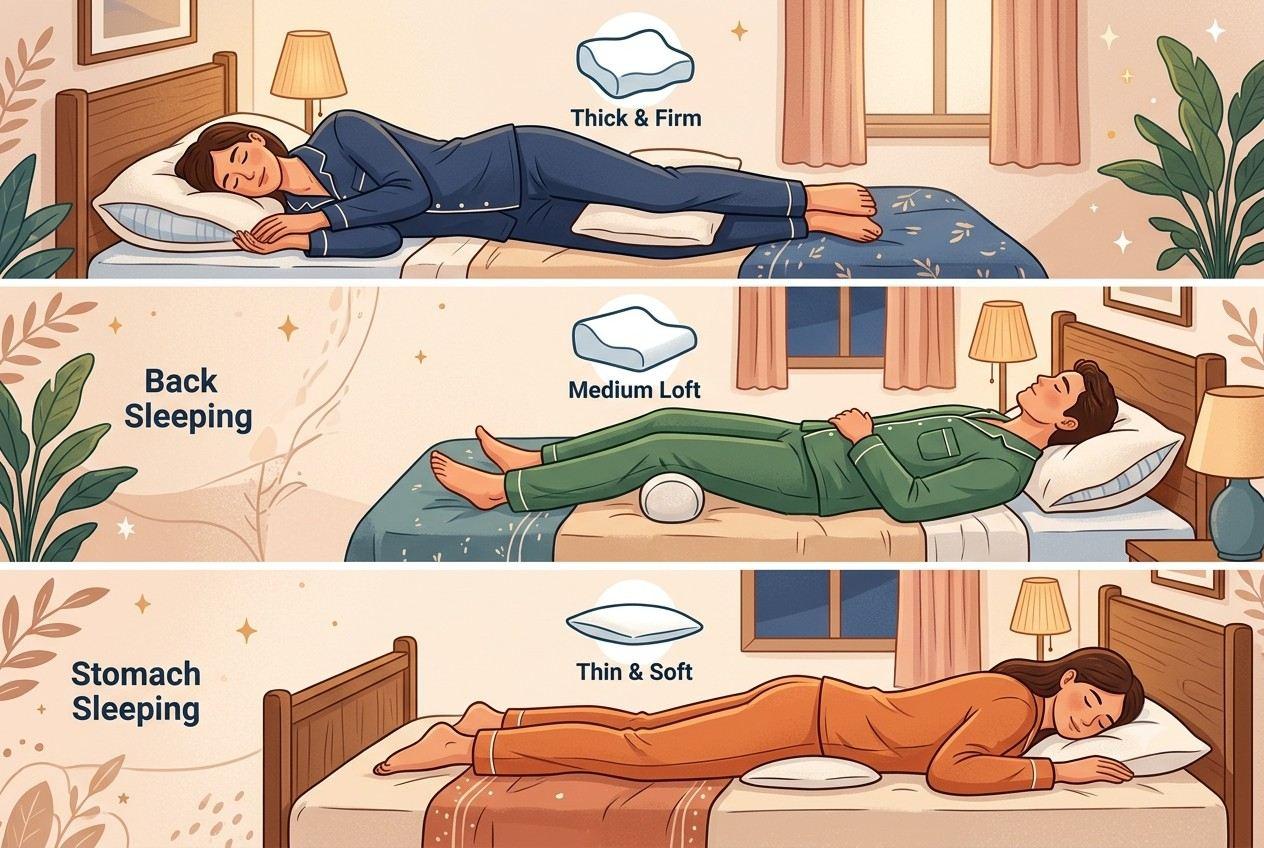

Choosing the right pillow is important for maintaining proper spinal alignment, supporting the neck, and getting comfortable, uninterrupted sleep. However, there is no single pillow that works perfectly for everyone. Your sleeping position plays a major role in deciding the right pillow height, firmness, shape, and material. Whether you sleep on your side, back, stomach, or change positions throughout the night, selecting a pillow designed for your sleeping style can help reduce pressure on the neck and shoulders and make your sleep more comfortable.
Why Does Your Sleeping Position Matter When Choosing a Pillow?
Your sleeping position determines how your head, neck, and spine are positioned during the night. A pillow that is too high can push your neck upward, while one that is too low may allow your head to tilt downward. Both situations can create discomfort and affect spinal alignment.
The ideal pillow should fill the space between your head and mattress without forcing your neck into an unnatural position. This is why choosing a Sleeping Pillow based on your preferred sleeping position can make a noticeable difference to your overall comfort.
What Is the Best Pillow for Side Sleepers?
Side sleepers generally need a pillow with enough height and firmness to fill the gap between the shoulder and head. When sleeping on your side, your shoulder creates additional space between your head and the mattress, so a thin pillow may leave your neck unsupported.
A medium-to-high loft pillow with good support can help keep the head and neck aligned with the spine. Memory foam and contoured pillows are often suitable choices because they can provide consistent support throughout the night.
Which Pillow Is Best for Back Sleepers?
Back sleepers usually need a pillow with moderate height and balanced firmness. A pillow that is too thick can push the head forward, while an extremely thin pillow may not provide enough support.
A contoured design can be useful for back sleepers because it can support the natural curve of the neck while allowing the head to rest comfortably. The goal is to keep the head in a neutral position rather than tilting it toward the chest.
What Is the Best Pillow for Stomach Sleepers?
Stomach sleepers generally benefit from a softer and thinner pillow. Because the body is already positioned face-down, using a thick pillow can force the neck into excessive rotation or extension.
A low-loft pillow can reduce the amount of elevation under the head. Some stomach sleepers may also feel comfortable using a very thin pillow or sleeping without a traditional head pillow, depending on their personal comfort.
What Pillow Should Combination Sleepers Use?
Combination sleepers change positions during the night, so choosing a pillow can be slightly more challenging. A pillow with medium loft and adaptable support can work well because it provides a balance between side and back sleeping.
Memory foam pillows can be a practical option for combination sleepers because they offer structured support while adapting to the head and neck. Adjustable pillows can also be considered if you frequently switch between sleeping positions.
Best Pillow for Neck and Spinal Alignment
Good spinal alignment is one of the most important factors when choosing a pillow. Your pillow should support the neck without creating an excessive bend between the head, neck, and upper back.
A supportive pillow can help maintain a more natural sleeping posture. If you frequently wake up with neck stiffness, evaluate whether your current pillow is too high, too low, too firm, or too soft.
Is a Contour Pillow Good for Side and Back Sleepers?
A Contour Pillow is designed with a shaped surface that can provide different levels of support for the head and neck. This design can be particularly useful for people who sleep on their back or side.
The raised edges and contoured shape can help support the neck while keeping the head positioned comfortably. However, the ideal contour height depends on your body shape, shoulder width, mattress firmness, and preferred sleeping position.
Is a Cervical Pillow Good for Sleeping?
A Cervical Pillow is designed to provide targeted support around the cervical region of the neck. Its shape can help maintain a more natural neck position while sleeping.
It can be especially useful for back and side sleepers who prefer structured neck support. When selecting one, consider the pillow's height and whether its shape matches your sleeping posture.
What Is a Cervical Gel Pillow?
A Cervical Gel Pillow combines cervical-style support with a cooling gel layer. This can be useful for sleepers who want both structured neck support and a cooler sleeping surface.
Cooling features may be particularly appealing to people who tend to feel warm while sleeping. However, the pillow's shape and height should still match your sleeping position for proper comfort.
Are Butterfly Pillows Good for Different Sleeping Positions?
A Butterfly Pillow has a distinctive shape designed to provide support around the head and neck. Its contoured areas can accommodate different sleeping postures and provide targeted support.
Depending on its dimensions and firmness, a butterfly-shaped pillow can be suitable for sleepers who want additional neck support while sleeping on their back or side.
What Is a Contour Gel Pillow?
A Contour Gel Pillow combines a contoured shape with cooling gel technology. The contour can provide structured support, while the ventilated gel surface can help improve the cooling feel of the pillow.
This type of pillow may be suitable for sleepers who prefer supportive foam but are also concerned about heat retention during the night.
Is a Pillow With Cooling Gel Good for Hot Sleepers?
If you frequently feel hot while sleeping, a Pillow with Cooling Gel may be worth considering. Cooling gel is designed to provide a cooler surface feel and can complement the supportive properties of memory foam.
However, cooling alone should not be the deciding factor. The pillow should also have an appropriate height, firmness, and shape for your sleeping position.
How Does Memory Foam Support Different Sleeping Positions?
Memory foam can conform to the contours of your head and neck, helping distribute pressure across the contact area. This makes memory foam a popular material for pillows designed for side and back sleepers.
The Advantages of Memory Foam Pillow can include contouring, consistent support, and pressure distribution. However, some people may prefer softer or more responsive materials depending on their personal sleeping preferences.
What Are the Benefits of Using a Supportive Pillow?
A supportive pillow can help maintain a comfortable position for the head and neck throughout the night. Proper support may also reduce the need to constantly adjust your pillow while sleeping.
The Health Benefits of Memory Foam Pillow are often associated with its ability to conform to the body and provide consistent support. Still, individual results can vary, and comfort should always be considered alongside support.
How to Choose a Pillow for Neck Pain?
If you regularly experience neck discomfort after sleeping, your pillow may not be providing the right level of support. Start by assessing your sleeping position and checking whether your head remains aligned with your spine.
Learning how to Choose Pillow For Neck Pain can help you understand factors such as pillow height, firmness, shape, and material before making a decision.
Does Pillow Height Matter for Side Sleepers?
Yes, pillow height is particularly important for side sleepers. Because the shoulder creates space between the mattress and head, side sleepers usually need more loft than stomach sleepers.
A pillow that is too low can allow the head to fall toward the mattress, while an excessively high pillow can push the head away from the mattress. Your pillow should comfortably bridge the gap created by your shoulder.
Does Pillow Firmness Matter for Back Sleepers?
Pillow firmness affects how much your head sinks into the pillow. Back sleepers generally need enough support to prevent the head from sinking too deeply while avoiding excessive elevation.
Medium-firm support can work well for many back sleepers, but the ideal firmness depends on body weight, mattress firmness, pillow material, and personal preference.
What Type of Pillow Is Best for People Who Change Positions?
If you frequently move between your back and side during sleep, look for a pillow that offers adaptable support. A medium-loft memory foam or contoured pillow can provide a useful balance.
The wider range of Pillows available in different shapes and materials makes it easier to select a design according to your sleeping habits rather than choosing solely based on appearance.
Should You Use One or Two Pillows?
For most people, one appropriately sized and supportive head pillow is enough. Adding multiple pillows under the head can raise the neck too much and may affect alignment.
However, additional pillows can be used for other parts of the body. For example, a pillow between the knees may provide additional comfort for some side sleepers, while a pillow beneath the knees can feel comfortable for some back sleepers.
Can Your Mattress Affect Your Pillow Choice?
Yes. Your mattress and pillow work together to support your body. A softer mattress allows the body to sink further, which may reduce the amount of pillow height required. A firmer mattress generally provides less sinkage.
When choosing a pillow, consider how your mattress feels as well as your sleeping position. The combination of mattress firmness and pillow height can influence your overall alignment.
How Can You Tell if Your Pillow Is Too High?
If your pillow is too high, your head may be pushed upward or forward while you sleep. You may also notice tension around the neck or feel uncomfortable when lying in your usual position.
For side sleepers, excessive height can cause the head to tilt away from the mattress. For back sleepers, a very high pillow can push the chin toward the chest.
How Can You Tell if Your Pillow Is Too Low?
A pillow that is too low may fail to support the space between your head and the mattress. Side sleepers may notice their head tilting downward, while back sleepers may feel that their neck lacks support.
If you frequently fold or bunch your pillow to make it comfortable, it may be a sign that the current pillow does not provide the appropriate loft.
How Often Should You Replace Your Pillow?
Pillows can lose their original shape and support over time. The replacement period depends on the material, construction, usage, and care instructions.
Instead of relying only on a specific number of years, check for visible flattening, permanent lumps, reduced support, unpleasant odours, or a shape that no longer returns to normal after use.
How to Choose the Right Pillow Material?
Pillow materials have different characteristics. Memory foam is known for contouring and structured support, while microfiber and other soft-fill materials can provide a different, more traditional feel.
Your choice should depend on your sleeping position, desired firmness, temperature preference, neck support requirements, and personal comfort.
Is a Memory Foam Pillow Suitable for Side Sleepers?
A memory foam pillow can be a good option for side sleepers when its loft and firmness are appropriate. The foam can contour around the head and neck while maintaining support.
If you are considering a memory foam pillow amazon india, compare the pillow's dimensions, height, construction, and intended sleeping position rather than choosing only based on material.
What Is the Best Pillow for Back and Side Sleepers?
For people who alternate between back and side sleeping, a medium-to-high supportive pillow may provide a good balance. Contoured and cervical designs can be particularly useful when you want structured neck support in both positions.
The most important consideration is whether your head and neck remain comfortably aligned when you change positions during the night.
What Is the Best Pillow for Stomach and Combination Sleepers?
Stomach sleepers generally require less pillow height, while combination sleepers may need something more versatile. If you regularly switch between stomach and side sleeping, an adjustable or moderately low-profile pillow may be more practical.
Pay attention to how your neck feels in each position rather than selecting a pillow solely according to its advertised sleeping position.
How Should You Position Your Pillow for Better Comfort?
Your pillow should support your head and neck without forcing your spine into an unnatural position. Place the pillow so that your head rests comfortably while the neck remains in line with the upper back.
Avoid placing too much of the pillow underneath your shoulders, as this can change the angle of your neck. Small adjustments to pillow placement can sometimes make a significant difference in comfort.
Can the Right Pillow Improve Sleep Comfort?
A suitable pillow can contribute to a more comfortable sleeping posture by providing appropriate support to the head and neck. However, sleep quality also depends on factors such as mattress comfort, room temperature, sleep routine, stress, and overall lifestyle.
The right pillow should therefore be considered one part of a complete sleep environment rather than a standalone solution.
Conclusion
The best pillow for sleeping depends largely on your sleeping position, body shape, preferred firmness, and individual comfort. Side sleepers typically need a higher and more supportive pillow, back sleepers often benefit from moderate loft and structured neck support, while stomach sleepers generally require a softer and thinner pillow. Combination sleepers may prefer a versatile pillow that can accommodate multiple positions.
When selecting a pillow, focus on maintaining comfortable head and neck alignment rather than choosing a product based only on its appearance or material. Whether you prefer a contour design, cervical support, cooling gel, or memory foam, the right choice should complement the way you naturally sleep.
FAQs About Choosing a Pillow for Different Sleeping Positions
1. What is the best pillow for side sleepers?
Side sleepers generally benefit from a medium-to-high loft pillow with enough firmness to fill the gap between the shoulder and head while supporting the neck.
2. What is the best pillow for back sleepers?
Back sleepers usually need a medium-height pillow that supports the natural curve of the neck without pushing the head too far forward.
3. Which pillow is best for stomach sleepers?
Stomach sleepers generally benefit from a thin and softer pillow because excessive height can place additional strain on the neck.
4. Is a contour pillow good for side sleepers?
Yes. A contour pillow can provide structured support for the head and neck and may be suitable for side sleepers when the height matches their shoulder width and body shape.
5. Are cervical pillows good for back sleepers?
Cervical pillows are designed to provide additional neck support and can be suitable for back sleepers who prefer a structured pillow shape.
6. Is memory foam good for sleeping?
Memory foam can provide contouring and consistent support. Whether it is suitable for you depends on your preferred firmness, sleeping position, and comfort requirements.
7. Is a cooling gel pillow suitable for hot sleepers?
A cooling gel pillow can be a useful option for people who prefer a cooler sleeping surface, although the pillow's height and support should also match their sleeping position.
8. Can one pillow work for all sleeping positions?
A versatile medium-loft pillow may work for some combination sleepers, but people with a strong preference for one position may benefit from a pillow specifically designed for that posture.
9. How high should a pillow be for side sleeping?
Side sleepers generally require more loft than stomach sleepers. The ideal height depends on shoulder width, mattress firmness, body shape, and pillow firmness.
10. How do I know if my pillow is supporting my neck properly?
Your head should remain comfortably aligned with your spine without being pushed significantly upward, downward, or forward. Persistent discomfort can be a reason to reassess your pillow and sleeping setup.
11. Should stomach sleepers use a pillow?
Many stomach sleepers prefer a very thin pillow because it minimizes excessive neck elevation. Some may also prefer sleeping without a head pillow.
12. Is a butterfly pillow good for neck support?
A butterfly-shaped pillow can provide targeted areas of support around the head and neck. Its suitability depends on the design, height, firmness, and your sleeping position.
13. Can a pillow help with neck discomfort?
A properly supportive pillow may improve sleeping posture and comfort, particularly when its height and shape are appropriate for your sleeping position. It should not be considered a treatment for an underlying medical condition.
14. Is a firm pillow better than a soft pillow?
Neither is universally better. Firmness should match your sleeping position, body weight, preferred comfort level, and the amount of support you need.
15. How often should I change my pillow?
Replace your pillow when it becomes flattened, lumpy, misshapen, or no longer provides adequate support. The useful life varies according to the pillow's material and construction.
16. What is the best pillow for combination sleepers?
Combination sleepers can consider a medium-loft pillow that offers both flexibility and support. Contoured memory foam pillows can be suitable for people who move between back and side positions.
17. Can the wrong pillow cause neck stiffness?
An unsuitable pillow can contribute to an uncomfortable sleeping posture and may be associated with morning neck stiffness for some people. Pillow height, firmness, and sleeping position should all be considered.
18. Should the pillow support the shoulders?
The pillow should primarily support the head and neck. Side sleepers should account for shoulder width when selecting pillow height, while the shoulder itself generally remains on the mattress.
19. Is a cooling pillow better for summer?
A cooling pillow may provide a more comfortable surface feel for people who tend to sleep warm. However, cooling features should be considered alongside support and pillow height.
20. What should I consider before buying a sleeping pillow?
Consider your primary sleeping position, pillow height, firmness, shape, material, neck support, temperature preference, mattress firmness, and personal comfort before making your choice.
Share:
More in Health
View category
Skin Booster Treatment in Bengaluru
ZIUR Wellness offers advanced Skin Booster Treatments in Bengaluru. Safe, effective & lasting glow. Try the best Skin Booster Treatments near me today!
READ ARTICLE
Throat Cancer Specialist in Lucknow: Specialized Cancer Care at Remedy Cancer Care
Remedy Cancer Care provides specialized head, neck and ENT cancer care in Lucknow, including Throat Cancer Surgery.
READ ARTICLE
Acute on Chronic Liver Failure Market Poised for Growth Through 2034
READ ARTICLE