
Share:

Vector Art Service: Professional Graphics for Print and Digital Design
A professional Vector Art Service helps transform existing artwork or creative concepts into scalable, editable, and production ready graphics.
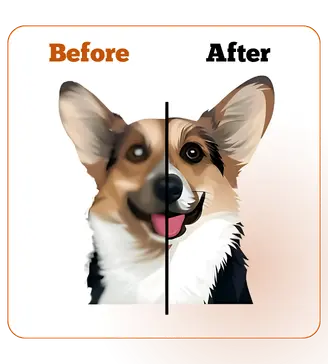
In a competitive digital and print market, businesses rely on professional graphics to communicate their identity clearly. Logos, illustrations, packaging artwork, advertisements, product designs, and promotional materials all require graphics that remain sharp and accurate in different sizes.
A professional Vector Art Service helps transform existing artwork or creative concepts into scalable, editable, and production ready graphics. Unlike pixel-based images, vector graphics are built with mathematical paths, curves, points, and shapes.
This structure allows artwork to be resized without sacrificing clarity. Whether the design is prepared for a business card, website, product label, large sign, or promotional material, vector artwork can maintain consistent quality.
What Is Vector Art?
Vector art is a type of digital graphic created with geometric elements rather than individual pixels. Each element can be edited independently, which provides greater control over colors, shapes, proportions, and other design details.
Common vector file formats include AI, EPS, SVG, and PDF. The appropriate format depends on how the artwork will be used. For example, SVG files are commonly suitable for digital applications, while EPS and PDF files are frequently used for professional printing and production.
A major advantage of vector graphics is scalability. Increasing the size of a vector illustration does not create the pixelation commonly associated with low resolution raster images. This makes vector artwork useful when one design needs to be reproduced across multiple sizes and surfaces.
Why Is Vector Artwork Important for Businesses?
Professional artwork contributes to consistent visual communication. A logo, illustration, or product graphic may be used across websites, packaging, printed materials, signage, clothing, and advertising. Using a properly prepared vector file helps maintain consistent proportions, colors, and visual details across these applications.
Vector files also provide flexibility during the design and production process. Designers can adjust individual elements without recreating the entire image. Colors can be changed, shapes can be modified, and text elements can be updated when the original file has been prepared correctly.
For businesses that frequently produce marketing or promotional materials, having editable artwork can reduce the need to recreate designs for every new application.
Common Applications of Vector Art Services
Vector artwork is used in many creative and commercial projects. Logo recreation and conversion are among the most common applications. Businesses may have an old logo available only as a small or low resolution image and require a clean vector version for professional use.
Packaging and product artwork also frequently require vector files. Labels, boxes, stickers, and promotional products may need precise graphics that can be resized according to production specifications.
Vector artwork is also widely used for apparel graphics, signage, advertisements, illustrations, icons, decals, and print materials. In each case, the artwork needs to remain clear and accurately reproduce the intended design.
Raster to Vector Conversion
Many existing graphics are available only in raster formats such as JPEG or PNG. While these formats can work well for photographs and certain digital applications, they may not provide the flexibility required for professional printing or large format production.
Raster to vector conversion involves recreating the image using paths and editable shapes. The process requires careful attention to curves, edges, proportions, colors, and small design elements.
Simply applying an automatic tracing process may not produce suitable professional artwork. Complex graphics can contain unnecessary points, uneven curves, or inaccurate details. Manual refinement is often necessary to create a clean and usable vector file.
Benefits of Professional Vector Art Conversion
Professional vector conversion can provide several practical benefits. The resulting artwork can be resized for different applications while maintaining visual clarity. Editable elements also make future modifications easier.
Another important benefit is production compatibility. Properly prepared vector files can be easier to work with for printing, signage, apparel decoration, packaging, and other production processes.
Share:
More in Business
View categoryTransform Your Property with Construction Services Galveston
BTB Construction provides quality-focused construction solutions in Galveston, helping property owners improve residential and commercial spaces through thoughtful planning, reliable workmanship, and attention to detail.
READ ARTICLEBest 11 Sites to Buy Verified LinkedIn Account Profile Explore Your Options
➤WhatsApp:+1 (740) 459-5764 ➤Telegram: @onsmmit
READ ARTICLETop 12 Trusted Platforms to Buy Verified WeChat Accounts in the USA
➤WhatsApp:+1 (740) 459-5764 ➤Telegram: @onsmmit
READ ARTICLEBuy Premium LinkedIn Accounts: Verification, Trust, and Security
If You Need To More Information Or Have Any Questions ➤24-Hour Reply/Contact ➤WhatsApp:+1 (740) 459-5764 ➤Telegram: @onsmmit ➤ Email: onsmmit@gmail.com
READ ARTICLE