Share:

Unpacking the Difference Between a Survey and Questionnaire: Why It Matters for B2C
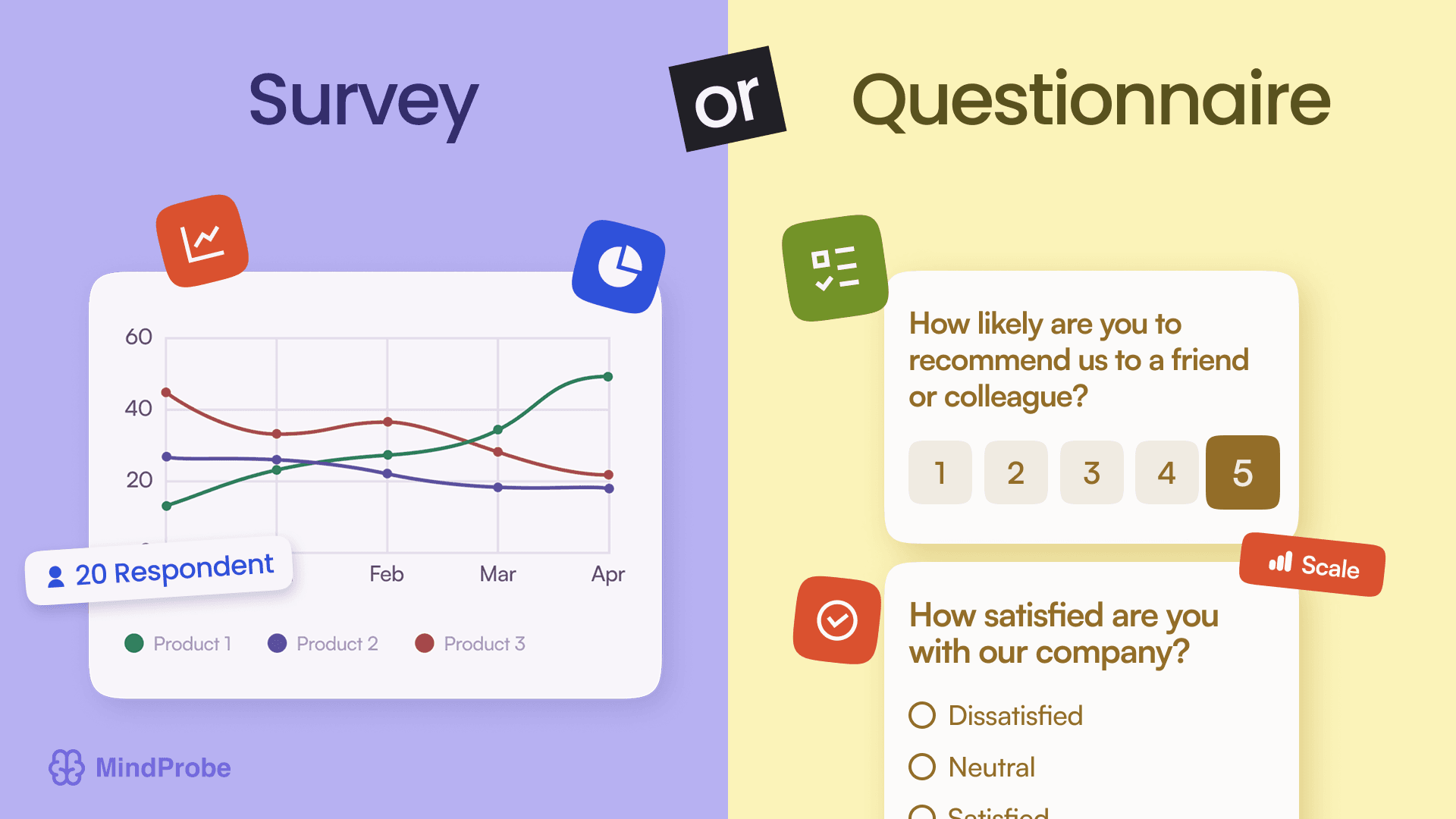
This guide unpacks the difference between surveys and questionnaires, explaining why it matters for B2C companies seeking genuine insights. We’ll examine key definitions, break down core differences, and highlight how to choose the right method for specific objectives
1. Introduction
In today’s competitive B2C market, understanding your customers and employees is more crucial than ever. Whether you're gauging customer satisfaction, launching a new product, or measuring employee engagement, collecting feedback is the bedrock of informed decision-making. Yet many in marketing or product management circles use the terms “survey” and “questionnaire” interchangeably, as though they’re synonymous.
Although both involve asking questions, a closer look reveals that “survey” and “questionnaire” each offer distinct advantages, focus areas, and design principles. Pinpointing these nuances can affect how you collect, analyse, and act on data - and ultimately shape your ability to meet ever-changing consumer demands.
This guide unpacks the difference between surveys and questionnaires, explaining why it matters for B2C companies seeking genuine insights. We’ll examine key definitions, break down core differences, and highlight how to choose the right method for specific objectives - be it capturing employee feedback or mapping consumer buying behaviours. Whether you’re a marketing manager or a product lead, clarity on these fundamentals can help you gather higher-quality data and drive better decisions.
2. What Is a Survey?
At its core, a survey is a systematic method of collecting information from a defined group of people, often on a larger scale. Typically, surveys aim for statistical relevance, employing features like sampling, controlled question order, and randomisation. Although surveys often contain questionnaires (the list of questions), the term “survey” generally implies additional rigour in terms of how data is collected, analysed, and extrapolated.
When to Use a Survey
1. Large-Scale Research
- If you need representative data from hundreds or thousands of respondents, such as measuring brand awareness or estimating the total market for a new product.
2. Statistical Significance
Share:
More in Marketing
View categoryHow to Choose the Right Luxury Custom Home Builder in Studio City, CA
Choose the right luxury home builder in Studio City by evaluating local expertise, licensing, portfolios, pricing, communication, quality, technology, and construction experience.
READ ARTICLESan Jose Hard Money Lenders
Alliance Portfolio provides flexible real estate financing solutions for investors and borrowers seeking property-backed funding.
READ ARTICLEStylish Eyeglasses Frames for a Confident Modern Appearance
Stylish Eyeglasses Frames for a Confident Modern Appearance
READ ARTICLE