
Share:

The Financial Toll of Parental Incarceration on the Family at Home
In How Did I Get Here?, the author stands at a grocery checkout with her three children while a cashier removes items from the order. She has worked out what she thinks she can spend, and the debit card has been declined.
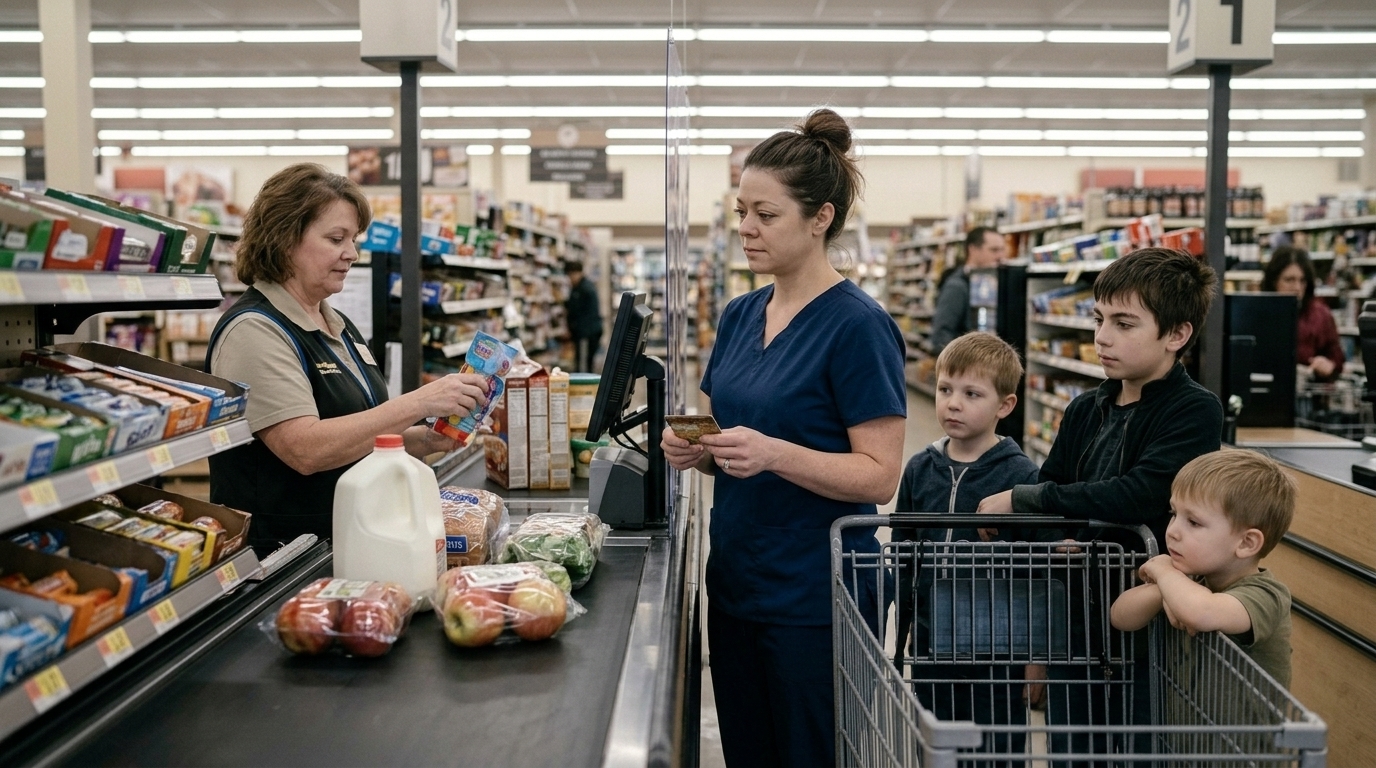
In How Did I Get Here?, the author stands at a grocery checkout with her three children while a cashier removes items from the order. She has worked out what she thinks she can spend, and the debit card has been declined. The difference can come down to an automatic payment arriving sooner than she expected. It is a small scene with a great deal inside it. The financial impact of parental incarceration on families shows up in a household budget. It also shows up in how many times a parent has to do the arithmetic, how much margin she has for a mistake and who is standing beside her when the numbers fail.
The Paycheck Holds Several Jobs Together
The author was still relatively new to nursing. Her wage covered necessities such as food, housing and childcare, and she was conscious of what missing even part of her scheduled work could mean. She remembers trying to think ahead about bills while doing a job that required attention to patients. Her income held the household together. Spending time away from work to meet a need at home could weaken the source of the money that would pay for that need.
Childcare makes that problem clear. School supervised her sons for part of the day, and her shifts did not consistently begin and end within those hours. Paying for extra coverage meant making room for another recurring cost. When she could not get to the school in time, the oldest son sometimes helped, including walking home with his youngest brother. The budget is part of that story even though nothing changes hands during the walk. The work has fallen to another member of the household, a child himself.
The grocery line shows a second side of the same pressure. She has taken care with her choices before she gets to the register. She has considered fruit, milk and cheaper cereal. Now a cashier has to ask what she can leave behind while the people in line wait. The author recalls smiling for the boys' benefit. The work of managing a shortage includes deciding how much of the worry a child needs to see. That is separate from and often as demanding as the effort of calculating what the family can spend.
Contact With Their Father Also Had a Price
After the move to New York, the boys seeing their father in Arizona involved airfare, lodging and scheduling around school and nursing shifts. The author watched for cheaper travel in the summer and planned the trips around prison visits. This expense belonged to maintaining a relationship the children valued. Giving it room in the budget took months of looking at the calendar and comparing fares. Regardless of what happened at the prison, the expenses began before the children had spoken a word to their father.
This is an important reason terms such as household income tell only part of the story. The National Institute of Justice overview of incarceration and dependent children discusses the economic pressures families can face. The author shows how new reasons to spend money can coincide with a reduction in the number of adults available to help. A hotel reservation, an extra hour of childcare and a trip to buy food each compete for money. Each also protects a different part of a child's life. The only person who can settle the order of those priorities is often the caregiver trying to cover all of them.
Keeping a House and Keeping the Heat On
The house the author had walked away from during the divorce later became a possibility again because her name remained on its title. It was boarded up when she went to see it with the boys. A neighbor offered to clear the property and help secure it in exchange for keeping the things left inside. She thought over the risk before accepting. The agreement addressed one kind of work. There was still paperwork to handle and money to find for repairs.
She worked with the mortgage company and eventually refinanced, bringing the house out of foreclosure. The work continued on weekends, when she scrubbed floors and painted. The author rightly takes pride in the accomplishment. She also makes clear what ownership demanded once the family moved in. Electric heat could push winter bills to nearly $1,200 in some months. On one occasion, the bill fell far enough behind for her to receive a shutoff notice.
The employer she turned to for emergency assistance asked for paperwork showing how far things had gone. The author remembers the embarrassment of providing it and the kindness she met when she did. The assistance prevented the disconnection. For a household already tracking every due date, the benefit was easy to name. They would still have electricity and heat, and the author could go home without having to find the whole sum at once. The episode gives readers a concrete example of how well placed help can change the immediate conditions a family is living in.
What a Family Pays in Time
The family had a source of wages, a parent who kept track of the bills and a series of plans that sometimes worked. She could negotiate with a company, watch ticket prices and prepare a meal in advance for the boys. Each solution drew on hours she also needed for work, rest or being with them. It is easy to see her competence and overlook the amount of time it took to put that competence to use.
That is what makes the checkout scene worth returning to. The author has made a plan for a commonplace errand. A slight change in the account balance is enough to put her back to making choices in front of her children. Later chapters show how the same process can play out with a larger sum and a higher consequence. Keeping an Arizona visit affordable took planning. Keeping a house warm in New York took the willingness to ask for help. All of those episodes belong to the financial history of the family, and all of them took time away from a parent whose weeks were already full.
Share:
More in Health
View categoryDubai Strengthens Its Position as a Global Pharmaceutical and Life Sciences Innovation Hub
Dubai Strengthens Its Position as a Global Pharmaceutical and Life Sciences Innovation Hub
READ ARTICLE