
Share:

Tesla or Electric Car in an Accident? Can Any Body Shop Fix It?
Got into a Tesla or EV accident in Livingston, NJ? Learn when a body shop can handle repairs and when Tesla-approved or EV-trained specialists are needed.
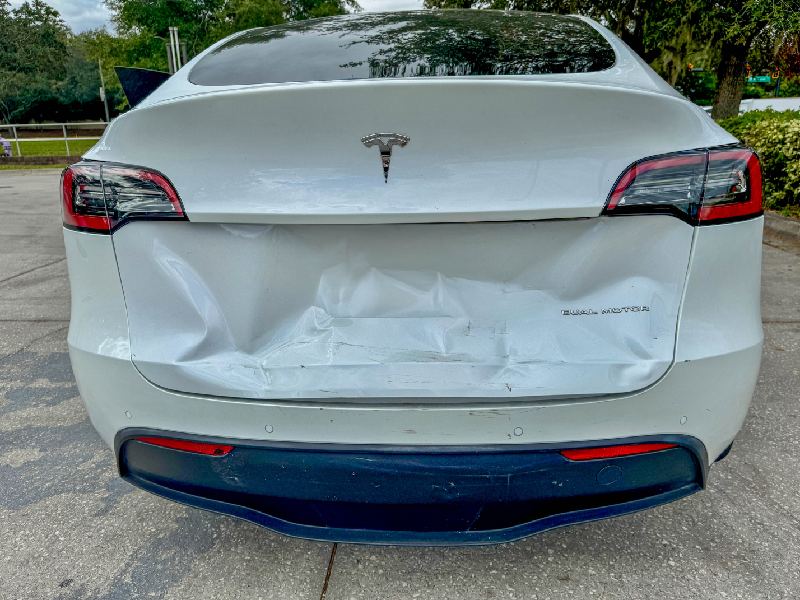
Getting into a motor vehicle collision in Essex County is stressful enough without adding the confusion of modern vehicle technology into the mix. If you drive a Tesla Model 3, Model Y, Model S, Model X, Cybertruck, or another modern electric vehicle (EV), you might be asking yourself a critical question after a fender bender: Can any body shop fix it?
The short answer is no.
Fixing an electric vehicle requires vastly different skills, specialized tooling, structural equipment, and safety precautions than repairing a traditional gasoline-powered car. Taking your car to an unqualified shop can compromise structural integrity, damage the high-voltage drivetrain, or disrupt sensitive safety sensors.
At Livingston Collision, we specialize in advanced auto body repair in Livingston, NJ, giving local drivers clear guidance on EV repairs, insurance claims, and vehicle safety.
Why EV and Tesla Collision Repair Is Radically Different
Standard auto repair shops built their businesses around steel unibody frames, internal combustion engines, and simple body panels. Electric vehicles abandon these traditional designs. Instead, they feature hyper-lightweight aluminum structures, high-voltage battery enclosures, and intricate sensor networks.
Feature / Aspect | Traditional Vehicle Repair | Electric Vehicle (EV) Repair |
Structural Materials | Mild & High-Strength Steel Panels | Lightweight Aluminum & Castings |
Joining Methods | Standard Spot & MIG Welding | Specialized Riveting & Bonding |
Disassembly & Safety | Basic Mechanical Disassembly | High-Voltage De-Powering Safety |
Calibration & Alignment | Mechanical Alignment Tools | ADAS & Radar Camera Recalibration |
Here are the main factors that separate everyday repairs from specialized EV body work:
1. High-Voltage Battery Safety Protocols
The battery pack under your vehicle operates at high voltages (typically between 400 to 800 volts). Before any pulling, cutting, structural heating, or paint drying occurs, technicians must perform a systematic high-voltage disconnect procedure.
Exposing an EV battery to improper heating inside a standard paint booth (which regularly reaches 140°F to 160°F) can cause thermal degradation or permanent battery damage. A qualified electric vehicle body shop in Livingston, NJ understands how to monitor battery temps, isolate power lines, and handle high-voltage components safely.
2. Specialized Aluminum & Mixed-Material Joining
Teslas and modern EVs use high amounts of structural aluminum, cast aluminum nodes, and ultra-high-strength steel to save weight and maximize battery range.
- Aluminum cannot be pulled or pounded out like mild steel; it snaps or tears if heated incorrectly.
- Aluminum repairs require specialized clean rooms to prevent airborne steel particles from causing galvanic corrosion on the metal.
- Panels are frequently joined using self-piercing rivets (SPRs) and structural adhesives rather than standard MIG welding.
3. Advanced Driver Assistance Systems (ADAS) & Sensor Calibration
EVs rely heavily on suites of exterior cameras, ultrasonic sensors, and radar modules to power features like Autopilot, lane-keeping assistance, and automatic emergency braking.
Even a minor bumper tap requires careful removal and reinstall of these components. Once body panels are aligned, the shop must perform precise digital camera and sensor recalibrations. If a body shop replaces a bumper or windshield without recalibrating these systems, your car’s active safety features could fail when you need them most.
The Hidden Dangers of Choosing an Unqualified Body Shop
Choosing a general repair shop that lacks experience with modern EV architectures can lead to costly and dangerous complications down the road:
Risk Area | Standard Repair Mistake | Long-Term Consequence |
Battery Health | High heat exposure in paint booths | Reduced battery range or catastrophic thermal runaway |
Structural Integrity | Improper welding on structural aluminum | Failed crash zones in subsequent collisions |
Safety Electronics | Skipping ADAS sensor recalibration | Malfunctioning blind-spot checks and emergency braking |
Vehicle Warranty | Using non-approved aftermarket parts | Voided Tesla or manufacturer battery/drivetrain warranty |
When looking for Tesla collision repair in Livingston, NJ, choosing a repair facility that invests in specialized equipment, technical training, and precise measuring systems is vital.
Key Steps in the EV Collision Repair Process
Restoring an electric vehicle to pre-accident condition requires a methodical, multi-step workflow. Here is what happens when you bring your car to a professional facility:
Share:
More in Business
View categoryBuy Aged Gmail Accounts for Google Ads: The Ultimate Guide to Scaling PPC Campaigns
Looking to buy aged Gmail accounts for Google Ads? Get verified, high-quality aged accounts that help you scale campaigns faster with better trust signals. http://buymailaccounts.com/service/buy-aged-gmail-accounts-for-google-ads
READ ARTICLEComplete Guide to Buying Aged Gmail Accounts for Reviews and Outreach
Buy aged Gmail accounts for reviews to boost product ratings with authentic, verified profiles. Get reliable aged accounts delivered fast. Order securely today! https://buymailaccounts.com/service/buy-aged-gmail-accounts-for-reviews
READ ARTICLEDye Penetrant Kit: A Complete Guide for USA Industries
Discover how a Dye Penetrant Kit detects surface cracks, improves inspection quality, and delivers cost-effective NDT solutions for USA industries.
READ ARTICLEWhy Marketers Buy Aged Mix Country Gmail Accounts for Global Outreach
Looking to buy aged mix country Gmail accounts? Purchase high-quality, aged Gmail accounts from various countries. Perfect for marketing, bulk use & long-term reliability. https://buymailaccounts.com/service/buy-aged-mix-country-gmail-accounts
READ ARTICLE