
Share:

SEO for Jewelry Brands: How to Reach High-Intent Buyers
Learn how SEO for jewelry brands can target high-intent buyers with the right keywords, content structure, and on-page strategy that converts.
Traffic is easy to generate. High-intent traffic is not. A jewelry brand can rank for broad, high-volume terms and still struggle to convert visitors, because volume and intent are two completely different things. The buyer typing "diamond ring meaning" is in research mode. The buyer typing "buy engagement ring online" is in decision mode. SEO for jewelry brands only works when it's built around that distinction.
This guide breaks down how jewelry brands can structure content, keywords, and site experience specifically around buyers who are close to purchasing, not just browsing for inspiration.
Why High Intent Matters More Than High Volume
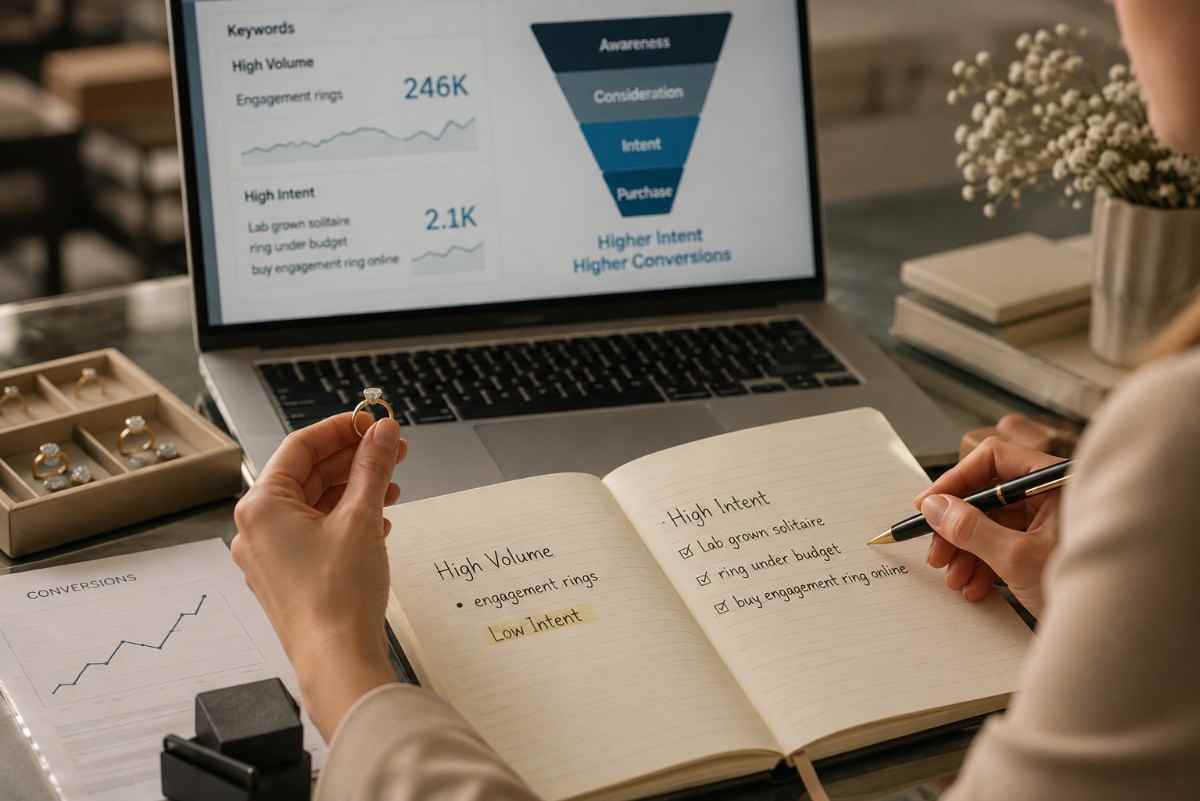
A keyword with massive search volume isn't automatically valuable. "Engagement rings" gets searched constantly, but a huge share of that traffic is inspiration browsing, gift research, or people years away from buying anything.
Compare that to a phrase like "lab grown solitaire ring under budget" or "buy engagement ring online." Smaller search volume, but the person searching has already made key decisions and is actively evaluating retailers. For a jewelry brand, ranking well for ten high-intent searches often converts better than ranking for one enormous, low-intent term.
Understanding the Jewelry Buyer's Search Journey
Most jewelry purchases, especially engagement rings, follow a research-heavy path before checkout. Effective SEO for jewelry brands maps content to each stage of that journey, rather than targeting only the final purchase keyword.
- Awareness stage: broad, educational searches like "how to choose an engagement ring" or "diamond vs cubic zirconia"
- Consideration stage: comparison and style-specific searches like "halo vs solitaire" or "gold vs platinum"
- Decision stage: direct, purchase-ready searches like "buy engagement ring online" or specific product-style searches
- Post-purchase stage: care and maintenance searches like "ring resizing cost" or "how to clean an engagement ring"
Ranking across every stage builds a much stronger funnel than only chasing decision-stage keywords, since it captures buyers earlier and keeps them engaged through the full journey.
Building Content Around High-Intent Keywords
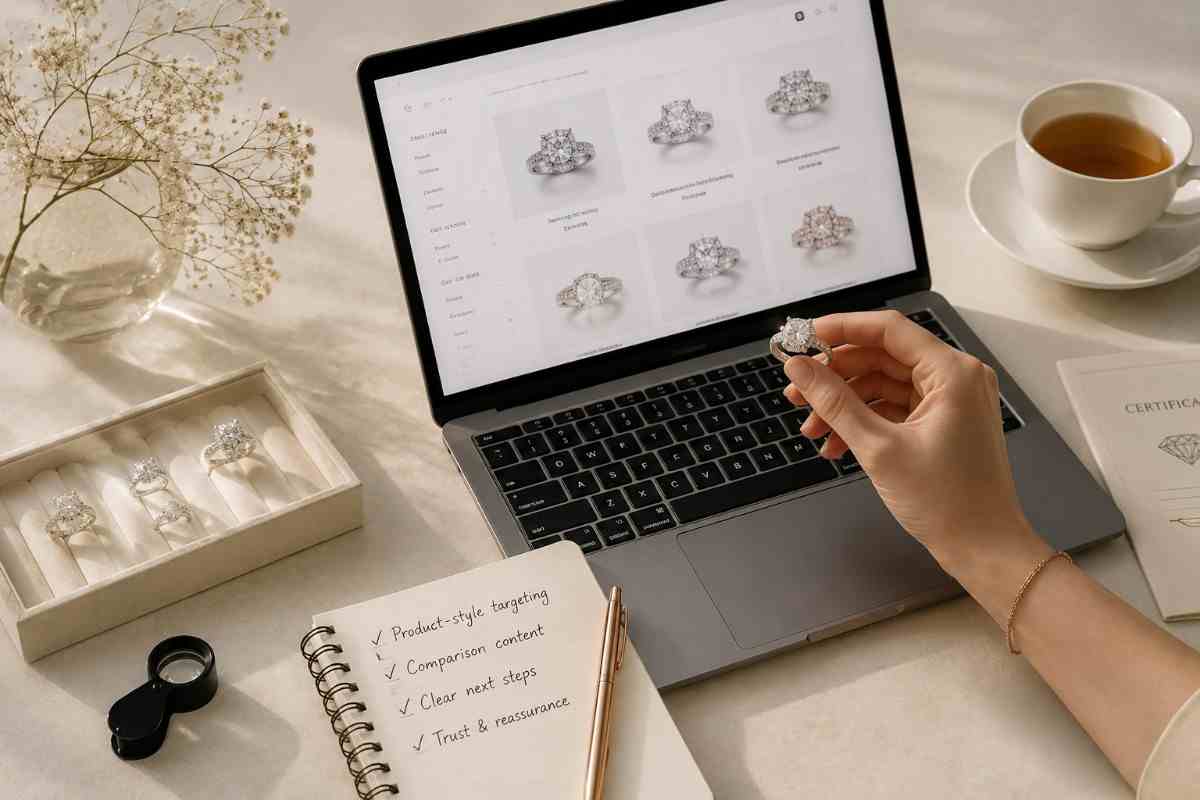
High-intent content looks different from general educational content. It answers questions buyers ask right before they're ready to purchase, and it does so with enough specificity to move them toward checkout.
Strong high-intent content typically includes:
- Specific product-style targeting, such as content built around halo rings for women rather than generic "engagement ring" content alone
- Direct comparison content, helping buyers choose between two real options rather than explaining concepts in the abstract
- Clear next steps, guiding a ready buyer toward a collection or product page rather than leaving them without direction
- Trust-building details, like certification information and policy clarity, placed exactly where a buyer needs reassurance before committing
On-Page SEO Elements That Matter Most for Jewelry
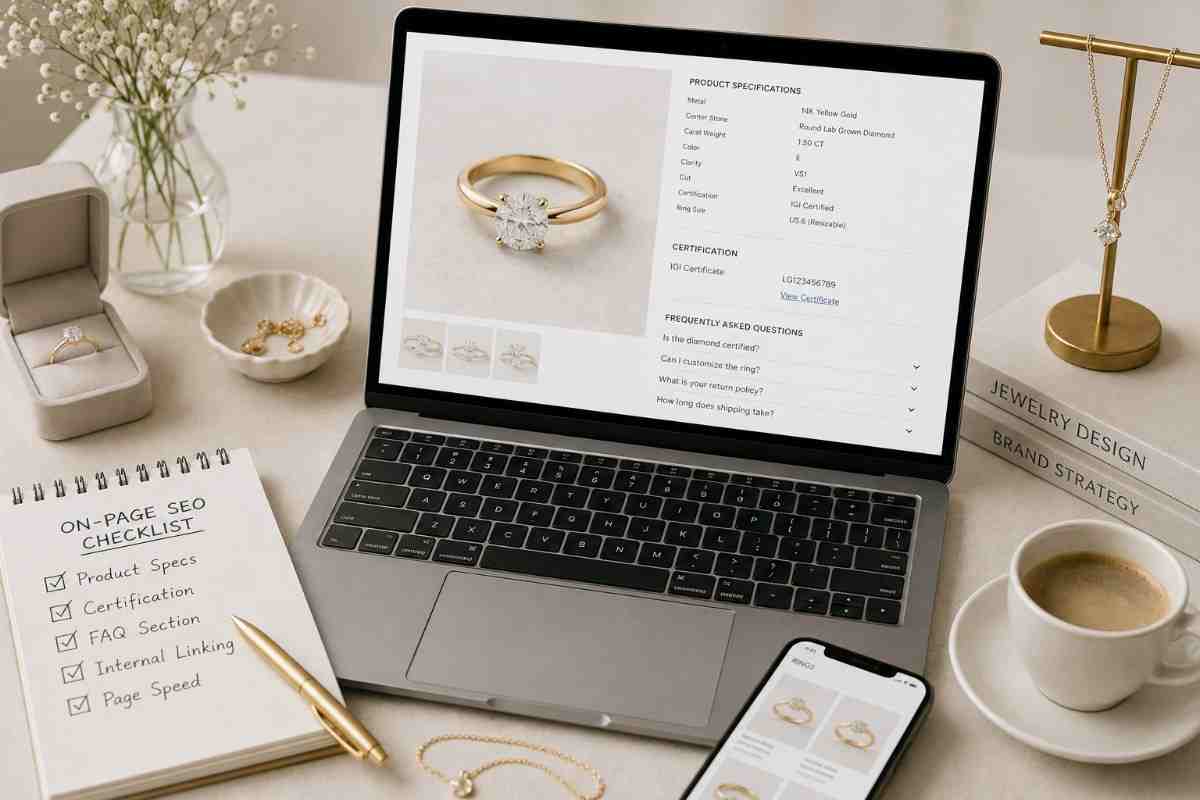
A few on-page factors carry outsized weight for jewelry brands specifically, given how research-heavy and trust-dependent these purchases are.
- Detailed product specifications on every listing, not just marketing copy, since serious buyers actively compare specs before buying.
- Certification references clearly stated and linkable, supporting both buyer trust and search engine trust signals.
- Structured FAQ content, which supports both traditional search snippets and newer AI-driven answer engines that pull directly from well-formatted Q&A sections.
- Clear internal linking between educational content and product collections, guiding search engines and buyers toward conversion paths naturally.
- Fast, mobile-optimized pages, since a slow product page loses high-intent buyers just as easily as a poorly written one.
Why Buying Guides Outperform Generic Blog Content
Generic jewelry blog content, written purely for traffic, tends to attract low-intent visitors who rarely convert. Buying guides, comparison posts, and maintenance content perform differently, because they answer the exact questions a serious buyer is actively asking.
A post explaining how to choose between styles, how to verify certification, or how much resizing typically costs does more than inform. It builds the confidence a buyer needs before they're ready to Buy engagement ring online, which makes it far more likely to convert than a broad, inspiration-only post ever could.
Share:
More in Marketing
View categoryWebshark: A New Approach to Enterprise Technology and Digital Innovation
Webshark: A New Approach to Enterprise Technology and Digital Innovation
READ ARTICLEModern Silver Mangalsutra Designs for the Contemporary Indian Woman
Explore modern silver mangalsutra designs for the contemporary Indian woman, from minimalist pendants and geometric styles to traditional black-beaded necklaces and statement designs. Discover everyday styling ideas, online buying tips, and simple care advice to help you choose a mangalsutra that reflects your personal style and lifestyle.
READ ARTICLETop Digital Marketing Institute with Practical Projects and Expert Guidance
DIGI Brooks Academy is a reputable training institute based in India that offers a wide range of training courses like digital marketing, content writing, PPC training, and many more. We have a team of professionals who have years of experience. Contact us now!
READ ARTICLE