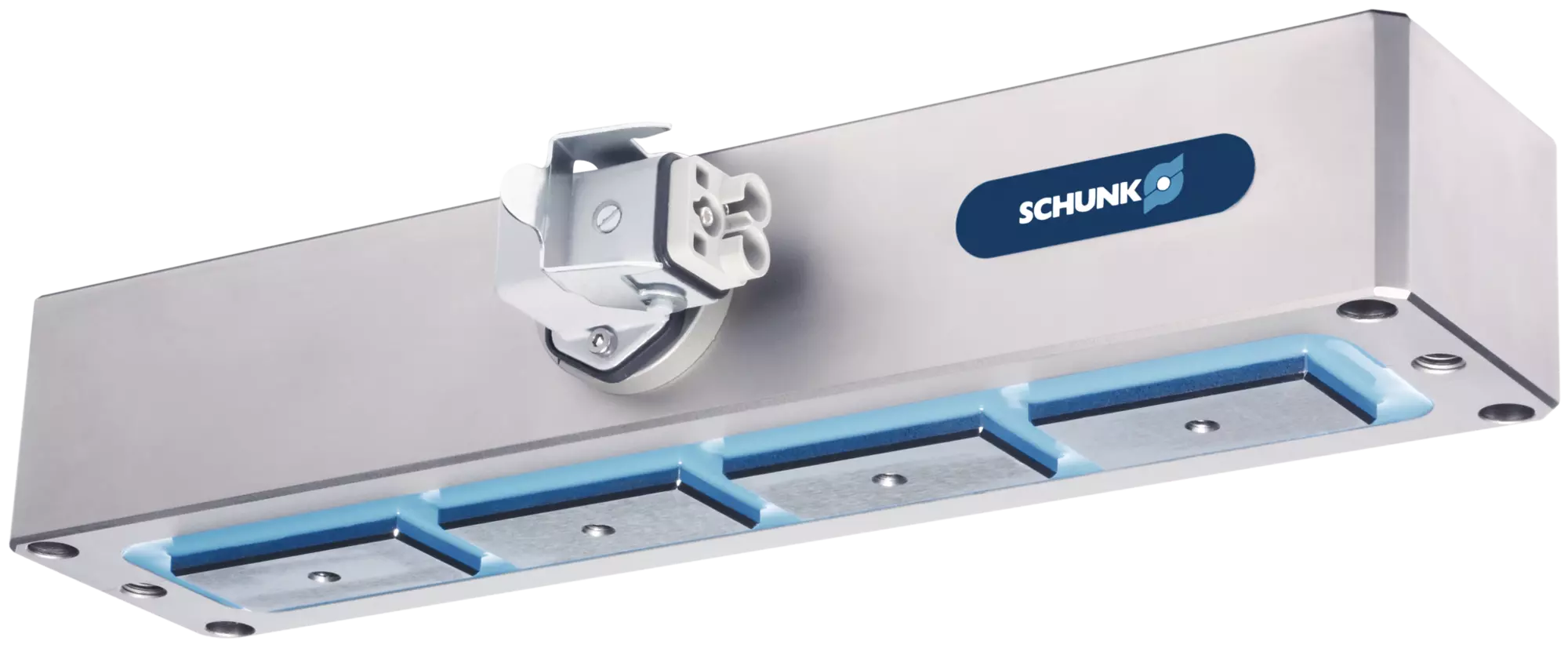
Automation has transformed the way manufacturers move, position and process components. Pick-and-place systems are particularly valuable because they can perform repetitive handling tasks quickly and consistently, reducing manual intervention while supporting production efficiency. The choice of gripper, however, plays a major role in determining whether an automated handling system can work reliably.
Pick and place with magnetic grippers is an effective option for handling suitable ferromagnetic workpieces. Magnetic gripping technology can allow robots to pick up and move metal components without mechanically enclosing them between jaws. This can simplify certain handling processes and provide flexibility where conventional gripping may be difficult.
Magnetic gripping is also only one part of a broader automation strategy. In applications involving woodworking, for example, a woodworking vacuum clamping system may be more appropriate for securing non-ferromagnetic boards, panels and other materials during processing. Understanding the differences between these technologies helps manufacturers select the right solution for each application.
What Is Pick-and-Place Automation?
Pick-and-place automation involves using a robot or automated handling system to pick up a component, move it to another location and release it accurately.
A typical sequence may involve:
- Detecting or identifying the component
- Positioning the robot or handling system
- Activating the gripper
- Picking up the workpiece
- Moving it to the required location
- Positioning and releasing the component
These operations are common in manufacturing, assembly, packaging, machine loading and material handling.
Why Automate Pick-and-Place Tasks?
Manual handling can become repetitive, particularly in high-volume production environments. Automated pick-and-place systems can perform the same movement repeatedly according to programmed parameters.
Automation may help manufacturers achieve more consistent cycle times, reduce repetitive manual handling and improve machine utilisation. It can also allow employees to focus on tasks that require greater judgement or technical involvement.
How Magnetic Grippers Work
Magnetic grippers use magnetic force to attract and hold suitable ferromagnetic objects. Depending on the design, the magnetic force can be generated through permanent magnets, electro-permanent technology or other magnetic principles.
The gripper is attached to a robot or automated handling system and positioned over the workpiece. Once activated, magnetic force holds the component while the robot moves it to the required location.
Suitable Materials
Magnetic gripping is generally intended for ferromagnetic materials. Steel and certain iron-based components can be suitable, while materials such as wood, plastic, glass and many non-ferrous metals cannot normally be handled using conventional magnetic gripping.
This material limitation is important when selecting an automation solution.
Advantages of Pick and Place With Magnetic Grippers
Magnetic grippers can offer several advantages for suitable industrial applications.
Fast Component Handling
Magnetic gripping can engage a compatible workpiece without requiring mechanical jaws to close around it. This can support fast pick-and-place cycles.
For production environments where handling speed is important, reducing the time required to grip and release components can contribute to overall process efficiency.
Access to Different Workpiece Geometries
Mechanical grippers often require appropriate gripping surfaces or access points. Magnetic gripping can provide an alternative where the surface of the component is accessible from above.
This can be useful when handling flat or irregularly shaped steel components.
No Mechanical Jaw Movement
Because the magnetic force provides the holding action, the gripping process does not necessarily require conventional jaw movement. This can simplify some handling operations and reduce the number of mechanical movements involved.
What Should Be Considered Before Using Magnetic Grippers?
Magnetic gripping is not suitable for every workpiece. Manufacturers should assess the material, geometry, weight and surface condition before selecting this technology.
Workpiece Material
The first consideration is whether the component is sufficiently ferromagnetic to be securely handled.
Workpiece Weight
The magnetic gripper must have adequate capacity for the load being handled. Safety factors should also be considered, particularly when robots move components at speed.
Surface Condition
Paint, coatings, gaps, contamination and surface irregularities can influence magnetic contact and holding performance. The application should therefore be assessed under realistic operating conditions.
Orientation and Movement
The direction in which a workpiece is lifted or moved can influence the forces acting on the magnetic grip. Acceleration and sudden movements should also be considered when selecting the appropriate gripper.
Magnetic Grippers vs. Mechanical Grippers
Mechanical grippers use physical jaws, fingers or other mechanisms to hold a workpiece. They can be used with a wide variety of materials, provided the component has suitable gripping surfaces.
Magnetic grippers, by contrast, are primarily suited to ferromagnetic materials but can offer advantages in applications where fast engagement or unobstructed gripping access is important.
The right choice depends on the component and handling process.
When Magnetic Gripping Makes Sense
Magnetic grippers can be useful for handling steel sheets, metal components, machined parts and other suitable ferromagnetic workpieces.
When Mechanical Gripping May Be Better
If the workpiece is made from wood, plastic, composite material or another non-magnetic material, mechanical or vacuum gripping may be more appropriate.
This distinction becomes particularly important in woodworking applications.
Vacuum Clamping in Woodworking
Woodworking processes often involve handling and securing materials such as timber, MDF, plywood and panels. Since these materials are not suitable for conventional magnetic gripping, vacuum technology can provide an effective alternative.
A woodworking vacuum clamping system uses suction to hold a workpiece against a fixture or surface. Vacuum clamping can be particularly useful for CNC routing, drilling, cutting and other woodworking processes where the workpiece needs to remain securely positioned.
Why Vacuum Clamping Is Useful for Woodworking
Vacuum clamping can hold panels without requiring conventional mechanical clamps to occupy working areas around the component. This can provide greater accessibility for cutting tools and automated equipment.
It can also help distribute holding force across an appropriate surface area, depending on the vacuum setup and material.
Pick-and-Place Automation in Woodworking
While magnetic grippers are unsuitable for most wooden materials, automated woodworking systems can use other gripping technologies for material handling.
Vacuum grippers can pick up suitable wooden panels, while vacuum clamping can secure those panels during machining.
This illustrates an important principle in automation: the best gripping or clamping technology depends on the material and the task being performed.
Selecting the Right Automation Solution
Before implementing a pick-and-place system, manufacturers should evaluate the complete handling process.
Identify the Workpiece
Consider material, dimensions, weight, shape and surface characteristics.
Define the Movement
Determine how the component will be picked up, transported, rotated and positioned. Acceleration, orientation and cycle time can affect gripper selection.
Evaluate the Environment
Manufacturing environments can involve dust, chips, oil, moisture and temperature changes. The selected equipment should be appropriate for the operating conditions.
Consider the Required Cycle Time
High-volume applications may require rapid gripping and release. The gripper should be capable of supporting the required production cycle without compromising safety or reliability.
SCHUNK Solutions for Automated Handling
SCHUNK develops gripping and automation technologies for industrial applications, including magnetic grippers and other end-of-arm tooling solutions. Its portfolio enables manufacturers to select gripping technologies according to material, geometry and handling requirements.
A successful automation project begins with understanding the application rather than choosing a gripper based solely on its nominal specifications. Workpiece characteristics, robot capacity, cycle time, safety requirements and environmental conditions should all be considered.
Conclusion
Pick and place with magnetic grippers can provide a fast and flexible approach to handling suitable ferromagnetic components. Their ability to grip metal parts without conventional mechanical jaws can make them valuable in specific manufacturing and material-handling applications.
However, magnetic technology is not appropriate for every material. For woodworking, where components are commonly made from non-magnetic materials, a woodworking vacuum clamping system or vacuum gripping technology may be more suitable.
By matching the gripping or clamping principle to the material and process, manufacturers can build automation systems that are safer, more efficient and more reliable. SCHUNK's range of gripping and automation solutions can help manufacturers evaluate technologies suited to different industrial handling requirements.
Share:
More in Business
View category
High Performance Polymers Market Eyes US$ 103.80 Billion by 2034
The high performance polymers market was valued at US$ 51.93 billion in 2025 and is projected to reach US$ 103.80 billion by 2034, expanding at a CAGR of 8.0% during 2026–2034.
READ ARTICLE
Who Needs ISO 9001 Certification in Oman to Improve Business Performance?
ISO 9001 certification? The answer is broader than many organizations expect. Any business that wants to improve consistency, customer satisfaction, process control, and long-term performance can benefit from a quality management system.
READ ARTICLE
Why Structural Steel Detailing Services Are the Foundation of Fabrication Precision
Discover how Structural Steel Detailing Services and Structural Steel Connection Design Services combine to achieve fabrication accuracy, BIM coordination, precise BOM and BOQ, and lower risk on international projects. GridsGlobal Steel Detailing LLC delivers complete engineering solutions.
READ ARTICLE