
Share:

Paintless Dent Repair in Livingston, NJ: When It Works and When It Doesn't
Learn when paintless dent repair works and when it won't. Livingston Collision Inc gives honest PDR checks and car dent repair in Livingston, NJ. Call today.
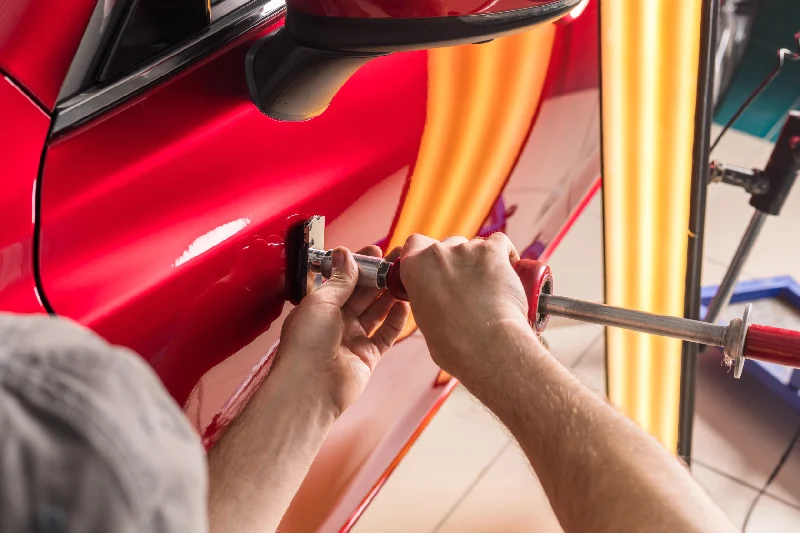
Paintless dent repair (PDR) works best on shallow, smooth dents where the paint is not cracked or chipped and a technician can reach the back of the panel. It usually won't work on dents with broken paint, sharp creases, stretched metal, damage on a panel edge, or most plastic bumpers. At Livingston Collision Inc, we look at the dent first and tell you plainly which repair method fits.
A shopping cart rolls into your door at the Livingston Mall. A summer storm drops hail on your car while it sits in a lot off Route 10. Someone swings their door open a little too hard at the train station. Most of these dents look worse than they are, and many can be fixed without paint, filler, or a long stay at the shop. Some can't, and paying for the wrong repair means the dent comes back or the finish fails later.
This guide covers how paintless dent repair works, which dents qualify, which ones need traditional car dent repair in Livingston, and what to expect for time and cost. If you are searching for paintless dent repair in Livingston, NJ, this is the information to have before you call any shop.
What is paintless dent repair?
Paintless dent repair is a way of reshaping a dented panel without sanding, body filler, or repainting. A trained technician works from behind the panel with metal rods and picks, or pulls the dent from the outside using glue tabs. The metal is moved back a little at a time until it matches the original contour. A special light or reflection board shows small high and low spots, so the surface ends up level.
Because the factory paint is never touched, there is no color matching, no overspray, and no drying time. Your car keeps its original finish. That helps with lease returns and resale, since buyers and dealers often check paint thickness to spot past body work.
When paintless dent repair works
PDR is usually a good fit when most of these are true:
- The paint is intact. There are no cracks, chips, or flaking in or around the dent.
- The dent is shallow and smooth. Think door dings, hail marks, and soft dents from a ball or a falling acorn.
- The size is small to medium. Coin-sized up to a few inches across is the sweet spot, though skilled techs can sometimes handle larger, softer dents.
- There is access. The technician can reach the back of the panel, or the spot works well for glue pulling.
- The metal is not stretched. The dent pushed the metal in without folding or thinning it.
- It sits on a flat or gently curved area. Doors, hoods, roofs, fenders, trunk lids, and quarter panels are common PDR spots.
Typical PDR jobs we see around Livingston include parking lot door dings, hail damage after summer storms, light creases from shopping carts or bikes, and small dents from branches and acorns in tree-lined neighborhoods.
When paintless dent repair doesn't work
Here are the cases where PDR alone is the wrong choice:
- Cracked or chipped paint. Once the paint is broken, bare metal is exposed. The area needs sanding, primer, and paint to stop rust, so traditional repair is required.
- Sharp creases and deep dents. A hard impact can stretch the metal. Stretched metal has more surface area than it started with, so pushing it back often leaves a high spot or a ripple.
- Panel edges and sharp body lines. Edges are often double-layer metal and hard to move. Dents on a crisp body line can sometimes be improved but may not come out perfect.
- Previous body work. Filler or a thick repaint can crack when the panel is pushed.
- Plastic bumpers and trim. Most bumper covers need a plastic repair and refinish instead of PDR.
- Some aluminum panels. Many newer trucks and luxury models use aluminum hoods, doors, or fenders. Aluminum is harder to reshape, so some dents can be fixed with PDR and others can't.
- No way to reach the back. Braces, double panels, or wiring can block the tools. Sometimes a tech can remove a tail light or interior trim to get in, and sometimes there is no safe path.
- Accident damage. If the dent came from a collision, there may be hidden damage to brackets, sensors, or structure. That calls for a full collision inspection.
A quick check you can do in your driveway
You can get a rough idea before you visit a shop:
- Look at the paint in bright light. Any crack or chip means PDR alone won't finish the job.
- Run your fingers lightly over the dent. A smooth, soft dip is a good sign. A sharp fold or line is a warning sign.
- Check the location. The middle of a door or hood is easier than an edge, a body line, or a spot near the roof rail.
- Try a fridge magnet. If it won't stick, the panel may be aluminum or plastic, which changes the options.
- Take two photos. Shoot one straight on and one at an angle so the reflection shows the shape. Send them to a shop for a first opinion.
Paintless dent repair vs traditional car dent repair
| Paintless dent repair | Traditional dent repair |
Paint | Original factory paint stays in place | Area is sanded, filled, primed, and painted |
Typical time | Often same day; a single ding can take an hour or two | Usually several days for filler, paint, and curing |
Cost | Usually lower for small dents | Higher, due to materials and paint labor |
Best for | Dings, hail, shallow dents with good paint | Broken paint, deep creases, stretched metal, collision damage |
Resale | No repaint for a buyer or dealer to find | A paint thickness gauge can detect the refinish |
Some repairs use both. A technician may use PDR to bring most of a dent out, then do a small, local paint repair on the damaged spot. This is often called push to paint, and it keeps the refinished area much smaller than a full panel repaint.
How long does paintless dent repair take?
A single door ding often takes an hour or two. Several dents on one car can usually be done the same day. Hail damage across a roof, hood, and trunk can take a few days, depending on how many dents there are and how big they are. Traditional car dent repair in Livingston takes longer because filler and paint need time to cure before the car goes back on the road.
How much does paintless dent repair cost?
Price depends on the size and depth of the dent, where it sits, how easy it is to reach, the panel material, and how many dents there are. A small ding usually costs much less than sanding and repainting the same panel. Hail repairs are often priced per panel based on dent count and size, which is how most insurance estimates are written. The only way to get a real number is to have the dent looked at, in person or through clear photos.
Share:
More in Business
View categorySmall Display Boxes: Types, Uses and Retail Design Tips
Explore small display boxes, from countertop trays to custom printed designs. Learn how to choose suitable materials, sizes and retail layouts for products.
READ ARTICLEThe Ultimate Guide to Custom Mailer Boxes
The right mailer box combines practical protection with clear brand presentation. Product size, board construction, inserts, and artwork all influence the finished package. Personalized mailer boxes can support these goals when their design reflects the product and shipping requirements.
READ ARTICLE