
Municipalities and commercial developers rarely operate in a static environment. A region planning for a population of 10,000 today might easily need to support 25,000 within a decade. If the initial infrastructure is rigid, accommodating that growth requires abandoning existing assets and executing a complete, highly expensive system redesign.
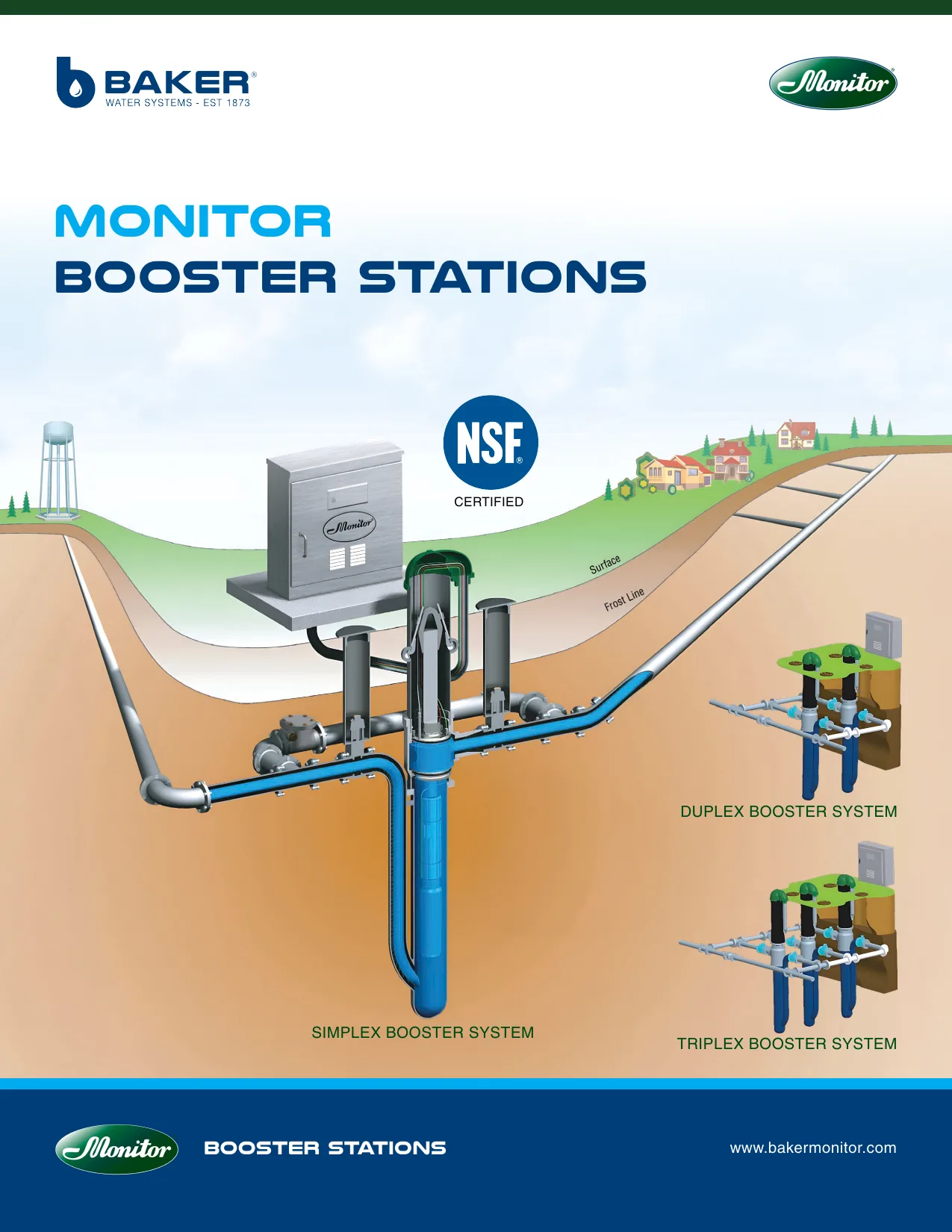
A core philosophy behind the Monitor Booster Station design is long-term elasticity. The structural capsule and internal manifold configurations are built with the foresight to accommodate larger pumps and higher-horsepower motors in the future.
Feature | Traditional Pump House | Monitor Booster Station |
|---|---|---|
Footprint Requirement | Large surface area required | Minimal / Zero surface footprint |
Weather Vulnerability | High (Requires active HVAC/Heating) | Extremely Low (Naturally insulated underground) |
Expansion Flexibility | Requires structural demolition/rebuilding | Drop-in upgrades for larger pumps |
Pressure Regulation | Often relies on cycling or pressure valves | Continuous, precise VFD modulation |
Initial Civil Cost | High (Foundation, walls, roofing, permits) | Low (Excavation and direct deployment) |
When local demand hits a critical threshold due to new sub-divisions, commercial expansion, or industrial zoning, water authorities do not need to tear out the station or excavate new lines. Instead, the existing pump can be pulled and replaced with a higher-capacity unit within the same footprint. This built-in modularity ensures that the capital invested today remains viable for decades, adapting seamlessly to the community's evolving hydraulic footprint.
Through the integration of space-saving underground engineering, precise VFD optimization, simplified asset maintenance, and clear scaling paths, Monitor Booster Stations deliver a highly dependable, smart infrastructure solution. They ensure that no matter how drastically water demands change, the system pressure remains rock-solid.
Share:
More in Technology
View category
How to Choose the Best Website & Mobile App Development Company for Your Business
Learn how to choose the best website and mobile app development company for your business to improve online presence, user experience, and business growth.
READ ARTICLE