
Share:

Insoya Plant: Characteristics, Growth, and Uses
Discover Insoya, its soybean connection, key characteristics, growing needs, common uses, and why correct plant identification matters.
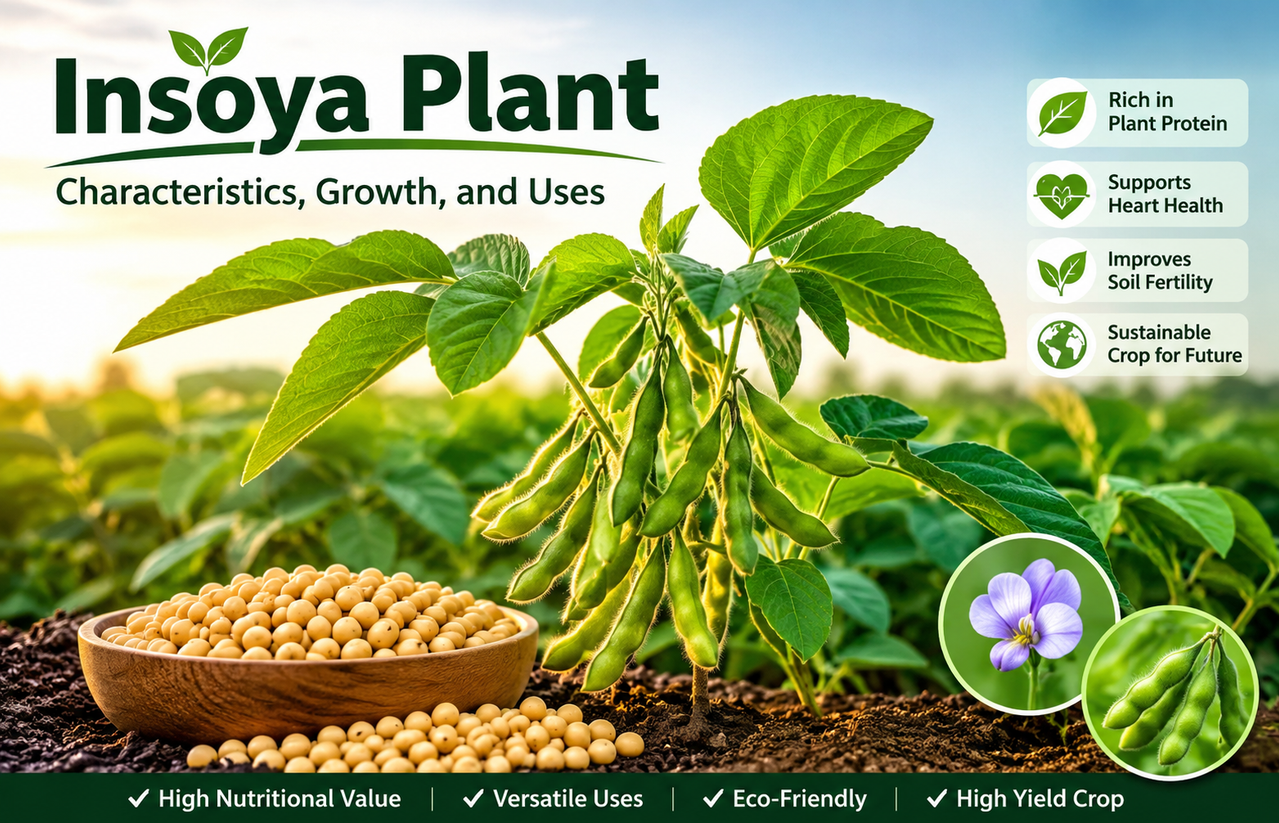
The name Insoya has started appearing in plant and food-related searches, but there is an important point to clear up first. Current public sources do not establish it as a separate, formally recognized plant species. The term is used online in several ways, often in connection with soy or soy-based products. For a plant-focused discussion, the closest well-documented reference is the soybean, known botanically as Glycine max. That distinction matters because reliable plant information should be based on an identified species rather than repeated online claims.
With that context, this article looks at Insoya through the soybean plant itself: what it looks like, how it grows, the conditions it prefers, and why the crop has so many practical uses.
What Does Insoya Look Like?
Soybean is an annual plant, so it completes its life cycle in one growing season. It usually has an upright, bushy form with several branches. Mature size can vary with the variety, climate, soil, and growing conditions.
The first young leaves look simple. Later leaves usually appear in groups of three. The plant also produces small white, pink, or purple flowers. After flowering, pods begin to form along the stems. Each pod commonly holds a small number of beans. USDA plant descriptions note the same bushy form, three-part leaves, small flowers, pods, and rounded seeds.
The roots are important too. Soybeans belong to the legume family. Their roots can form small nodules through a relationship with helpful soil bacteria. These bacteria help make nitrogen available to the plant.
How Insoya Grows
The growth cycle begins when a seed absorbs moisture and sprouts. The young shoot pushes through the soil while roots spread below. Once the first leaves open, the plant builds a stronger stem and more leaf growth.
Soybean development has two broad parts. The first is leafy growth. The second begins when flowers appear and continues through pod formation, seed filling, and maturity. University of Minnesota Extension describes these as vegetative and reproductive stages.
For home gardeners, it is easier to watch the visible changes. Seedlings and leaves come first. Then the plant gains height and branches. Flowers follow, and small pods form after flowering. The beans inside gradually become larger. Near maturity, the leaves yellow and drop while the pods dry and change color.
This sequence makes Insoya easier to understand without memorizing formal growth-stage labels.
Growing Conditions That Support Healthy Plants
Soybeans generally perform best in warm conditions and open areas with plenty of sunlight. They need soil that holds enough moisture for growth without staying waterlogged. Good drainage is important because roots need both moisture and air.
Planting depth also affects early growth. University of Minnesota Extension notes that soybean seeds generally emerge best when planted no deeper than about two inches. Seeds planted too deeply must use more stored energy to reach the surface.
Steady moisture becomes especially important as flowers and pods develop. Long dry periods can reduce growth and pod filling. At the same time, constantly soaked soil can cause problems. Aim for even moisture rather than extremes.
Different soybean varieties also respond differently to day length and local climate. A variety suited to one region may mature too early or too late in another. Locally recommended seed varieties are often a better choice.
The YourHomify community brings together home and garden readers who share practical ideas about plants, outdoor spaces, and everyday growing questions.
Common Uses of Insoya
The soybean crop is valuable because the harvested bean has many uses. Some beans are eaten more directly, while others are processed into food ingredients, cooking oil, or animal feed.
For human food, soybeans can become soy milk, tofu, tempeh, soy flour, and textured soy protein. Soybean oil is also widely used in cooking and prepared foods. The Food and Agriculture Organization describes both whole-bean foods and products made by separating soybeans into oil and meal.
After oil is removed, the remaining soybean material is rich in protein. Much of it is used as animal feed. USDA data also shows that soybean oil and meal are major outputs of soybean processing.
Share:
More in Uncategorized
View categoryDevoleena Bhattacharjee Biography 2026: Age, Height, Husband, Career and Net Worth
Discover Devoleena Bhattacharjee's biography, age, height, husband Shanwaz Shaikh, family, TV career, popular shows, and estimated net worth in 2026. Is this conversation helpful so far?
READ ARTICLEWhy Modern Businesses Partner with US Staffing Companies
Discover how a Staffing Company in USA helps businesses find skilled talent, adapt to workforce needs, and support long term growth.
READ ARTICLE