Share:
How to Improve Price Discovery for Illiquid Tokenized Real-World Assets
Learn how to improve price discovery for illiquid tokenized real-world assets using reliable valuation, liquidity, market makers, oracles, secondary markets, and transparent trading infrastructure.

Tokenizing a real-world asset does not automatically create a liquid market. A commercial property, private credit instrument, infrastructure project, or collectible may become represented by thousands of blockchain-based tokens, but investors can still struggle to determine what those tokens are actually worth.
This is where price discovery becomes critical.
For illiquid tokenized real-world assets (RWAs), price discovery depends on much more than putting tokens on a blockchain. It requires reliable valuation data, active buyers and sellers, transparent trading infrastructure, credible redemption mechanisms, market makers, and a clear connection between the token and its underlying asset.
The issue is becoming more important as the RWA market expands. CoinGecko reported that tokenized RWAs reached approximately $19.3 billion by the end of Q1 2026, more than tripling from the beginning of 2025. Tokenized Treasuries remained the largest segment, while tokenized commodities, stocks, and ETFs also expanded.
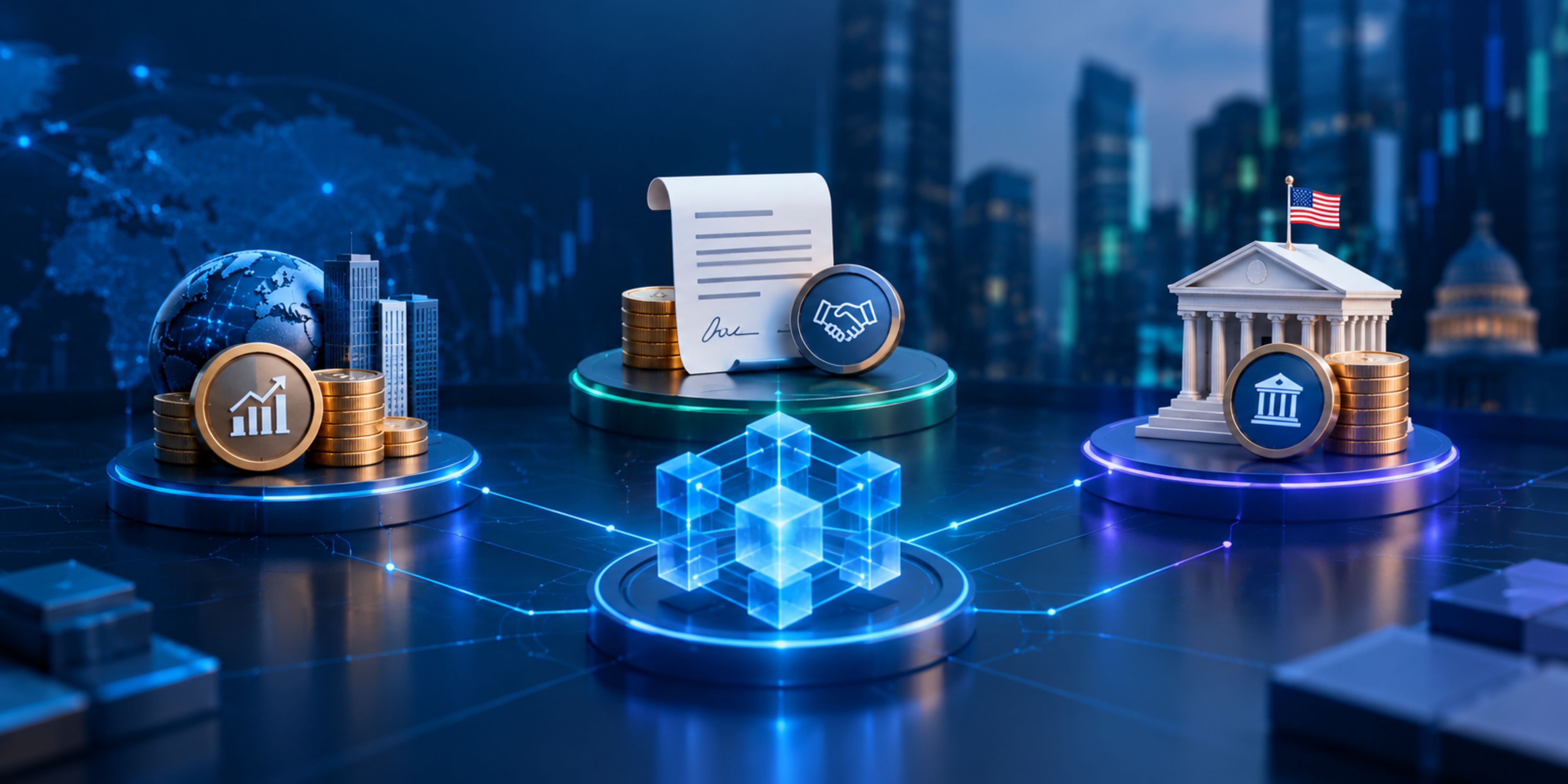
At the same time, recent tokenization initiatives show that secondary-market liquidity remains a major challenge. India's 2026 corporate-bond tokenization pilot, for example, has demonstrated primary issuance activity, while market participants identify secondary trading, liquidity, and price discovery as the next important tests.
So, how can platforms improve price discovery when the underlying asset itself does not trade frequently?
Why Price Discovery Is Difficult for Tokenized Illiquid Assets
Price discovery is the process through which buyers and sellers arrive at a market price based on available information, liquidity, and willingness to transact.
For a publicly traded stock, thousands or millions of transactions can continuously establish a reference price. An office building, private loan, renewable-energy project, or private-equity position works differently.
The underlying asset may be valued only periodically. Transactions may be negotiated privately. Comparable assets may be limited. Information may arrive with a delay.
Tokenization changes the ownership and transfer mechanism, but it does not eliminate these underlying constraints.
Research on RWA tokenization has highlighted this distinction: liquidity is not an inherent property of an asset; it has to be deliberately created through legal structures, market infrastructure, transfer mechanisms, and participating buyers and sellers.
A tokenized property could therefore have 100,000 tokens outstanding and still have poor price discovery if only a handful of investors trade them.
1. Establish a Reliable NAV and Valuation Framework
The first requirement is a credible reference value.
For an illiquid RWA, the platform should maintain a net asset value (NAV) or equivalent valuation methodology that reflects the underlying asset rather than simply relying on the last token trade.
For example, consider a tokenized commercial property:
- Property valuation: $50 million
- Outstanding tokens: 5 million
- Indicative NAV: $10 per token
- Recent token trade: $9.40
- New comparable-property valuation: $52 million
The $9.40 transaction should not automatically become the definitive "fair value." It may represent a small transaction in a thin market.
A robust platform can instead combine:
- Independent asset valuations
- Recent comparable transactions
- Income or cash-flow analysis
- Underlying asset performance
- Market transactions
- Redemption or liquidation value
- Current supply and demand
This creates a valuation reference against which market prices can be compared.
The connection between off-chain valuation and on-chain markets is especially important because RWA tokens derive their economic value from assets outside the blockchain. Pyth's RWA research similarly emphasizes the importance of continuously delivering reliable real-world price information on-chain.
2. Use Multiple Data Sources Instead of a Single Price Feed
A single valuation provider can become a single point of failure.
For assets such as gold or publicly traded securities, market data can be relatively frequent. For private real estate or private credit, however, valuation data may be sparse.
An RWA platform can improve price discovery by constructing a multi-source valuation layer.
For example, a tokenized real-estate platform could combine:
- Independent appraisal data
- Rental income
- Occupancy rates
- Comparable property sales
- Local property indices
- Interest-rate movements
- Property operating expenses
- Recent token transactions
The platform can then calculate an indicative price range rather than pretending that one exact number represents the asset's true value.
Oracle infrastructure becomes important here. Pyth's current infrastructure provides market data across asset classes, while its 2026 developments have increasingly focused on institutional-grade data distribution and broader price coverage.
For illiquid assets, however, an oracle should be treated as part of the valuation architecture—not as a substitute for independent asset valuation.
3. Build Real Secondary Markets, Not Just Token Transferability
One of the biggest mistakes in RWA tokenization is confusing transferability with liquidity.
A token may technically be transferable between wallets without having an active market.
For genuine price discovery, investors need somewhere to continuously express buy and sell interest.
That can include:
- Regulated secondary marketplaces
- Order-book exchanges
- Permissioned trading venues
- OTC trading desks
- Automated liquidity pools where legally appropriate
- Dealer and market-maker networks
An order book is particularly useful for price discovery because it exposes actual buy and sell intentions.
Suppose an RWA token has:
Price | Buy/Sell | Quantity |
$9.80 | Sell | 20,000 |
$9.70 | Sell | 15,000 |
$9.60 | Sell | 30,000 |
$9.50 | Buy | 25,000 |
$9.40 | Buy | 40,000 |
$9.30 | Buy | 35,000 |
The spread and depth provide substantially more information than simply displaying the last traded price.
Current RWA market infrastructure discussions increasingly focus on exactly this problem: market makers provide continuous quotes, while both on-chain and off-chain liquidity can contribute to tighter spreads and better execution.
4. Introduce Professional Market Makers
Illiquid markets often need designated liquidity providers.
A market maker can continuously quote bids and ask prices, absorbing temporary imbalances between buyers and sellers.
For an RWA token, however, market making is more complicated than simply placing algorithmic orders.
The market maker needs to understand:
- Underlying asset value
- Redemption mechanics
- Token supply
- Investor restrictions
- Transfer restrictions
- Settlement periods
- Hedging options
- Asset-specific risk
For example, if a tokenized gold asset trades at a significant premium to the underlying gold price, a market maker can potentially sell the token and hedge against movements in the underlying market.
For private real estate, the arbitrage mechanism is less straightforward. This makes reliable NAV calculations, redemption procedures, and professional liquidity providers even more important.
5. Connect Token Prices to Redemption and Creation
Price discovery becomes stronger when there is a credible mechanism connecting the token to its underlying value.
This is the same basic economic principle behind arbitrage.
If a token trades significantly below its realizable underlying value, an eligible investor may be able to buy the token and redeem it or otherwise capture the difference.
If it trades above underlying value, authorized participants may have an incentive to create additional tokens or sell existing holdings.
This creates a feedback mechanism between the primary asset and the secondary market.
However, redemption must be legally and operationally realistic. A token representing a fraction of a building cannot simply be redeemed for "1/100,000th of the building" every time an investor wants to exit.
Instead, the legal structure may provide redemption for cash, fund interests, distributions, or another defined claim.
The token's rights therefore need to be designed alongside its liquidity mechanism.
6. Standardize Token Structures and Investor Rights
Price discovery becomes difficult when investors cannot easily understand what different tokens represent.
A token should clearly specify:
- Economic ownership
- Income entitlement
- Voting rights
- Redemption rights
- Transfer restrictions
- Lock-up periods
- Seniority
- Default procedures
- Valuation methodology
- Corporate actions
This is particularly important as RWA markets become multi-chain and cross-platform.
Tokenization research emphasizes that the token is not merely a digital representation; its structure defines the rights available to investors and determines how those rights can be transferred.
Standardized token structures can therefore make comparable assets easier to evaluate and trade.
7. Combine On-Chain and Off-Chain Liquidity
An RWA platform does not necessarily need to choose between decentralized and traditional market infrastructure.
A hybrid model can be more practical.
For example:
On-chain layer → token ownership, settlement, compliance rules, transfer records
Market-data layer → NAV, reference prices, asset information
Exchange layer → order matching and execution
Off-chain layer → custodians, brokers, banks, asset managers, market makers
Settlement layer → fiat or tokenized cash
This approach can connect blockchain settlement efficiency with established financial-market liquidity.
It is particularly relevant because tokenized markets are becoming increasingly integrated with traditional financial institutions. Recent developments around tokenized equities and institutional trading infrastructure show major market operators exploring hybrid models rather than treating blockchain markets as completely separate systems.
8. Use AI for Liquidity and Valuation Monitoring
AI can add another layer to RWA price discovery—but it should support market infrastructure rather than replace it.
For example, an AI-powered monitoring system can detect:
- Abnormal price deviations from NAV
- Sudden spread widening
- Unusual trading volume
- Liquidity deterioration
- Conflicting valuation inputs
- Manipulative trading patterns
- Changes in underlying asset performance
For a tokenized private-credit portfolio, an AI model could monitor borrower financial data, repayment behavior, interest-rate changes, and comparable credit spreads to flag when the market price appears inconsistent with updated risk information.
This becomes particularly valuable for markets operating continuously while their underlying assets are evaluated less frequently.
9. Create Transparent Market-Quality Metrics
Displaying only the token price does not tell investors whether the market is healthy.
RWA platforms should expose metrics such as:
- Bid-ask spread
- Order-book depth
- 24-hour trading volume
- Volume-weighted average price
- NAV premium/discount
- Number of active buyers and sellers
- Price deviation from NAV
- Redemption volume
- Market-maker participation
- Liquidity concentration
For example, a token trading at $10 may appear stable. But if only $5,000 worth can be sold near $10 while a $500,000 sell order pushes the price to $8.50, the displayed price is misleading.
Depth matters as much as the last transaction.
10. Connect RWA Markets With Broader Trading Infrastructure
The final piece is distribution.
An RWA token listed on an isolated marketplace may struggle to develop sufficient trading activity. Integrating with compliant exchanges, institutional trading platforms, liquidity providers, custodians, and settlement networks can expand the participant base.
This is where cryptocurrency exchange development can intersect with RWA infrastructure.
A modern exchange architecture can support permissioned listings, investor eligibility checks, multi-asset order books, real-time market data, custody integrations, and automated settlement while maintaining the compliance requirements applicable to tokenized securities.
For developers building these systems, the objective should not simply be "list the token." The objective should be to create an ecosystem in which reliable information, executable liquidity, and legally enforceable ownership rights reinforce one another.
What the Next Generation of RWA Platforms Should Prioritize
The RWA market is moving beyond the initial question of whether an asset can be tokenized.
The more difficult question is whether the resulting token can support a functioning market.
Current market growth illustrates the transition. Tokenized RWAs reached $19.3 billion by Q1 2026, while tokenized gold and tokenized equities generated substantial trading activity during the quarter. Meanwhile, institutional market-data infrastructure is expanding toward broader coverage, lower latency, and programmatic access.
For genuinely illiquid assets, the winning architecture will therefore need to combine accurate valuation + reliable oracles + active market makers + regulated secondary markets + redemption mechanisms + transparent market metrics.
This is the core opportunity for companies offering Asset Tokenization Development Services. Instead of treating tokenization as a smart-contract deployment exercise, development should encompass the entire market lifecycle—from legal asset representation and valuation data to trading, liquidity, compliance, and settlement.
Conclusion
Tokenization can make an illiquid asset digitally transferable, divisible, and easier to access. But those capabilities alone do not guarantee meaningful price discovery.
For a tokenized private-credit portfolio, commercial property, infrastructure project, or other illiquid RWA, market quality depends on whether investors have enough reliable information and sufficient liquidity to establish a credible price.
The most effective platforms will connect off-chain asset fundamentals with on-chain market activity. They will use independent valuation data, real-time market feeds, professional market makers, transparent order books, redemption mechanisms, and compliant secondary markets to create a continuous feedback loop between the token and its underlying asset.
As RWA markets mature, price discovery—not token issuance alone—will become one of the defining measures of whether tokenization has created a functioning financial market.
For businesses developing institutional RWA infrastructure, Debut Infotech can help translate these requirements into blockchain-based tokenization, trading, liquidity, and market-data systems designed around the specific characteristics of the underlying asset.
Share:
More in Technology
View categorySmart Lock Installation in Perth: A Complete Homeowner Guide
Good smart lock installation starts with the door, not the gadget. Measure the backset, check the bore hole,
READ ARTICLESnaptroid Review: A Practical Look at the Snapchat Story Viewer and Downloader
[Snaptroid](https://trysnaptroid.com/) is a third-party Snapchat story viewer and downloader designed to help users browse publicly available Snapchat stories and save photos or videos without logging into a Snapchat account. It is mainly built for Android, with additional options for iOS and PC users.
READ ARTICLEHow AI Is Transforming Digital Lending and Debt Collection in Australia
Explore how AI-powered digital lending and debt collection software is transforming loan management, recovery, automation, and lending operations in Australia.
READ ARTICLENight Vision CCTV Cameras in Pakistan: What to Know
Before you check night vision cctv camera prices in Pakistan, understand IR range, full-color night vision, and what actually matters after dark.
READ ARTICLE