
Share:

How to Choose the Right Ceiling Fan Size for Your Room
Choosing the right ceiling fan size is an important step in creating a comfortable and well-designed room. A properly sized fan can help improve air circulation, support everyday comfort, and complement the room's interior style. However, selecting a ceiling fan involves more than choosing a design or color.
Choosing the right ceiling fan size is an important step in creating a comfortable and well-designed room. A properly sized fan can help improve air circulation, support everyday comfort, and complement the room's interior style. However, selecting a ceiling fan involves more than choosing a design or color. Room dimensions, ceiling height, blade span, airflow, and installation requirements all play an important role. Today, ceiling fans are available in many sizes, styles, and designs. Some are made for small bedrooms, while others are designed for large living rooms, dining areas, and open spaces. Hunter ceiling fans are one example of a product range homeowners may compare when reviewing different fan sizes and features.
Lighting is another important part of room planning. A ceiling fan with an integrated light can provide general illumination, while a track light system can direct light toward specific areas. Understanding how these fixtures work together can help create a balanced and functional room. This guide explains how to measure your room, choose a suitable fan size, understand airflow, and consider ceiling height, lighting, and other important details before making a decision.
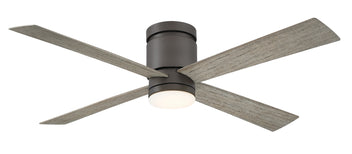
Why Choosing the Right Ceiling Fan Size Matters
The size of a ceiling fan affects how air moves around a room. A fan that matches the room's dimensions can help distribute airflow more evenly and support everyday comfort. This is why measuring the room before selecting a fan is an important first step.
A fan's blade span should be suitable for the available space. A smaller fan may be appropriate for a compact room, while a larger room may require a wider blade span or more than one fan. The goal is to select a fan that provides suitable airflow without taking up too much visual or physical space.
The correct size also helps maintain a balanced interior design. A fan should look proportionate to the room, furniture, and ceiling. When comparing different ceiling fans, consider both their measurements and their recommended room coverage.
Understand Ceiling Fan Blade Span
Blade span is one of the most important measurements when choosing a ceiling fan. It refers to the diameter of the circular area covered by the rotating blades. For example, a fan with a 52-inch blade span covers a wider area than a fan with a 36-inch blade span.
Manufacturers usually provide blade span information in product specifications. This measurement helps buyers understand how much ceiling space a fan will occupy and whether it is suitable for a particular room.
When comparing Hunter ceiling fans or other models, check the listed blade span rather than judging the fan by its appearance in product photos. A fan may look compact in an image but have a wider blade span than expected. Measuring the available ceiling space can help you make a more suitable choice.
Measure Your Room Before Choosing a Fan
Measuring the room is a simple way to identify the right fan size. Start by measuring the room's length and width. Multiply these measurements to calculate the total floor area.
For example, if a bedroom is 12 feet long and 12 feet wide, its total area is 144 square feet. This measurement gives you a starting point for comparing ceiling fan sizes.
It is also useful to consider the room's shape. A long rectangular room may need a different airflow arrangement from a square room with the same floor area. Furniture placement, walls, and other objects can also affect how air moves. Accurate measurements make it easier to compare ceiling fans and select a model that suits the available space.
Ceiling Fan Size Guide Based on Room Dimensions
Different room sizes generally require different fan blade spans. The following measurements are common starting points for residential rooms, although the manufacturer's recommendations should always be checked before purchasing.
For a small room of up to 75 square feet, a fan with a blade span of around 29 to 36 inches may be suitable. These sizes can work in compact bedrooms, small offices, and similar spaces where a wide fan is not required.
For rooms measuring approximately 76 to 144 square feet, a fan with a blade span of around 36 to 42 inches may be considered. Medium-sized bedrooms and home offices often fall within this range. Rooms between approximately 144 and 225 square feet may need a fan with a blade span of around 44 to 50 inches. Larger living rooms or open spaces measuring approximately 225 to 400 square feet may require a fan with a blade span of 50 to 54 inches or more. These are general guidelines, so the room's shape, ceiling height, and the fan's airflow rating should also be considered.
Choosing the Right Size for Small Bedrooms
Small bedrooms need a fan that provides suitable airflow while leaving enough space around the blades. A compact fan can help maintain a comfortable environment without making the ceiling look crowded.
Before choosing a fan, measure the bedroom and check the distance between the fan location, walls, wardrobes, and other tall furniture. This is particularly important when the room has limited ceiling space or a large wardrobe near the installation area.
Share:
More in Business
View categoryCustom Embroidered Patches, Custom PVC Patches, and Sublimated Patches
Custom patches are an effective way to showcase creativity, build brand recognition, and give clothing and accessories a distinctive appearance.
READ ARTICLEHow Assignment Help Supports Students in Managing Academic Challenges
Discover how Assignment Help supports students with academic challenges, complex subjects, research, writing skills, and university deadlines.
READ ARTICLEComplete Guide to GAMCA Medical Appointment and Registration Process in Pakistan
We are GAMCA Medical Pakistan, Get your GAMCA Appointment Token Slip for travel all GCC countries, including United Arab Emirates (UAE), Dubai, Saudi Arabia, Oman, Bahrain, Yemen, and Kuwait.
READ ARTICLE