Share:

How to Build an Intent-Based DEX Aggregator With Solver and Filler Networks
DEX aggregation is moving beyond conventional smart-order routing. Instead of asking users to approve a token, select a route, pay gas, and execute a swap themselves, newer trading architectures let users sign an intent describing the outcome they want while external solvers and fillers compete to execute it.
This shift is visible in protocols such as CoW Protocol and UniswapX, where execution is separated from the user's transaction flow. UniswapX, for example, uses signed orders and competitive fillers to source liquidity from AMMs and private inventory, while CoW Protocol uses batch auctions and solver competition to find execution paths.
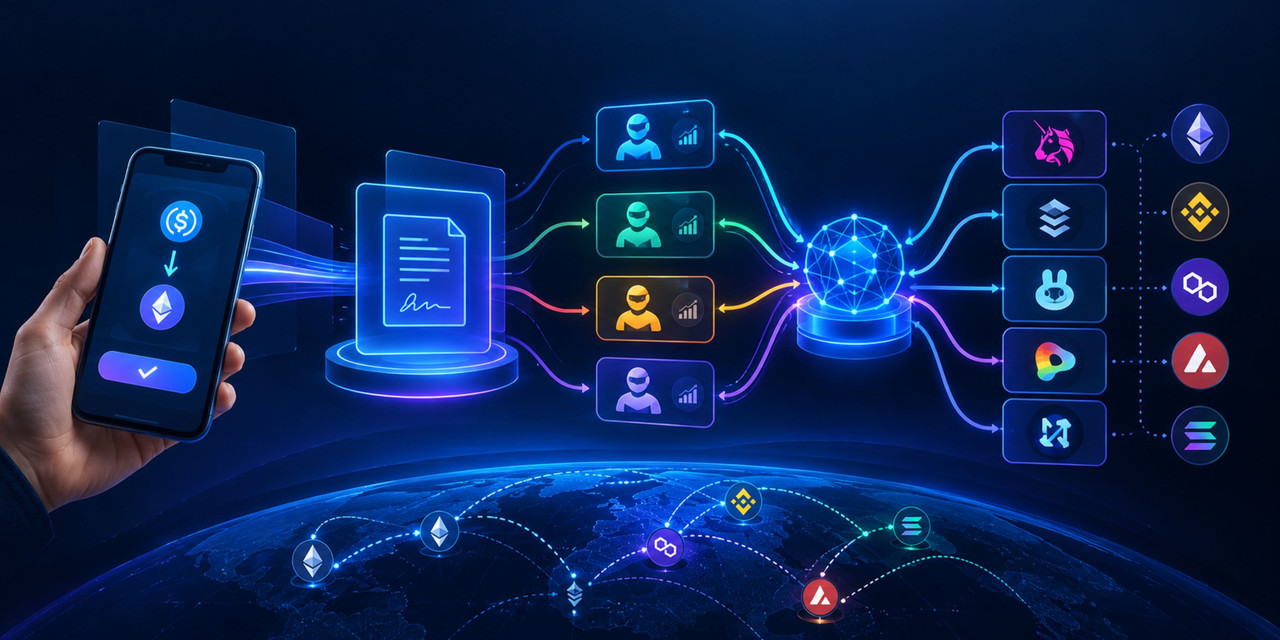
For businesses evaluating a DEX Aggregator Development Company, this creates a fundamentally different architecture: the aggregator is no longer simply a routing engine. It becomes an intent auction, solver coordination, liquidity discovery, settlement, and MEV-management system.
What Is an Intent-Based DEX Aggregator?
A conventional DEX aggregator calculates a route such as:
USDC → Uniswap V3 → ETH
The user receives a transaction containing that route and submits it on-chain.
An intent-based aggregator changes the model to:
“Sell 10,000 USDC and receive at least 5.1 ETH before the deadline.”
The user signs the desired outcome rather than specifying how the swap should happen.
The protocol then distributes that intent to competing solvers or fillers. They determine whether the order should be executed against an AMM, another DEX, private inventory, an RFQ market maker, or even another user's opposing order.
Share:
More in Technology
View category87 Best Places to Buy Online KYC Verified Services
📍Telegram : Abusmms 📍Whatsapp : +1 (312) 533-8937 📍Email : abusmmteam@gmail.com 📍Facebook Page : Abusmm 📍Signal : +1 (682) 474-9468
READ ARTICLEElectric vs Gas Dirt Bikes: Where Does the Storm Bee Fit Into the Future of Off-Road Riding?
This article compares electric and gas-powered dirt bikes, highlighting the Storm Bee’s instant power, lower maintenance, quieter operation, and modern off-road capabilities while exploring how e moto technology is shaping the future of trail riding.
READ ARTICLEHow Low-Code and No-Code Improve IT and Business Collaboration
Low-code collaboration brings IT and business teams together to build applications faster, reduce development bottlenecks, and improve innovation.
READ ARTICLE