Share:

How Pharmacode Detects Packaging Line Errors in Real Time
Pharmacode uses simple binary bar width logic for lightning-fast, reliable verification on high-speed pharma packaging lines, preventing errors and costly recalls in real-time.
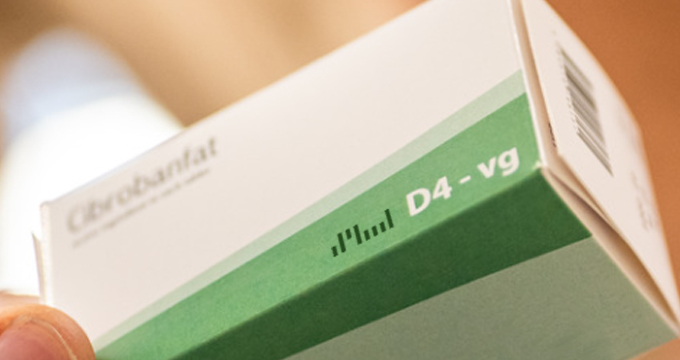
Pharmaceutical packaging lines must ensure that every blister, carton, and leaflet matches its batch at high speeds, often exceeding several hundred units per minute. A single misfeed, incorrect insert, or mismatched carton can result in costly recalls or regulatory issues. Pharmacode addresses this challenge by enabling machines to confirm, within milliseconds, that each component is correctly placed. Unlike consumer barcodes that store detailed product data, Pharmacode is designed solely for rapid, reliable verification. Its bar and space width logic is the reason it remains the standard for real-time checks on high-speed packaging lines.
Key Takeaways
- Pharmacode encodes a single numeric value using only the relative widths of bars and spaces, not absolute measurements, which makes it resilient to print variation and high line speeds.
- The code has no built-in checksum, so reliability comes from strict structural rules that a reader validates during decoding.
- Detection logic relies on measuring width ratios between adjacent elements rather than fixed pixel or millimeter values.
- Pharmacode verification typically works alongside vision systems and a barcode reader SDK integrated into the line’s control software.
- Most packaging line rejects trace back to a handful of recurring error types, each with a distinct detection signature.
What Pharmacode Is and Why Packaging Lines Rely on It
Before looking at the detection logic, it helps to understand what Pharmacode actually represents on a carton or blister. Pharmacode, sometimes called Pharma Code or One-Track Pharmacode, is a one-dimensional symbology that encodes a single integer rather than a string of alphanumeric data. It was developed specifically for pharmaceutical packaging, where the goal is not to store product information in the code itself but to mechanically confirm that a specific component belongs to a specific batch.
Pharmacode’s focused purpose makes it highly effective for line-side verification. Packaging lines require a simple, immediate answer: does this carton match this blister? Because Pharmacode is designed for this specific task, its structure is simpler and faster to decode than general-purpose symbologies. This efficiency makes it well-suited for automated quality control software rather than manual scanning.
The Bar and Space Width Logic Behind Real-Time Detection
The core of Pharmacode’s reliability lies in how it represents numbers using only two bar widths and the spaces between them.
Binary Width Encoding, Not Data Encoding
Each Pharmacode symbol is made up of bars that are either narrow or wide, with spaces following the same two-width logic. When read in sequence, these widths form a binary number, which is then converted to the decimal value shown or referenced on the packaging. There are no alphanumeric characters, lookup tables, or variable-length data fields. This streamlined structure enables rapid processing by the reader.
Relative Measurement Over Absolute Precision
Pharmacode’s suitability for high-speed lines comes from its reliance on relative, not absolute, bar widths. The scanner only needs to determine if a bar is wider or narrower than its neighbor, not measure exact dimensions. This ratio-based method ensures readability even with minor print variations, ink spread, or slight distortions. The design prioritizes robustness over data richness, which is essential for fast-paced packaging lines.
Why This Logic Works at High Line Speeds
Blister and carton lines operate at speeds where scanners have only milliseconds to validate each code. Since Pharmacode lacks a checksum digit, error resistance relies on strict rules for bar counts and sequence structure. The reader recognizes valid symbols, and any deviation—such as smudged print, torn labels, or misfeeds—is immediately flagged by the system.
For this reason, Pharmacode integration typically uses a dedicated barcode reader SDK instead of a generic scanning library. A specialized SDK applies width-ratio decoding consistently across different cameras, lighting conditions, and line speeds, which is more important for line uptime than any single hardware component.
Common Error Types Pharmacode Verification Catches
Most packaging line rejects fall into a few common categories, and Pharmacode’s width-based logic is designed to detect each type distinctly.
Error Type | What Happens on the Line | How Width Logic Detects It |
Mismatched batch | Carton and blister carry different Pharmacode values | Decoded integers are compared and flagged when they do not match |
Missing component | A leaflet or blister is absent entirely | No valid bar sequence is present, triggering an immediate no-read reject |
Print quality failure | Ink smearing or low contrast distorts bar edges | Width ratios fall outside acceptable tolerance, producing an invalid decode |
Partial or torn code | Physical damage removes part of the symbol | Bar count or sequence structure fails validation rules |
Wrong orientation | Component is fed upside down or reversed | Start and stop pattern does not match expected structure |
Each failure mode creates a unique signature during decoding, allowing real-time verification to distinguish genuine batch mismatches from simple print defects, rather than treating all failed reads identically.
Integrating Verification Into the Packaging Line
Error detection is effective only if the line can respond immediately, so Pharmacode verification is rarely used in isolation.
Share:
More in Business
View categoryMost 27 Platforms to Buy Old Yahoo Accounts Safely
💡🤝 Need more details? We’re here 24 hours — Just reach out! 🌏🗣🔥👉➤Telegram: @getpvasmm 🌏🗣🔥👉➤Discord:getpvasmm 🌏🗣🔥👉➤WhatsApp: + 1 (830) 739-8217 🌏🗣🔥👉➤Telegram: @getpvasmm
READ ARTICLE12 Best Sites to Buy LinkedIn Accounts
💡🤝 Need more details? We’re here 24 hours — Just reach out! 🌏🗣🔥👉➤Telegram: @getpvasmm 🌏🗣🔥👉➤Discord:getpvasmm 🌏🗣🔥👉➤WhatsApp: + 1 (830) 739-8217 🌏🗣🔥👉➤Telegram: @getpvasmm
READ ARTICLEThe 1.9 Sites Guide to Buying Old Twitter Accounts ... ..
💡🤝 Need more details? We’re here 24 hours — Just reach out! 🌏🗣🔥👉➤Telegram: @getpvasmm 🌏🗣🔥👉➤Discord:getpvasmm 🌏🗣🔥👉➤WhatsApp: + 1 (830) 739-8217 🌏🗣🔥👉➤Telegram: @getpvasmm
READ ARTICLEBest Marketplaces to Buy Aged Facebook Accounts
💡🤝 Need more details? We’re here 24 hours — Just reach out! 🌏🗣🔥👉➤Telegram: @getpvasmm 🌏🗣🔥👉➤Discord:getpvasmm 🌏🗣🔥👉➤WhatsApp: + 1 (830) 739-8217 🌏🗣🔥👉➤Telegram: @getpvasmm
READ ARTICLE