
Share:

How Integrated Security Systems Improve Safety in Modern Commercial Buildings
Discover how integrated security systems improve commercial building safety with CCTV, access control, fire alarms, intercoms, and centralized monitoring.
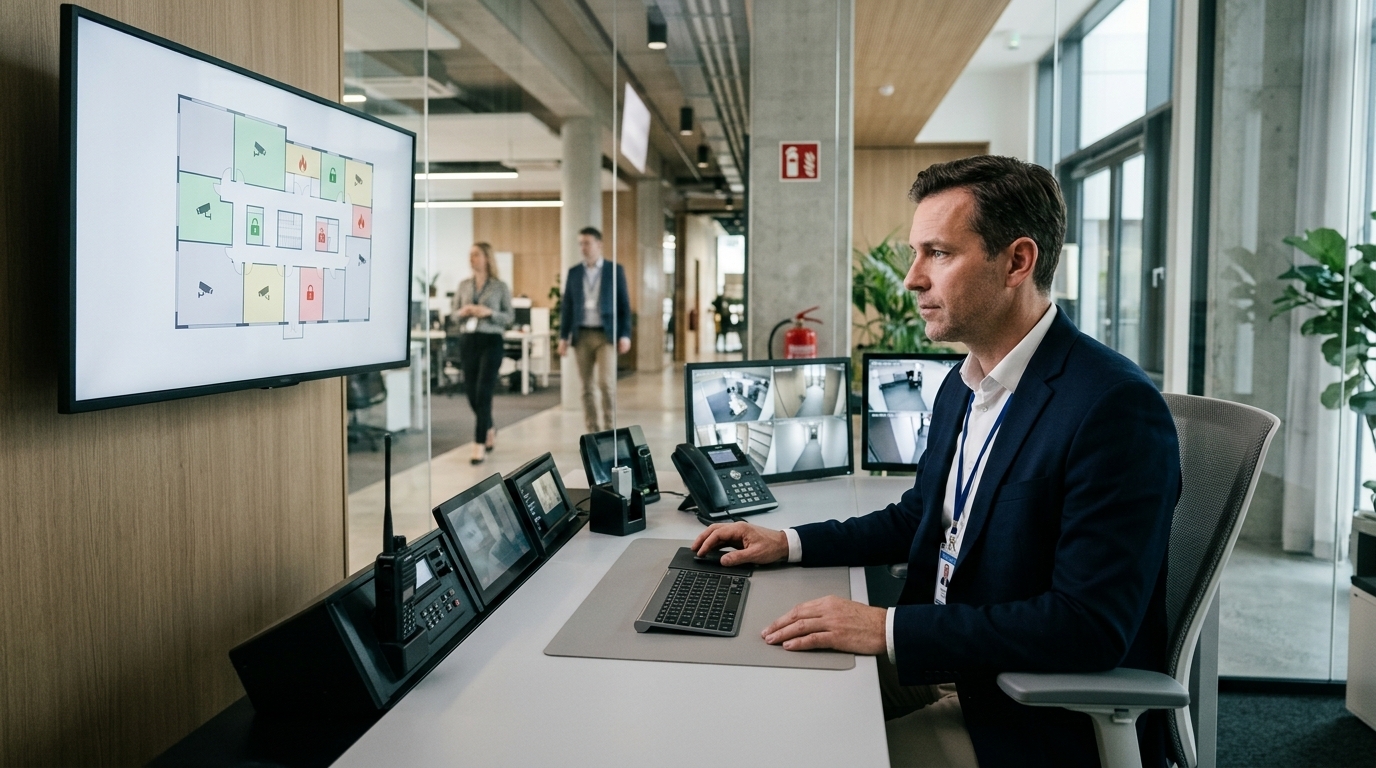
Commercial buildings face a wide range of safety and security challenges every day. From unauthorized entry and theft to fire emergencies and restricted-area access, businesses need reliable systems that can protect people, property, and operations.
Traditional security setups often rely on separate technologies that operate independently. A building may have CCTV cameras for surveillance, access control for entry management, fire alarms for emergencies, and intrusion alarms for detecting unauthorized activity. While each system has an important role, managing them separately can make it harder to respond quickly when an incident occurs.
An integrated security approach connects these technologies so they can work together more effectively. For modern commercial properties, this can create a more coordinated and manageable security environment.
What Is an Integrated Security System?
An integrated security system connects multiple security and safety technologies through shared infrastructure, communication, or centralized management.
Depending on the building's requirements, an integrated solution may include:
- Fire alarm systems
- CCTV security cameras
- Access control systems
- Intrusion detection
- Video intercom systems
- Security door locks
- Automatic door operators
- Low-voltage cabling and networking
The objective is not simply to install more security equipment. Instead, integration allows different systems to exchange information and support coordinated responses.
For example, when an alarm is triggered, security personnel may be able to view relevant camera footage while also checking access activity in the affected area. This provides more context than relying on an individual alarm notification.
Why Commercial Buildings Need Connected Security
Modern commercial properties can have multiple entrances, employee areas, storage rooms, parking facilities, server rooms, and other sensitive locations. Monitoring all these areas can become difficult when systems operate independently. Commercial intercom systems can further strengthen communication by helping staff manage visitor access and communicate between key areas of the property.
An integrated approach provides a broader view of what is happening throughout the property. Instead of checking multiple systems separately, building managers can coordinate information from cameras, access points, alarms, commercial intercom systems, and other devices. This can reduce confusion during an incident and help security teams make informed decisions more quickly.
1. Faster Response to Security Events
Response time is one of the most important factors in commercial security.
When different systems can communicate, an event detected by one device can provide useful information through another. For instance, an intrusion alarm can be paired with nearby CCTV cameras so personnel can verify what is happening in the area.
This helps reduce the uncertainty that can occur when an alarm is received without supporting information.
2. Better Access Control
Access control systems help businesses determine who can enter specific areas and when they are permitted to enter.
In a commercial building, not every employee, visitor, contractor, or delivery person needs access to every location. Access control can help restrict sensitive areas while maintaining convenient entry for authorized users.
When access control works alongside video surveillance, businesses can gain additional visibility into entry activity. This combination can be especially useful for offices, warehouses, healthcare facilities, educational buildings, and other properties with controlled areas.
3. Improved Video Surveillance
CCTV cameras provide valuable visual information, but their effectiveness can increase when they are connected with other security technologies.
Share:
More in Business
View category11 Best Websites to Buy Yelp Accounts – Reliable Options for Businesses and Marketers
Looking to buy Yelp accounts? Purchase aged, trusted Yelp profiles instantly. Perfect for businesses wanting more reviews and better search rankings. Safe & reliable service. https://buymailaccounts.com/service/buy-yelp-accounts/
READ ARTICLE11 Best Websites to Buy LinkedIn Accounts – Secure, Aged & Ready-to-Use Profiles
Looking to Buy LinkedIn Accounts? Premium, high-quality accounts available with authentic activity. Fast delivery & 24/7 support. Start scaling now! https://buymailaccounts.com/service/buy-linkedin-accounts
READ ARTICLE11 Best Websites to Buy Aged GitHub Accounts – Secure, Verified Profiles with Real History
Looking to buy aged GitHub accounts? Get fully aged, active GitHub profiles with commits, stars & contributions. Fast, secure delivery and best prices available now. https://buymailaccounts.com/service/buy-aged-github-accounts
READ ARTICLE11 Best Websites to Buy Old GitHub Accounts – Reliable Aged Profiles for Developers & Marketers
Looking to buy old GitHub accounts? Choose premium aged accounts with real activity. Cheap prices, fast delivery & 100% safe. Buy today and boost your projects! https://buymailaccounts.com/service/buy-old-github-accounts
READ ARTICLE