Share:

Gokyo Lakes Trek: An Alternative to Everest Base Camp
The Gokyo Lakes Trek is a stunning alternative to Everest Base Camp, taking trekkers through the heart of Nepal’s Khumbu region to a series of breathtaking turquoise glacial lakes. With fewer crowds, spectacular Himalayan scenery, and panoramic views of Everest, Lhotse, Makalu, and Cho Oyu from Gokyo Ri, this 10–12 day trek offers an unforgettable high-altitude adventure for those seeking both beauty and tranquility in the Himalayas.
Key Takeaways
- A quieter alternative – The Gokyo Lakes Trek offers the same incredible Khumbu scenery as Everest Base Camp but with significantly fewer crowds along the trail and at teahouses.
- Unmatched mountain views – From Gokyo Ri, trekkers can see four of the world's highest peaks—Everest, Lhotse, Makalu, and Cho Oyu—from a single viewpoint, plus stunning turquoise glacial lakes not found on the EBC route.
- Slightly shorter and similarly challenging – At 10–12 days with a max altitude of about 5,357 meters, it's a bit shorter than Everest Base Camp but requires the same level of fitness and careful acclimatization.
- Can be combined with Everest Base Camp – Adventurous trekkers can link both routes via the Cho La Pass, experiencing the best of both treks in one extended trip.
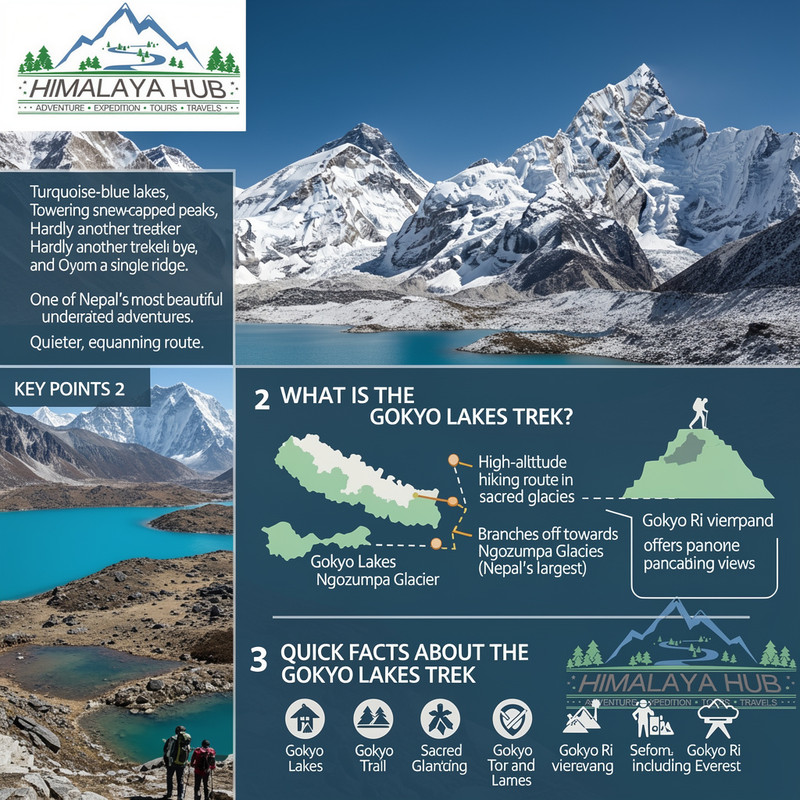
Picture turquoise-blue lakes sitting beneath towering snow-capped peaks, with hardly another trekker in sight. Now picture that same mountain panorama including Everest, Lhotse, Makalu, and Cho Oyu, four of the world's highest peaks all visible from a single ridge. That's the magic waiting for you on the Gokyo Lakes Trek, one of Nepal's most beautiful yet underrated adventures.
Nepal's Khumbu region is best known for the famous Everest Base Camp Trek, but it's also home to a quieter, equally stunning route that many travelers don't know about. If you're looking for incredible Himalayan views, sacred glacial lakes, and a slightly less crowded trail, the Gokyo Lakes Trek might be exactly what you're searching for and it makes a wonderful alternative to Everest Base Camp.
In this article, we'll explore everything you need to know about the Gokyo Lakes Trek, including what makes it special, how it compares to Everest Base Camp, and how to plan your own journey to this hidden Himalayan gem.
What Is the Gokyo Lakes Trek?
The Gokyo Lakes Trek is a high-altitude hiking route in the Khumbu region of Nepal, leading to a series of sacred glacial lakes near the village of Gokyo. The trek follows a similar starting path to the Everest Base Camp Trek but branches off toward the Ngozumpa Glacier, Nepal's largest glacier, and the stunning Gokyo Lakes.
From Gokyo Ri, a viewpoint above the lakes, trekkers are rewarded with one of the best panoramic mountain views in all of Nepal, including close-up sights of Mount Everest itself.
Quick Facts About the Gokyo Lakes Trek
- Location: Khumbu region, northeastern Nepal
- Duration: Usually 10 to 12 days (round trip)
- Difficulty: Moderate to challenging good for fit beginners and experienced trekkers
- Max altitude: Around 5,357 meters (17,575 feet) at Gokyo Ri
- Starting point: Lukla, reached by flight from Kathmandu
- Best season: March to May and September to November
Share:
More in Travel
View category21safe-trusted-places-to-buy-verified-alipay-accounts
📍Telegram : Abusmms 📍Whatsapp : +1 (312) 533-8937 📍Email : abusmmteam@gmail.com 📍Facebook Page : Abusmm 📍Signal : +1 (682) 474-9468
READ ARTICLELa Bhutanz Tours: Discover Personalised Bhutan Tour Packages from Mumbai
Bhutan is a remarkable Himalayan destination known for its peaceful atmosphere, breathtaking mountain landscapes, ancient monasteries, colourful festivals, and rich Buddhist heritage. For travellers looking to escape busy city life and experience a different way of travelling, Bhutan offers a beautiful combination of culture, nature, spirituality, and adventure.
READ ARTICLEVillas in Tadoba for a Relaxing Wildlife Stay
Whether you are planning a wildlife adventure with friends or a peaceful break with family, make time to enjoy both the forest and the stay itself. Plan your Tadoba getaway and book your stay at WelcomHeritage Tadoba Vanya Villas Resort & Spa for a holiday that brings together nature, comfort and the excitement of the wild.
READ ARTICLEIndia’s Finest: Luxury Holidays Through Royal Palaces, Wild Jungles & Golden Deserts
Discover Luxury India holidays featuring royal palaces, thrilling wildlife safaris, golden deserts, and unforgettable experiences with Indian Odyssey.
READ ARTICLE