
Business
2
Using a Lump Sum Payment to Pay Off Debt
See how a lump sum payment can help eliminate high interest debt faster than waiting for scheduled payments.
READ ARTICLELearn how to protect company data with AI-powered security, prevent phishing attacks, ensure data privacy, and maintain data sovereignty. Discover secure business email solutions and on-premises deployment with XgenPlus.
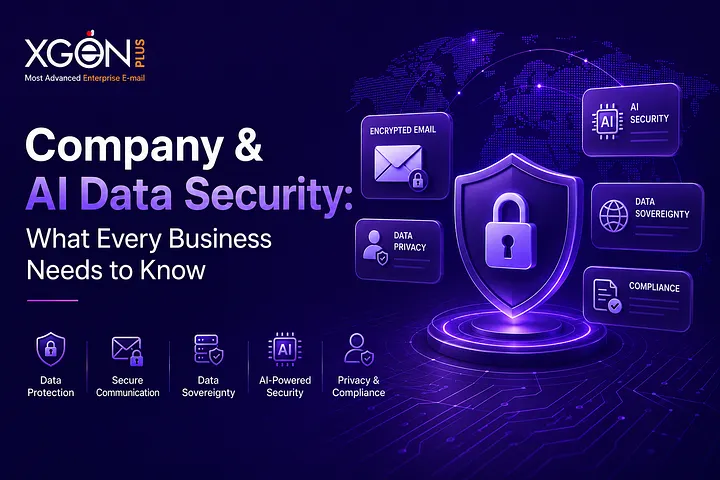
AI can significantly improve business productivity, but it also introduces new security risks if implemented without proper safeguards. Organizations should adopt AI solutions that protect sensitive information, comply with regulations, prevent phishing attacks, and offer flexible deployment options such as cloud, hybrid, or on-premises environments.
Artificial Intelligence has become a competitive advantage for organizations across every industry. Businesses now use AI for customer support, email management, document creation, analytics, cybersecurity, and workflow automation.
However, every AI interaction potentially involves valuable organizational data:
If this information is processed without adequate security controls, organizations may face:
The future belongs to organizations that combine AI innovation with enterprise-grade security.
Modern businesses generate massive volumes of sensitive digital information. As AI systems process this data, organizations must ensure confidentiality, integrity, availability, and regulatory compliance through secure infrastructure, strong access controls, encryption, and governance.
Company data security refers to the technologies, policies, and practices used to protect business information from unauthorized access, theft, misuse, alteration, or destruction.
It includes protecting:
For example, an AI-powered email assistant that automatically drafts responses should never expose confidential client information to unauthorized systems or external AI models without appropriate safeguards.
AI adoption should strengthen business operations, not create new attack surfaces.
AI enhances productivity through automation and intelligent assistance, but it also creates new security considerations. Organizations must balance innovation with governance by controlling how AI accesses, processes, stores, and shares sensitive business information.
AI is helping organizations:
At the same time, organizations must evaluate:
A finance department using AI to summarize confidential contracts must ensure those documents remain protected throughout processing and are not retained or reused in ways that violate organizational policies.
Responsible AI begins with responsible data governance.
The biggest AI security risks include data leakage, phishing attacks, unauthorized access, shadow AI usage, compliance failures, and insufficient visibility into how sensitive information is processed. Understanding these risks is essential before deploying AI at scale.
Employees may unintentionally upload confidential business information into public AI tools.
Examples include:
Create clear AI usage policies and deploy enterprise-approved AI platforms.
AI enables cybercriminals to generate highly convincing phishing emails, fake invoices, and impersonation attempts.
Modern phishing campaigns often include:
Combine AI-powered threat detection with employee awareness training and secure business email platforms.
Without role-based permissions, employees may gain access to confidential information beyond their responsibilities.
Implement:
Organizations handling regulated data must ensure AI usage complies with legal and industry requirements.
Examples include:
Compliance should be integrated into AI deployment from the beginning, not treated as an afterthought.
Although closely related, data privacy and data security serve different purposes. Data security protects information from threats, while data privacy governs how personal and organizational information is collected, used, stored, and shared.
Data Security | Data Privacy |
Protects data from unauthorized access | Controls how data is used |
Focuses on cybersecurity | Focuses on compliance and governance |
Uses encryption and access controls | Uses policies and consent management |
Prevents breaches | Ensures lawful processing |
Organizations need both strong security controls and clear privacy governance for responsible AI adoption.
Data sovereignty ensures organizational data remains subject to the laws and regulations of the country or region where it is stored. For many enterprises and government organizations, controlling data location is a critical security and compliance requirement.
Many organizations cannot allow sensitive information to be processed outside approved jurisdictions.
This is particularly important for:
Organizations should evaluate solutions that provide:
Data sovereignty is becoming a strategic business requirement, not just a regulatory checkbox.
Email remains the primary communication channel for most organizations, making it a high-value target for cybercriminals. A secure Business Email Solution combined with AI capabilities helps improve productivity while reducing cyber risks.
A modern Business Email Solution should include:
An employee receives hundreds of emails daily.
An AI-powered email assistance feature can:
When implemented securely, these capabilities improve efficiency without sacrificing organizational control.
AI should enhance secure communication, not replace security best practices.
Choosing between cloud and on-premises email depends on security, compliance, budget, operational requirements, and data governance needs. Organizations handling highly sensitive information often require greater control through on-premises or hybrid deployments.
Cloud Deployment | On-Premises Email Deployment |
Faster deployment | Greater infrastructure control |
Lower upfront costs | Higher customization |
Vendor-managed updates | Organization-managed environment |
Scalable resources | Enhanced data sovereignty options |
Shared responsibility | Full administrative control |
Cloud may suit:
On-premises may suit:
Deployment decisions should align with business risk, compliance obligations, and long-term IT strategy.
Organizations should adopt a layered security strategy that combines governance, technology, employee awareness, continuous monitoring, and secure AI deployment. Security is most effective when integrated into every stage of AI adoption.
Organizations that integrate cybersecurity into their AI strategy from day one are better positioned to innovate safely while maintaining stakeholder trust.
Technology alone cannot secure AI; people, processes, and governance are equally important.
Organizations seeking secure business communication should prioritize platforms that combine productivity with privacy, administrative control, and flexible deployment. Solutions that support AI while respecting data sovereignty requirements help reduce operational risk and strengthen long-term digital resilience.
XgenPlus is designed to support organizations that require:
By combining AI-driven productivity with security-focused deployment options, organizations can modernize communication while maintaining greater control over business-critical information.
Company data security is the practice of protecting organizational information from unauthorized access, theft, misuse, loss, or cyberattacks through technology, policies, and governance.
AI processes large volumes of sensitive information. Without proper governance, organizations may face risks such as data leakage, compliance issues, unauthorized access, and sophisticated phishing attacks.
Businesses can reduce phishing risks by combining employee awareness training, secure email platforms, multi-factor authentication, AI-assisted threat detection, and regular security monitoring.
Data sovereignty options determine where business data is stored and processed. Organizations may choose cloud, regional hosting, hybrid, or on-premises email deployment to meet compliance and operational requirements.
Business email often contains highly sensitive information. A secure platform enables organizations to use AI-powered email assistance while maintaining security, compliance, and administrative control.
Government agencies, financial institutions, healthcare providers, defense organizations, and enterprises with strict regulatory requirements often benefit from greater infrastructure control through on-premises deployment.
Organizations should assess security controls, privacy practices, deployment options, compliance capabilities, vendor transparency, access management, encryption, and support for organizational governance.
Artificial Intelligence is reshaping the future of business, but its success depends on trust. Organizations that prioritize company data security, protect against phishing attacks, respect data privacy, and choose the right data sovereignty options will be better prepared for long-term digital transformation.
Security is no longer a separate IT function; it is a strategic business enabler. By implementing strong governance, educating employees, and selecting secure communication platforms with flexible deployment models, businesses can confidently embrace AI without compromising control over their most valuable asset: their data.
If your organization is evaluating a secure Business Email Solution with AI-powered email assistance, flexible on-premises email deployment, and enterprise-focused security capabilities, explore how XgenPlus can help modernize business communication while supporting your privacy, compliance, and data sovereignty goals.
Discover how your organization can adopt AI with confidence without sacrificing security, control, or trust.
See how a lump sum payment can help eliminate high interest debt faster than waiting for scheduled payments.
READ ARTICLEIntroduction: Finding the Perfect Storage Solution in London
READ ARTICLE