Share:
Chocolate Bar Packaging: What the Box Actually Has to Get Right
A practical breakdown of what makes chocolate bar packaging work: protection, shelf presence, and compliance, beyond just the design.

Chocolate is one of the least forgiving products to package. It melts, it scratches, it picks up odors from whatever's near it, and it has to survive a supply chain that doesn't always run at the right temperature. Most chocolate bar packaging content online talks about design first. In reality, the box has three jobs to solve before design even matters: protect the product, hold up through shipping, and meet labeling requirements. Get those three wrong and no amount of good design saves the unboxing experience.
Protection Comes Before Presentation
A chocolate bar box has to solve a problem most other product packaging doesn't: temperature sensitivity. Even a short delay in a hot warehouse or delivery van can soften or bloom a bar before it ever reaches the customer. That changes the packaging brief entirely. Structural rigidity, insulation properties, and how tightly the bar sits inside the box all matter more here than they would for, say, a candle or a phone case, where a little movement in transit barely registers.
This is also where a lot of small chocolate brands get caught off guard. A design that looks great in a mockup can fail completely once it's tested against a real summer shipping route, or a delivery van that sat in a parking lot for an hour. Custom chocolate bar boxes built with the actual product dimensions and shipping conditions in mind solve this at the structural level, not just the surface level. A snug-fit insert, a rigid outer shell, and the right stock thickness do more for product integrity than any print finish ever will.
Choosing the Right Material
Material choice quietly decides most of the other packaging outcomes. Corrugated stock offers better cushioning for shipping-heavy brands, while a smoother folding carton reads as more premium on a retail shelf but offers less shock protection. Neither is universally correct. The decision comes down to how the product actually moves: a brand shipping direct-to-consumer nationwide has a very different risk profile than one selling exclusively through a handful of local retail partners.
Thickness matters as much as material type. A box that feels flimsy in hand undercuts a premium price point before the customer even opens it, regardless of how good the print job looks. This is one of the more common mismatches in chocolate packaging: brands investing heavily in finish and print quality while using a stock weight that doesn't match the price positioning of the product inside.
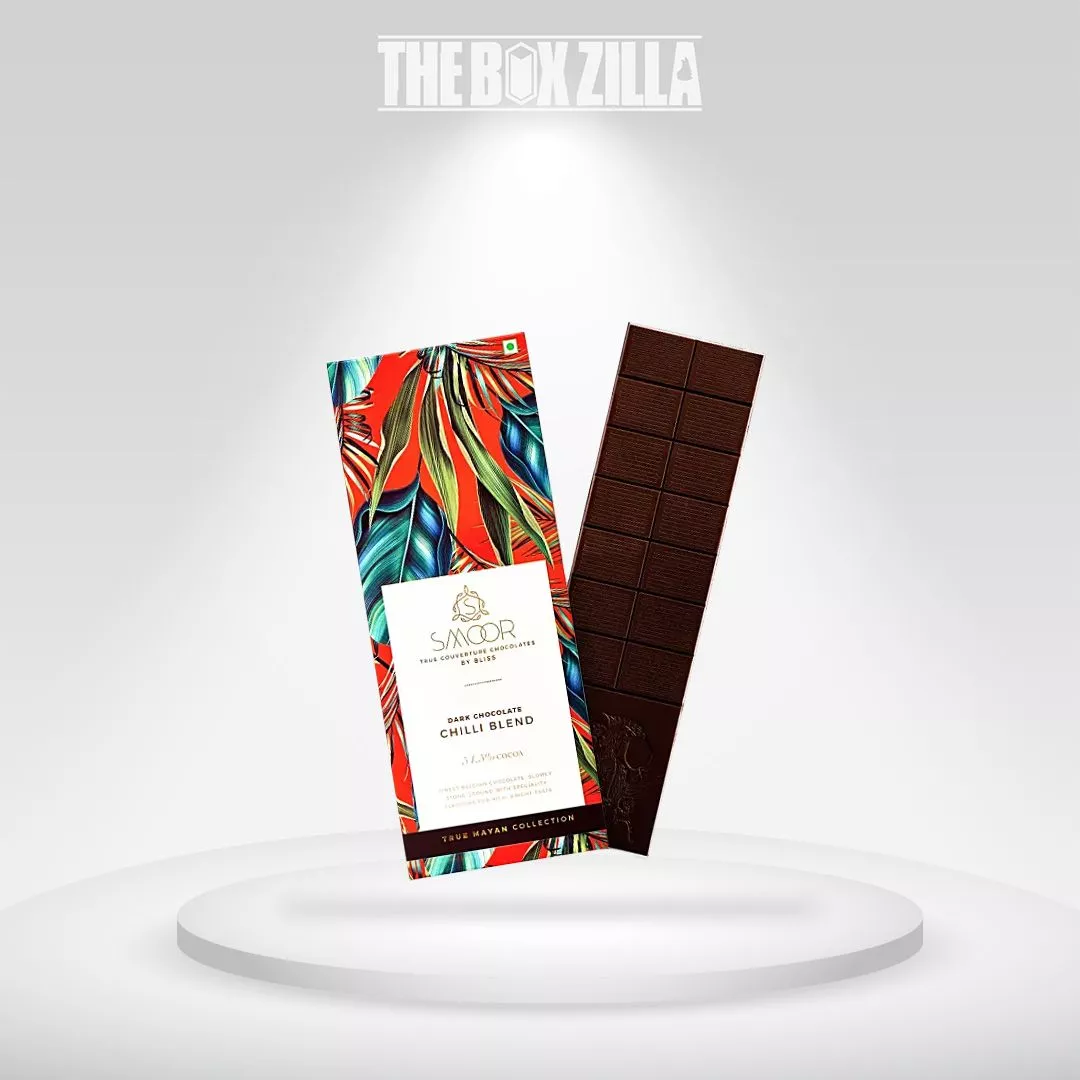
Shelf Presence Still Has to Do Its Job
Once protection is handled, the box has to compete for attention, whether that's a retail shelf or a product photo on a website. The National Confectioners Association's packaging trends coverage points to a consistent pattern across the confectionery industry: brands are leaning into recyclable materials, cleaner label design, and packaging that visibly signals quality before the wrapper is even opened.
Why settle for standard packaging when you can have custom chocolate boxes? At The Box Zilla we specialize in crafting luxurious customizable packaging that protects your chocolates and elevates your brand. Everyone loves chocolates, so why not make them unforgettable with unique eye‑catching designs? Our team creates custom printed chocolate boxes tailored to your specific needs ensuring your brand stands out.
What actually reads as premium
- Matte or soft-touch finishes over glossy default stock
- Clear hierarchy on the front panel, brand first, flavor second, claims last
- A structural detail that makes the box feel considered rather than generic, like a magnetic close or a custom insert
- Restraint in color and copy, rather than covering every inch of the box with text
None of this requires the most expensive materials. It requires the design decisions to be intentional rather than default. A box crowded with every claim the brand wants to make (organic, small-batch, award-winning, gluten-free) usually reads as less premium than one that picks the single strongest claim and gives it room to breathe.
Sizing and Templates Are Not an Afterthought
A surprising number of packaging problems trace back to sizing decisions made too early in the process, often before the final product formulation is locked. A bar that changes thickness by even a few millimeters during recipe testing can turn a perfect-fit box into one with visible gaps, or worse, one the bar doesn't fit into at all. Locking dielines only after the product spec is finalized, rather than working from an early draft, avoids a costly reprint down the line.
The Compliance Piece Nobody Budgets For
Every chocolate bar box also has to carry required label information, allergens, ingredients, and net weight, in the right format. It's easy to treat this as a last step handled after the design is finalized, which is exactly how brands end up needing a reprint. The FDA's labeling requirements for products marketed as chocolate are specific about what claims can and can't appear on packaging, and about how allergen information has to be presented, which is worth checking before a design goes to print, not after.
Common Mistakes Worth Avoiding
A few issues show up repeatedly across chocolate packaging projects, regardless of brand size:
- Designing the artwork before confirming the final product dimensions, leading to last-minute resizing that compromises the layout.
- Choosing a glossy finish for a premium positioning, when matte or soft-touch consistently reads as higher-end to most buyers.
- Underestimating how much heat exposure a shipment will realistically face, and choosing a stock or structure that can't handle it.
- Treating compliance labeling as a design constraint to work around instead of a requirement to design with from the start.
Each of these is cheap to fix early and expensive to fix after a print run is already committed.
Getting the Sequence Right
The brands that end up happy with their packaging usually solved these problems in order: protection first, then presentation, then compliance folded in from the start rather than bolted on at the end. Reverse that order, and it usually shows up later as a reprint, a damaged shipment, or a label that has to be redone. A box that survives the trip, looks intentional on arrival, and meets the label requirements without a second print run is doing everything it actually needs to do.
Share:
More in Marketing
View categoryWhat Are the Latest Custom Aluminum Signs Design Trends?
Discover how businesses can use durable, visually appealing signage to strengthen branding, improve visibility, and attract customers.
READ ARTICLEWhat Should Founders Learn From the First 1,000 Users of a Social App?
Learn what the first 1,000 users can reveal about onboarding, engagement, content behavior, retention, creator activity, and future growth opportunities for a social app.
READ ARTICLE