
There are places in India where you check your phone one last time, step into a forest, and forget you ever had one. Bandhavgarh is that kind of place. Tucked deep into the Vindhya hills of Umaria district, the Bandhavgarh Tiger Reserve Madhya Pradesh is not simply a national park it is the closest most of us will ever come to watching a wild Bengal tiger living entirely on its own terms.
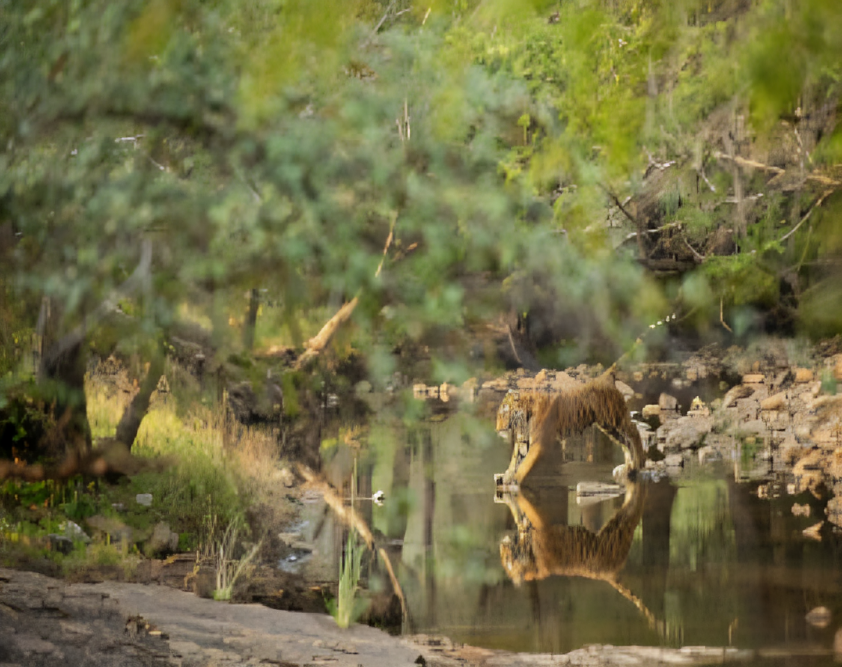
The forest operates on its own schedule. Alarm calls from spotted deer ripple through the sal canopy at dawn. A pugmark pressed into soft mud tells a story that unfolded three hours before your jeep arrived. And then, when the light is flat and the forest goes completely still, a tiger walks out of the shadows unhurried, indifferent to your presence, magnificent in a way that no photograph quite captures.
This guide covers everything you need to know before booking a tiger safari Bandhavgarh from the reserve's layered history and safari zones to seasonal timing and what to carry on your first jungle morning.
Why Bandhavgarh Tiger Reserve Madhya Pradesh Stands Apart
India has more than 50 tiger reserves. Bandhavgarh consistently ranks among the very best for one straightforward reason: tiger density. The reserve holds one of the highest concentrations of Royal Bengal tigers of any protected forest in the country. The compact core zone, combined with rich prey populations and experienced resident naturalists, translates into sighting rates that are genuinely hard to match elsewhere.
But density alone does not explain Bandhavgarh's pull. The park combines open meadows, steep rocky ridges, dense bamboo thickets, and ancient ruins — all within a single morning drive. You might spend the first half of a safari watching a tigress call her cubs out of a ravine, and the second half absorbing the silence of a 2,000-year-old fort reclaimed entirely by roots and green moss.
The reserve spans roughly 1,536 sq km, with a core zone of 716 sq km forming the heart of tiger territory. Surrounding buffer zones extend the wilderness and keep human pressure at a manageable distance.
A Forest with History in Its Roots
The name Bandhavgarh comes from two Sanskrit words Bandhav (brother) and Garh (fort). According to Hindu mythology, Lord Rama gifted this fort to his brother Lakshmana upon returning from Lanka, asking him to keep watch over the south. That story gives the forest a quality that is hard to define but easy to feel as if the land itself has been held sacred for a very long time.
More recently, the reserve spent centuries as the private game reserve of the Maharajas of Rewa. It was here, in 1951, that Maharaja Martand Singh captured a white tiger cub during a hunt for a cub he named Mohan rather than kill. Every white tiger held in captivity anywhere in the world today traces its lineage back to that single capture in these forests.
Bandhavgarh was declared a national park in 1968 and brought under Project Tiger in 1993. Conservation efforts since then have steadily rebuilt tiger populations that unrestricted hunting had once severely reduced. As of the latest estimates, the reserve is home to over 135 tigers — a number that reflects decades of committed protection.
Safari Zones: Where to Go and What to Expect
Tala Zone — The Heartland of Tiger Territory
Tala is the most sought-after zone for a Bandhavgarh tiger safari, and rightly so. It offers the highest tiger density, open grassland meadows ideal for sightings, and the most iconic landmarks in the reserve including views of the ancient Bandhavgarh Fort and the carved Shesh Shaiya, a reclining statue of Lord Vishnu set against the forest floor. For first-time visitors, Tala is the obvious starting point.
Book Tala zone permits well in advance. During peak season (November to March), slots fill weeks ahead.
Magdhi Zone — Quieter Forests, Rewarding Encounters
Magdhi offers a more intimate safari experience. The terrain here is denser, and though vehicles are fewer, the wildlife encounters tend to feel more private. Leopards are spotted with reasonable frequency, and the birding is exceptional. Photographers who have already experienced Tala often prefer Magdhi for its unhurried atmosphere.
Khitauli Zone — Open Grasslands and Family-Friendly Terrain
Khitauli's wide meadows and relatively flat terrain make it an excellent choice for families and first-time safari guests. Wildlife is visible from greater distances here, which eases the experience for those still learning to read the forest. Sloth bears, wild boar, and various deer species are commonly seen, with tigers making frequent appearances around waterholes during the dry season.
Buffer Zones — Dhamokhar, Johila, and Panpatha
The three buffer zones offer a different kind of experience altogether. Elephant corridors, dense forest tracks, and far fewer other vehicles create conditions where encounters feel genuinely unscripted. Buffer zones also remain open during brief core zone closures, making them a reliable fallback. For visitors with more time, spending at least one safari in a buffer zone adds depth to the overall experience.
Best Time for Tiger Safari Bandhavgarh
October to February — The Comfortable Season
The park reopens in mid-October after the monsoon closure, and the forest arrives at its most atmospheric. Mist sits low over meadows at dawn, the sal canopy is deep green, and temperatures make long morning drives genuinely pleasant. Tiger sightings are good throughout this period, though big cats can be harder to locate amid dense vegetation. November to February is peak season ideal for those who want comfortable conditions alongside strong wildlife encounters.
March to June — The Season of Serious Tiger Sightings
As temperatures climb and water sources begin to shrink, wildlife concentrates around a handful of waterholes and clearings. This is when a Bandhavgarh tiger safari delivers its most dramatic encounters. Tigers emerge frequently, sometimes spending long periods near water in full view. The heat is real; temperatures can push above 40°C in May but the sighting quality is unmatched. Wildlife photographers consistently return during this window for exactly that reason.
July to September — Monsoon Closure
The core zones close each year from 1 July to 30 September, giving the forest time to regenerate. Buffer zones remain accessible for those who specifically seek the monsoon atmosphere, though most visitors plan their trips outside this period.
Wildlife Beyond the Tiger
A tiger safari Bandhavgarh often delivers far more than just the headline species. The reserve supports 37 species of mammals, over 250 species of birds, and more than 80 species of butterflies.
Leopards are present throughout the reserve and sighted regularly in Magdhi and Khitauli. Sloth bears, shy but unforgettable, are frequently encountered near rocky outcrops in the early morning. Gaur (Indian bison), the largest wild cattle in the world, move through the forest in small herds. Wild dogs occasionally pass through, and the sight of a pack threading through the meadow at speed is as exciting as any big cat encounter.
For birders, Bandhavgarh offers crested serpent eagles, Indian rollers, paradise flycatchers, and numerous species of kingfisher all visible without leaving the safari vehicle.
Practical Safari Information
Safari Types: Jeep safaris are the primary option and seat six passengers alongside a certified naturalist and driver. Canter safaris (larger vehicles) are available for budget travellers.
Safari Timings: Morning safaris begin shortly after sunrise and run for approximately three to four hours. Evening safaris start in the early afternoon and conclude before sunset. Exact timings shift across seasons always confirm with your booking operator.
Permits: Safari permits are issued by the Madhya Pradesh Forest Department through the official online booking portal. Full ID details for every participant are required at the time of booking. Carrying the same original ID on the day of your safari entry gate verification is strictly enforced.
How Many Safaris? Aim for a minimum of three to four safaris across different zones. No single outing is guaranteed to produce a tiger encounter. Spreading safaris across zones and times of day significantly improves your odds.
Getting to Bandhavgarh
By Air: The nearest airports are Jabalpur (approximately 160 km) and Khajuraho (approximately 200 km). Both have regular domestic connections from Delhi, Mumbai, and Bhopal. Taxis and pre-booked vehicles cover the remaining distance.
By Rail: Umaria Railway Station, about 32 km from the park, is the most convenient railhead. Katni Junction (around 110 km) offers broader national connectivity.
By Road: Bandhavgarh is well connected by road from Jabalpur, Katni, and Shahdol. Many visitors combine a Bandhavgarh trip with Kanha Tiger Reserve for an extended Madhya Pradesh wildlife circuit.
What to Pack for Your Bandhavgarh Tiger Safari
Neutral, earthy clothing is strongly recommended greens, browns, and tans help you blend into the environment and avoid startling wildlife. Avoid white, bright red, or neon colours entirely.
In winter months (November to February), temperatures inside the forest drop sharply during early morning safaris; a warm layer and a windproof jacket are essential. In summer, lightweight breathable clothing, a wide-brimmed hat, and solid sun protection will see you through.
For photography, a lens with at least 300mm reach gives you workable framing from a stationary jeep. Dust is a factor on forest tracks regardless of season keep your gear protected until you need it.
The Bandhavgarh Fort and Ancient Caves
Most visitors come for the tigers, but the Bandhavgarh Tiger Reserve Madhya Pradesh carries centuries of human history within its boundaries. The Bandhavgarh Fort, accessible by foot from certain safari routes in the Tala zone, sits atop a prominent Vindhya hillock and is believed to be over 2,000 years old. Ancient cave shrines, carved stone sculptures, and the striking Shesh Shaiya, a massive reclining Vishnu carved directly into a stone cliff face are all encountered during a standard jeep safari.
These landmarks are not detours from the wildlife experience. They are woven into it. Watching a safari vehicle roll past a 10th-century stone carving while langurs' alarm-call overhead captures something essential about this place. It is a forest that has been significant to people for a very long time, and the wildlife is richer for that layered protection.
Conservation and What Your Visit Supports
Every safari permit purchased directly funds Madhya Pradesh's forest protection infrastructure ranger patrols, habitat maintenance, and anti-poaching operations. The growth of Bandhavgarh's tiger population from near-local extinction to 135+ individuals over the past three decades is a genuine conservation achievement, built on the work of field staff who know individual tigers by territory and temperament.
Choosing a responsible operator, one that limits vehicle numbers, employs certified naturalists, and follows ethical wildlife-watching protocols extends this impact. A good naturalist does not chase sightings. They read the forest, wait, and let encounters happen on the wildlife's terms.
5 Frequently Asked Questions About Bandhavgarh Tiger Reserve
Q1. What is the best time to visit Bandhavgarh Tiger Reserve Madhya Pradesh for tiger sightings?
March to June is widely considered the best period for tiger sightings. As water sources shrink during the dry season, tigers and other wildlife gather around a smaller number of waterholes, making encounters more frequent and extended. November to February offers more comfortable temperatures and remains an excellent period for overall wildlife viewing, including good tiger sightings.
Q2. How many safaris should I book for a Bandhavgarh tiger safari?
A minimum of three to four safaris across different zones is strongly recommended. No individual safari guarantees a tiger encounter the forest makes its own decisions. Spreading your visits across Tala, Magdhi, and Khitauli zones, and mixing morning and evening drives, gives you the best overall chance of meaningful encounters.
Q3. How do I book a tiger safari Bandhavgarh permit?
Safari permits are booked through the official Madhya Pradesh Forest Department online portal. You will need valid government-issued ID details for every participant at the time of booking. Permits for Tala zone, the most popular, sell out quickly during peak season book four to six weeks in advance where possible.
Q4. Is Bandhavgarh Tiger Reserve suitable for first-time wildlife safari visitors?
Yes. Bandhavgarh is frequently recommended as one of the best entry points for first-time safari travellers in India, precisely because its high tiger density makes sightings more probable than in many other reserves. The safari infrastructure is well organised, experienced naturalists are widely available, and the terrain in zones like Khitauli is accessible and easy to read.
Q5. What wildlife can I see besides tigers on a Bandhavgarh tiger safari?
Bandhavgarh supports leopards, sloth bears, gaur, wild dogs, sambar, spotted deer, barking deer, nilgai, and chinkara alongside over 250 bird species including crested serpent eagles, Indian rollers, and various kingfisher species. Even on a safari where the tiger stays hidden, the surrounding wildlife and landscape consistently deliver a rewarding experience.
Planning a guided tiger safari to Bandhavgarh? The Wild Terrain runs small-group expert-led expeditions designed for wildlife enthusiasts and photographers. Every vehicle carries a maximum of four guests alongside an experienced naturalist, giving the forest room to surprise you.
Share:
More in Travel
View categoryTravel
2
Car Audio Installation Tips for Maximum Sound Quality
Achieve maximum sound quality with proper car audio installation techniques. Careful speaker placement, secure wiring, quality components, and professional tuning work together to deliver clearer audio, deeper bass, and a more immersive listening experience on every drive.
12 inch subwooferalpine subwoofersamp for car sound systembackup camerabox speaker boxcar audio amplifierspeaker box
READ ARTICLETravel
3
Building Your Future Together: The Comprehensive Guide to the Fiance Visa UK
Building Your Future Together: The Comprehensive Guide to the Fiance Visa UK
READ ARTICLE