
Share:
All About Yoga Asanas: Poses, Types, Benefits, and More
HealthExplore all the essential yoga asanas, their types, and benefits, from standing poses and backbends to breathing techniques, in this complete beginner-friendly guide.
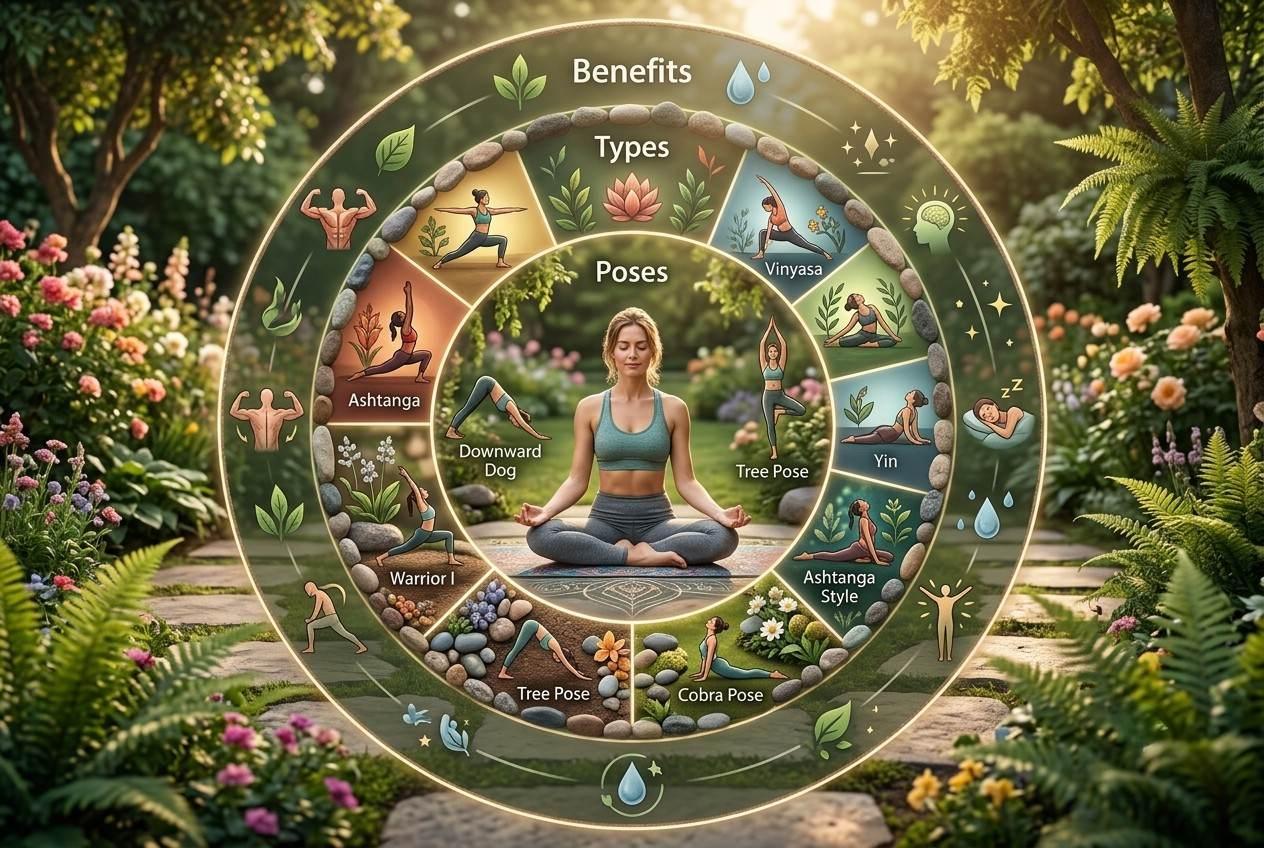

Yoga asanas form the physical backbone of yoga practice, each pose designed to work a specific combination of muscles, joints, and even mental states in ways that build toward greater strength, flexibility, and calm over time. With so many different asanas across standing, seated, backbend, twisting, and inverted categories, it's easy to feel overwhelmed trying to figure out where to start or which poses actually address your particular needs. Understanding the full landscape of yoga asanas, along with their individual benefits, gives you the knowledge to build a practice that genuinely supports your goals rather than following a routine blindly. This comprehensive guide walks through the major types of asanas, individual poses worth knowing, and the breathing techniques that complement them, offering a complete picture of what yoga practice has to offer.
What Are Yoga Asanas?
The term "asana" refers to a physical posture held during yoga practice, traditionally intended to prepare the body for meditation by building strength, flexibility, and steadiness over time. While modern practice often highlights the fitness benefits of these poses, their original purpose centered on creating the physical stability needed to sit comfortably through extended periods of meditation and breathwork. This dual focus on physical conditioning and mental preparation is what sets asanas apart from typical exercise movements.
The Different Types of Yoga Asanas
Yoga asanas are generally grouped into several broad categories, including standing poses, seated poses, backbends, twists, balancing poses, and inversions, each targeting different physical and mental benefits. Standing poses tend to build strength and stability, seated poses often focus on flexibility and calm, while backbends open the chest and spine in ways that can feel both physically and emotionally releasing. Understanding these categories helps explain why a well-rounded practice typically draws from multiple types rather than focusing exclusively on just one.
Getting Started with Beginner Yoga Asanas
A structured set of introductory Yoga Asanas offers newcomers a practical, manageable entry point into the broader world of yoga practice. These foundational poses are chosen specifically to build essential flexibility, balance, and body awareness at a pace that doesn't overwhelm someone just starting out. Spending real time mastering these basics creates a much stronger foundation for the more advanced poses that come later.
Surya Namaskar: A Sequence of Asanas
The twelve-step flow known as Surya Namaskar combines several individual asanas into one continuous, repeatable sequence that moves through the entire body at once. It's frequently one of the first things new practitioners learn, since it blends stretching, strengthening, and coordinated breathing into a single flowing pattern. Once mastered, this sequence becomes a dependable anchor that supports the rest of a developing practice.
Why Surya Namaskar Offers So Many Benefits
Looking closer at the Benefits of Surya Namaskar reveals why this particular sequence has remained a staple across so many yoga traditions and generations of practitioners. Regular practice is associated with improved cardiovascular fitness, greater flexibility, and a calmer, more focused state of mind. Few individual routines manage to address so many aspects of wellbeing simultaneously.
Hatha Yoga as a Style for Practicing Asanas
For those seeking a gentler, more foundational approach, the Benefits of Hatha Yoga explain why this particular style is often recommended for beginners learning basic asanas. This style emphasizes slower movements and longer holds, giving practitioners time to genuinely focus on alignment and breath rather than rushing through transitions. Its accessible pace makes it an especially effective framework for building a solid foundation in fundamental poses.
Bhujangasana (Cobra Pose) — A Foundational Backbend
The Bhujangasana Cobra Pose is one of the most fundamental backbends taught in beginner yoga, gently strengthening the spine while opening the chest and shoulders. This asana works particularly well for those who spend long hours sitting, since it directly counters the forward-hunched posture so common with desk work. Practicing it regularly improves spinal flexibility while easing tension that tends to build up in the lower back.
Dhanurasana (Bow Pose) for Core and Back Strength
Building on the foundation laid by cobra pose, the Benefits of Dhanurasana reveal why this bow-shaped posture is often introduced as a natural progression in backbend work. It engages the entire back body while also stimulating the abdominal organs and supporting healthy digestion. Both men and women can benefit from incorporating this asana for combined core and back strength.
Ardha Matsyendrasana (Spinal Twist) for Flexibility
The seated twist explored in Ardha Matsyendrasana introduces spinal rotation, a movement direction frequently missing from typical exercise routines. This gentle twist releases tension stored in the spine and surrounding muscles, and is often recommended for those hoping their practice will support better sleep. Adding this asana to an evening routine can genuinely ease the body into a more relaxed state before bed.
Vajrasana (Thunderbolt Pose) for Beginners
Among the gentlest poses available, the Benefits of Vajrasana highlight why this simple kneeling posture is recommended even for those with zero prior yoga experience. Unlike most other asanas, Vajrasana can safely be practiced immediately after eating, giving it a genuinely unique role in supporting digestion. Its simplicity makes it an ideal first pose for anyone still building comfort with basic seated postures.
Baddha Konasana (Butterfly Pose) for Hip Opening
The Benefits of Baddha Konasana center largely on improving hip flexibility and easing tension in the lower back and inner thighs. This seated pose adapts easily to different flexibility levels, staying accessible no matter your starting point. Regular practice gradually expands hip mobility, which benefits many other poses that rely on open hips.
Vrikshasana (Tree Pose) for Balance
The standing balance posture explored in the Benefits of Vrikshasana (Tree Pose) introduces one of yoga's most fundamental skills, balance, while simultaneously training focus and concentration. Holding steady on one leg while fixing attention on a single point develops coordination that carries over naturally into everyday movement. Even complete beginners tend to notice real improvements in stability after consistent practice.
Sirsasana (Headstand) for Advanced Practitioners
For those progressing further in their practice, the Benefits of Sirsasana explain why this inverted pose is often treated as a meaningful milestone. Practitioners frequently report improved circulation, greater upper body strength, and enhanced mental clarity, though this pose requires careful preparation and, ideally, guided instruction before attempting it independently. Building toward it gradually allows practitioners to eventually experience its benefits safely.
Gomukhasana (Cow Face Pose) for a Full-Body Stretch
The seated posture detailed in Gomukhasana Benefits offers a genuinely comprehensive stretch that works the shoulders, hips, and chest all at once. While it can feel challenging initially for those with tighter joints, simple modifications using straps or cushions make it accessible even for newcomers. This asana rounds out a practice nicely by addressing multiple tight areas in a single pose.
Konasana (Sideways Bend) for Lateral Flexibility
The sideways bending posture covered in Benefits of Konasana introduces lateral stretching, a direction of movement frequently overlooked in typical exercise and even in many yoga sequences. This asana improves flexibility along the sides of the torso while supporting greater spinal mobility overall. Including lateral stretches like this helps create a more balanced, well-rounded practice.
Katichakrasana (Standing Spinal Twist) for Everyday Relief
The standing spinal twist explored in Benefits of Katichakrasana offers a simple, accessible way to release spinal tension while improving rotational flexibility, all without needing to sit or lie down. Because it's performed standing, it fits easily into short breaks throughout the day, not just during a formal practice session. Regular use helps counteract stiffness that builds up from long periods of sitting.
Hastapadasana (Standing Forward Bend) for Hamstring Stretch
The standing forward bend detailed in Benefits of Hastapadasana provides one of the most basic yet effective stretches for the hamstrings and lower back. This forward fold also encourages blood flow to the brain and tends to have a calming effect when held with steady, controlled breathing. Its simplicity makes it a natural addition to nearly any asana sequence.
Ardha Chakrasana (Half Wheel Pose) for Backbend Support
The gentle backward bend explored in Benefits of Ardha Chakrasana offers a supportive introduction to deeper backbends, opening the chest and shoulders while strengthening the muscles along the spine. This pose is often used as a preparatory step before attempting more advanced backbend postures, helping build the flexibility needed to progress safely. Its accessibility makes it a valuable addition for practitioners at nearly any level.
Trikonasana (Triangle Pose) for Full-Body Engagement
The standing pose detailed in Benefits of Trikonasana engages the legs, spine, and shoulders simultaneously, offering one of the more comprehensive standing postures in a typical yoga sequence. This asana improves balance and flexibility while also stretching the hamstrings and opening the chest in a single, integrated movement. Its full-body engagement makes it a favorite for practitioners looking to work multiple areas at once.
Virabhadrasana (Warrior Pose) for Strength and Stability
The powerful standing posture explored in Benefits of Virabhadrasana builds significant strength in the legs and core while also improving overall balance and stability. This pose, available in several variations, is often used to build both physical and mental resilience, since holding the posture requires sustained focus and effort. Its strength-building emphasis makes it a valuable counterpart to the more flexibility-focused poses in a well-rounded practice.
Prasarita Padahastasana (Wide-Legged Forward Bend)
The wide-legged forward fold detailed in Benefits of Prasarita Padahastasana offers a deep stretch for the hamstrings and inner thighs while also calming the nervous system through its forward-folding nature. This pose is often included toward the middle or end of a sequence, providing a grounding, restorative counterbalance to more active standing poses. Its combination of physical stretch and calming effect makes it a valuable addition to nearly any practice.
Pranayama: The Breathing Side of Yoga Practice
Beyond physical postures, understanding Pranayama Benefits reveals how breath control forms an equally essential pillar of yoga practice alongside asanas. Pranayama focuses on directing and regulating the breath to influence both physical and mental states, complementing the physical work done through postures. Recognizing breathing as a core practice, rather than an afterthought, rounds out a much more complete understanding of what yoga actually involves.
Kapalbhati for Energizing Breathwork
Among the specific pranayama techniques worth knowing, understanding kapalbhati for sleep benefits introduces a particularly energizing breathing method built around quick, forceful exhales paired with passive inhales. When practiced correctly, it tends to leave practitioners feeling clearer and more energized, making it a popular addition to morning routines. Learning it properly, with attention to relevant precautions, adds real value to a well-rounded practice.
Bhramari Pranayama for Calm and Relaxation
The Benefits of Bhramari Pranayama introduce a wonderfully simple breathing technique centered on producing a gentle humming sound with each exhale. It's especially effective at calming an overactive nervous system and easing feelings of anxiety or mental clutter. Because it's so easy to learn, it's often one of the very first pranayama techniques introduced to newcomers.
Nadi Shodhana Pranayama for Balance
The alternate nostril breathing method explained in Nadi Shodhana Pranayama Benefits offers a structured technique for balancing energy and settling a busy mind. This practice involves shifting breath between nostrils in a specific pattern, believed to bring the body's two primary energy channels into better alignment. Many find it especially useful for reducing stress and sharpening focus.
Pran Mudra as a Subtle Complement to Asana Practice
For those curious about yoga's more subtle elements, Pran Mudra Benefits introduce a simple hand gesture that can be practiced almost anywhere, even while sitting at a desk. This mudra is believed to help boost vitality and reduce fatigue, making it a low-effort addition that complements physical asana practice nicely. Its simplicity offers a gentle introduction to yoga's more energetic, subtle dimensions.
Complementing Asanas with Leg Exercises
Pairing yoga asanas with targeted Leg Exercises helps build the strength and stability that many standing and balance poses ultimately depend on. Simple movements like squats, lunges, and calf raises complement yoga nicely, rounding out a more well-balanced approach to overall fitness. As leg strength improves, standing asanas tend to feel noticeably steadier and more controlled.
Office Exercises to Support Your Practice
For those spending long hours at a desk, incorporating simple Office Exercises throughout the day helps counteract the strain that builds up from prolonged sitting. These exercises are typically quick enough to do discreetly at a desk or during a short break, making them practical even on busy days. Combining them with regular asana practice helps address the specific postural challenges that come with office work.
Breathing Exercises for Everyday Stress Relief
Beyond formal pranayama techniques, general Breathing Exercises offer simple, accessible tools that require no special training or equipment. These exercises can be practiced anywhere, making them particularly useful during moments of acute stress or anxiety throughout the day. Incorporating simple breathing exercises alongside physical asanas creates a more complete, well-rounded approach to managing both physical and mental tension.
How to Build a Balanced Yoga Routine Using Different Asana Types
Creating a genuinely balanced practice means drawing from multiple categories of asanas, standing poses for strength, seated poses for flexibility, backbends for chest opening, and twists for spinal mobility, rather than focusing exclusively on just one type. Rounding out a session with breathing techniques and a few minutes of stillness at the end further enhances the overall benefits gained from the physical postures. Thoughtfully combining these different elements, rather than practicing poses randomly, tends to produce far more noticeable, lasting improvements over time.
Conclusion
Yoga asanas offer an incredibly rich and varied practice, spanning standing poses, seated stretches, backbends, twists, and breathing techniques that together address nearly every aspect of physical and mental wellbeing. From foundational postures like Surya Namaskar, Vajrasana, and Bhujangasana to more targeted poses like Trikonasana, Virabhadrasana, and Gomukhasana, each asana brings its own distinct set of benefits to a well-rounded practice. Pairing these physical postures with pranayama techniques like Bhramari and Nadi Shodhana, along with complementary exercises for the legs and everyday stress relief, creates a genuinely comprehensive approach to yoga. With a solid understanding of these poses, types, and benefits, building a practice that truly serves your needs becomes a far more achievable, rewarding goal.
FAQs
1. What is the difference between a yoga asana and a yoga pose?
The terms are largely interchangeable, though "asana" specifically refers to the traditional Sanskrit term for a physical posture held during yoga practice.
2. What are the main types of yoga asanas?
Yoga asanas are generally grouped into standing poses, seated poses, backbends, twists, balancing poses, and inversions, each offering different physical and mental benefits.
3. Which yoga asana is best for complete beginners?
Simple, foundational poses like Vajrasana or the Surya Namaskar sequence are excellent starting points, since they build basic flexibility and body awareness without requiring advanced skill.
4. Why is pranayama considered just as important as physical asanas?
Pranayama, or breath control, is considered a foundational pillar of yoga alongside physical postures, since it directly influences both physical relaxation and mental clarity.
5. Is it necessary to attempt advanced poses like Sirsasana as a beginner?
No, advanced poses like Sirsasana should only be attempted once a solid foundation of strength and flexibility has been built, ideally with proper guidance.
6. How can I build a balanced yoga routine?
A balanced routine draws from multiple asana types, standing poses for strength, seated poses for flexibility, and backbends for chest opening, along with breathing techniques to round out the practice.
7. How often should beginners practice yoga asanas?
Practicing for ten to fifteen minutes most days of the week tends to be more effective for beginners than longer, infrequent sessions, since consistency helps build lasting habits.
Share:
More in Health
View category
Dr.Melaxin - Peel Shot Exfoliating Kojic Acid Turmeric Spray: A Modern Korean Skincare Solution
Dr.Melaxin - Peel Shot Exfoliating Kojic Acid Turmeric Spray is a convenient Korean skincare treatment designed to refresh the look of dull, uneven, and rough-feeling skin. Combining exfoliating care with popular ingredients such as kojic acid and turmeric, its spray format makes targeted application simple and practical. Ideal for those looking to enhance their skincare routine with brightening and smoothing-focused care.
READ ARTICLE
US Packers and Movers Make Home and Office Shifting Easy and Simple Across Pakistan
Moving does not have to be a difficult experience. With professional help from companies like US Packers and Movers, families and businesses across Pakistan now have access to services that make shifting far more manageable. From packing to transport to unloading, the process is designed to be easy, organized, and stress-free.
READ ARTICLE
Why Do My Teeth Hurt When I Eat Something Cold or Hot?
Have you ever taken a sip of cold water or eaten ice cream and suddenly felt a sharp pain in your tooth? Maybe hot coffee or soup causes the same reaction. If this happens often, you may have tooth sensitivity.
READ ARTICLE