
Share:

2 Carat Engagement Ring Buying Guide — The Gem Royals Deep Dive You Need Before Saying Yes
Shopping for a 2 carat engagement ring? Learn how cut, shape, setting and certification change size, sparkle and price, so you can buy with confidence.
Picture a couple at a jewelry counter, two stones on the velvet tray. Both are labeled 2 carats. One looks noticeably larger, the other noticeably livelier, and the price gap is thousands of dollars. Which one is “right”? After years of watching people compare stones in person, I can tell you the weight on the paperwork is only the start of the answer. A 2 carat engagement ring is a serious purchase, so let’s go through what actually matters.
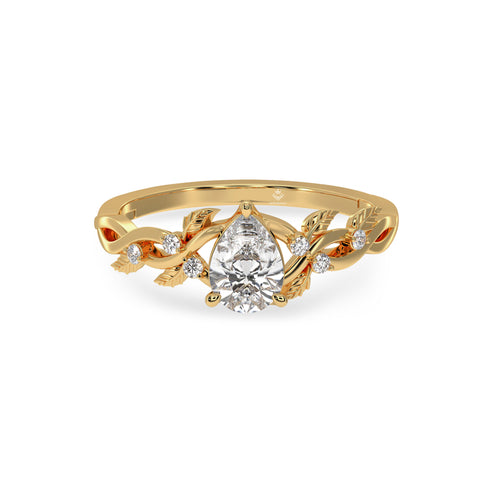
What “2 carats” really means
A carat is a unit of weight, not size. One carat equals 200 milligrams, so a two carat stone weighs 0.4 grams. That’s lighter than a paperclip.
Weight and visible size are related but not identical. A well-cut round brilliant at 2 carats typically measures around 8 mm across, though it varies with proportions. A stone with the same weight but a deep pavilion, where extra weight hides below the girdle, can face up smaller.
This is why I always tell buyers to ask for millimeter measurements, not just carat weight.
Why this size keeps winning hearts
The 2 ct diamond ring sits in a sweet spot. It’s unmistakably substantial, visible from across a table without feeling theatrical. It also stays practical for daily wear if the setting is designed sensibly.
There’s a psychological threshold, too. Many people feel a jump in presence between 1.5 and 2 carats, while the jump from 2 to 2.5 is subtler to the eye but much bigger on the invoice. Prices rise steeply at whole-carat marks, which brings us to a smart strategy later on.
Cut comes first, always
If I could tattoo one rule on every buyer’s hand, it would be this: choose cut before anything else. Cut determines how well a diamond handles light, and light is what you see as brilliance, fire and scintillation.
For round brilliants, GIA grades cut from Excellent to Poor. Fancy shapes like ovals and pears don’t receive an official GIA cut grade, so you’ll rely on proportions, symmetry, and your own eyes. A “tilt test” matters here. Tilt the stone under different lights and watch for dark patches in the center, often called a bow-tie in ovals and pears.
A common regret I hear: “We chased a bigger number and never looked at how it sparkled.” A mediocre cut at 2 carats can look flatter than an excellent cut at 1.8.
Color, clarity, and the art of not overpaying
The remaining Cs are where you find value.
Color. GIA’s scale runs from D (colorless) to Z. In white metals, G to I usually reads clean to most eyes, especially face-up. If your setting is yellow or rose gold, you can often go a grade or two lower without noticing.
Clarity. Bigger stones show inclusions more easily, since the facets are larger. For a two carat solitaire, VS2 to SI1 is often eye-clean, but “often” isn’t “always.” Inspect the actual stone, not just the grade. An SI1 with a dark inclusion under the table is a different story from one with a faint feather near the edge.
Pay for what you can see. Perfection you need a loupe to appreciate rarely changes how the ring looks on your hand.
Share:
More in Business
View categoryWhat Happens When You Put Your Furniture in the Wrong Place? 9 Design Mistakes to Avoid
Discover 9 common furniture placement mistakes that make rooms feel cramped or awkward. Learn how to improve room flow, lighting, comfort, and space.
READ ARTICLEHow to Find a Pure Banarasi Silk Saree Shop in Varanasi for Authentic Silk Designs
Find a pure Banarasi silk saree shop in Varanasi and learn what to check before buying. Understand silk certification, traditional weaving, zari work, and saree quality.
READ ARTICLEPEB Shed Manufacturers in Chakan MIDC: What to Know Before You Build
Discover why Pre-Engineered Buildings are ideal for factories, warehouses and commercial spaces. Learn the benefits, uses, and how to choose a reliable PEB partner.
Best PVDF Y Strainer for Chemical Processing Plants
Choosing the best PVDF Y Strainer for chemical processing plants is important for protecting industrial pipelines, valves, pumps, and other equipment from unwanted solid particles.
READ ARTICLE