
What You Need to Know About the Rotar Demolition Pulveriser
One tool that has become necessary in the industry is the demolition pulveriser — a powerful hydraulic attachment that breaks concrete structures into manageable pieces while exposing embedded reinforcement.
In modern demolition and concrete recycling work, efficiency, safety, and performance are critical. One tool that has become necessary in this industry is the demolition pulveriser — a powerful hydraulic attachment that breaks concrete structures into manageable pieces while exposing embedded reinforcement. Among leading brands, the Rotar demolition pulveriser stands out for its engineering quality, operational versatility, and durability.
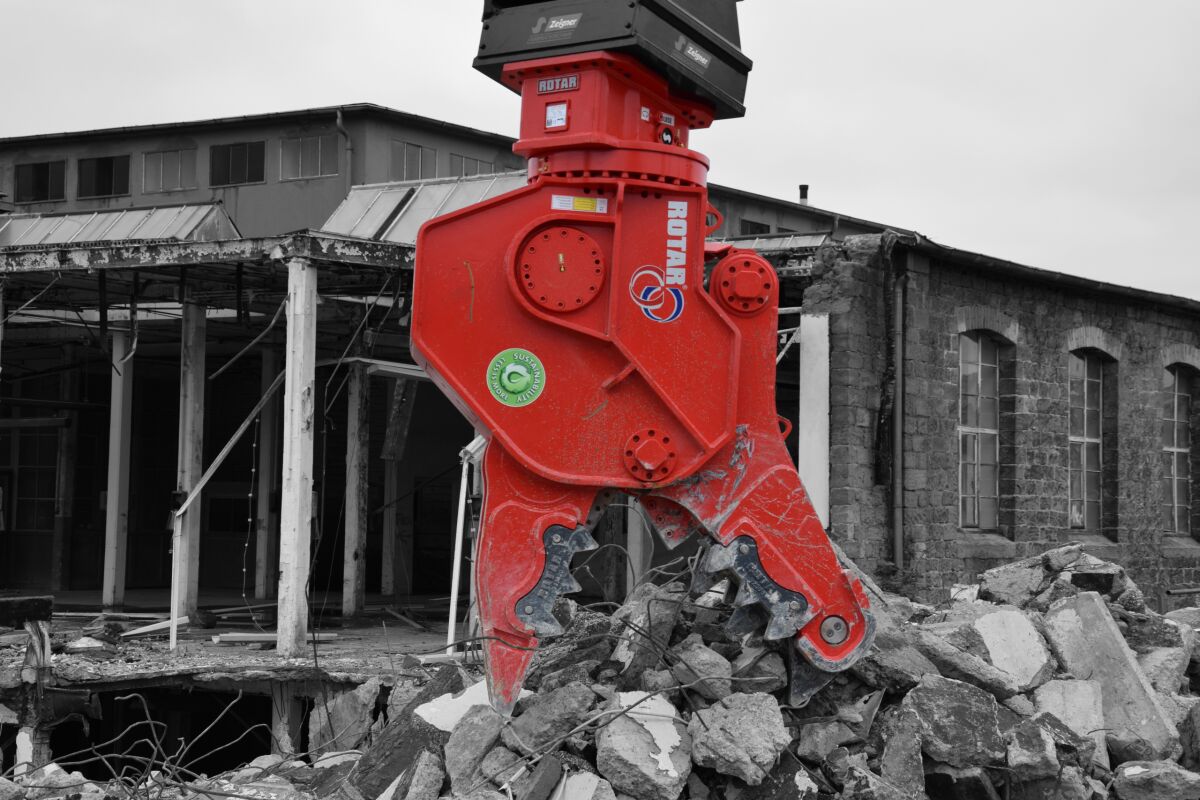
1. What Is a Demolition Pulveriser?
At its core, a demolition pulveriser is a hydraulic attachment that crushes concrete components and separates reinforcing steel, effectively combining the functions of breaking and processing demolished material on site. These tools are mounted on excavators and are used for deconstruction, recycling, and processing construction debris. The pulverizing process significantly reduces the need for manual rebar cutting and secondary crushing.
Unlike basic concrete breakers, pulverisers are designed with a jaw system — one fixed and one moving — equipped with heavy-duty crushing teeth that grip, break, and process concrete directly where it stands. This makes them efficient for both primary demolition (initial break-up of a structure) and secondary demolition (processing of already detached pieces).
2. Introducing the Rotar Demolition Pulveriser
The Rotar RDP-Series demolition pulveriser is engineered for primary and secondary demolition tasks. It’s made to work its way through reinforced concrete structures with ease, making it a popular choice for general demolition companies and recycling operators.
Key general attributes include:
Interchangeable wear parts:
These simplify maintenance and reduce downtime, as worn teeth and blades can be swapped out quickly
Rotating upper head with a heavy-duty slewing ring:
Allows the pulveriser to be positioned at virtually any angle, giving operators greater control — particularly in confined or complex demolition sites.
Specially developed speed valve:
This technology enables the attachment to switch rapidly between high-speed jaw closing and high-force pulverising mode as needed, improving workflow efficiency.
Optimal hydraulic design:
The trunnion-mounted hydraulic cylinder and robust internal plumbing reduce back pressure, which enhances cutting force and overall productivity.
These features make the Rotar pulveriser suitable not only for breaking slabs and beams, but also for exposing and separating rebar for recycling — an essential requirement in modern demolition and waste-minimising construction projects.
3. Primary vs. Secondary Demolition Applications
Understanding the difference between primary and secondary demolition workflows helps in choosing the correct pulveriser type and setup:
Primary demolition involves attacking the concrete structure directly — such as walls, columns, or foundations. The Rotar RDP series is rugged enough for these initial break-ups, delivering exceptional cutting power.
Secondary demolition refers to the further size reduction of already detached material on the ground, making it easier to sort and process debris for recycling or disposal. Rotar also offers static pulveriser models (RSP-Series) optimized for this stage, focusing on throughput and consistent crushing performance.
Pulverisers designed for primary work typically have larger jaw openings and increased structural strength, while secondary tools emphasize cycle time and material handling efficiency.
4. Why Choose Rotar?
Several factors make the Rotar demolition pulveriser a reliable choice for demolition professionals:
a. Durability and Maintenance
Rotar equipment is built from high-grade, wear-resistant materials. The interchangeable teeth and wear parts reduce long-term maintenance costs and help keep downtime to a minimum, even on high-usage sites.
b. Performance and Efficiency
Thanks to smart hydraulic design and advanced valve technology, the pulveriser offers rapid cycle times and significant cutting power — both critical for reducing project time and improving throughput on the job site.
c. Operational Flexibility
With a rotating head and heavy-duty slewing ring, the Rotar pulveriser can engage structures from multiple angles, which is particularly valuable in urban or restricted environments where space and positioning are constrained.
5. Operational Considerations
Before investing in a demolition pulveriser, some practical considerations include:
Excavator compatibility: Ensure that your carrier (excavator/loader) matches the pulveriser’s weight and hydraulic requirements — proxies are often specified in the product brochure.
Maintenance plan: Regular inspection of wear parts, hydraulic lines, and rotation bearings ensures safe operations and optimal performance.
Safety and site planning: Demolition pulverisers produce less vibration and noise compared to traditional breakers, but planning for dust control and operator safety remains essential.
The Rotar demolition pulveriser is a robust, versatile tool that combines high-force concrete breaking with efficient rebar separation — addressing both structural demolition and material processing needs. With smart engineering features such as interchangeable parts, hydraulic rotation, and speed valves, it stands as a practical investment for demolition contractors focused on performance, safety, and long-term reliability.