What Are the Best Outdoor Furniture Materials for Durability, Weather Resistance, and Style?
Discover the best outdoor furniture materials for durability, weather resistance, and timeless style. Learn what works best for your patio, deck, or balcony.
When selecting outdoor furniture, it’s not just about appearance—it’s about investing in materials that can withstand the elements, require minimal maintenance, and still reflect your personal style. Whether you're designing a spacious patio, a cozy balcony, or a poolside retreat, the materials you choose can significantly impact the comfort, longevity, and beauty of your space.
From scorching sun to torrential rain, your outdoor furniture needs to endure diverse weather conditions. This guide explores the best outdoor furniture materials in terms of durability, weather resistance, and aesthetic appeal, so you can make an informed decision before transforming your outdoor space.
The Role of Material in Outdoor Furniture
Before diving into specific materials, it's essential to understand why the right material matters. Unlike indoor pieces, outdoor furniture is constantly exposed to elements like UV rays, moisture, wind, and temperature fluctuations. The wrong choice can fade, crack, rust, or warp within a season. On the other hand, high-quality materials are designed to last for years with minimal wear and tear.
Three key factors you should consider when selecting outdoor furniture materials are:
- Durability – How well does the furniture stand up to heavy use and weather over time?
- Weather Resistance – Can it handle rain, sun, snow, and other environmental challenges?
- Style Versatility – Does it blend well with your outdoor décor and personal taste?
Teak: Timeless Elegance and Unmatched Durability
Teak has long been a favorite in the world of outdoor furniture—and for good reason. Naturally rich in oils, teak resists water and insects without needing chemical treatments. Over time, it develops a beautiful silvery-gray patina if left untreated, or it can be maintained with teak oil for a golden hue.
Teak is known for:
- High resistance to rot, mold, and pests
- Strength and stability even in wet or dry climates
- Elegant aesthetics that complement any outdoor space
Though it tends to be on the higher end price-wise, its longevity makes it a worthwhile investment.
Aluminum: Lightweight, Rustproof, and Contemporary
For those seeking a more modern style with minimal upkeep, aluminum is a top contender. It’s rust-resistant and doesn’t absorb moisture, making it ideal for humid or rainy regions. Because aluminum is lightweight, it’s easy to rearrange or store when not in use.
Powder-coated aluminum options provide added durability and come in various colors and finishes, which makes them perfect for mixing and matching with different cushions and accessories. It's a smart choice if you're seeking outdoor furniture that’s sleek, practical, and affordable.
HDPE Wicker (Resin Wicker): Stylish and UV-Resistant
Wicker furniture exudes charm and comfort, and when made from high-density polyethylene (HDPE), it becomes one of the best materials for all-weather use. HDPE wicker mimics traditional woven textures while offering resistance to UV rays, fading, and cracking.
Unlike cheap plastic versions that can degrade quickly, HDPE wicker is engineered for durability and can last for years without fraying or sagging. It also pairs beautifully with aluminum or steel frames for enhanced strength.
When shopping for long-lasting woven pieces, consider this high-quality synthetic wicker furniture that’s specifically designed for outdoor use and weather resistance.
Steel: Strength with a Need for Care
Steel is heavier and more durable than aluminum, which makes it a strong choice for wind-prone areas. It also provides a sleek, industrial look that appeals to many homeowners. However, unless it’s stainless or powder-coated, steel is prone to rust if exposed to moisture.
With proper maintenance, including covering or storing during rain, steel outdoor furniture can serve as a stylish and sturdy addition to your patio or deck.
Plastic and Resin: Budget-Friendly and Colorful
If you're seeking an affordable and lightweight option, molded plastic and resin outdoor furniture might be the answer. They’re available in various bright colors and modern shapes, making them great for family settings or temporary use.
While these materials are resistant to moisture and UV rays, they may not be as durable as metal or wood options. Over time, especially under direct sunlight, they can fade or crack. However, newer high-quality plastics offer improved performance and are 100% recyclable, making them an eco-friendlier choice.
Wrought Iron: Traditional and Heavy-Duty
Wrought iron offers classic charm and extreme durability. Its weight ensures that it stays in place even during high winds. With ornate details and timeless curves, wrought iron pieces often lend an elegant touch to traditional garden spaces.
The biggest drawback is its tendency to rust. Regular maintenance, such as repainting or applying anti-rust treatments, is required. Cushions are usually necessary to make these seats more comfortable, but the end result is sturdy, stylish outdoor furniture that lasts decades with care.
Recycled Materials: Sustainability Meets Strength
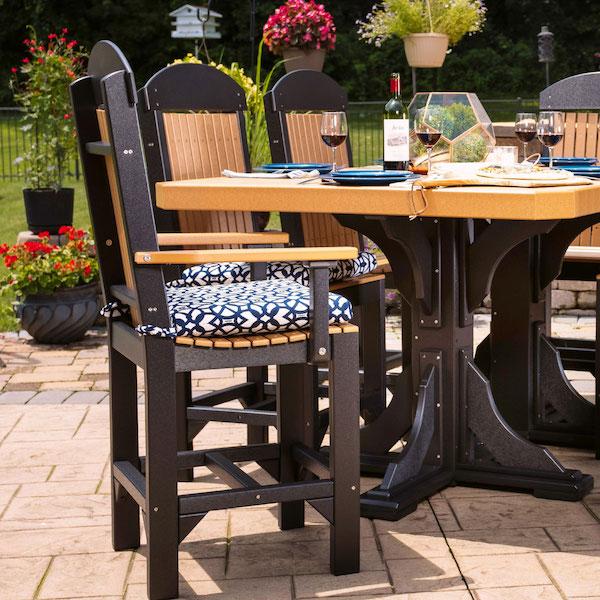
Eco-conscious homeowners are increasingly turning to outdoor furniture made from recycled materials, such as polywood. This engineered wood alternative uses recycled plastics to create weatherproof, low-maintenance pieces with the look and feel of painted wood.
Recycled plastic lumber is:
- Resistant to moisture, insects, and UV damage
- Available in various colors and textures
- Virtually maintenance-free
For those looking to reduce their carbon footprint without compromising on quality, sustainable furniture materials are a solid choice.
Matching Material with Lifestyle and Environment
Choosing the right outdoor furniture material also depends on your lifestyle and local climate. Ask yourself:
- Do you want maintenance-free furniture?
- Will your furniture be exposed to sun and rain year-round?
- Do you need lightweight pieces for easy storage or rearranging?
For coastal areas, aluminum and teak are great due to their corrosion resistance. If you live in a desert climate, UV-resistant materials like HDPE wicker or polywood are essential to avoid sun damage.
Caring for Your Furniture for Long-Term Use
Even the most durable materials need care to maintain their beauty. Regularly cleaning your outdoor furniture with mild soap and water, using covers during off-seasons, and storing cushions indoors will all help extend the life of your investment.
Avoid harsh chemicals that can erode finishes or discolor fabric. Check for any loose joints, rust, or mildew regularly, especially during seasonal transitions.
Invest in the Right Material for Lasting Beauty
Outdoor living spaces have become essential for relaxation, entertaining, and enhancing the value of your home. Selecting the best outdoor furniture material ensures that your patio, deck, or balcony remains functional, stylish, and durable through every season.
Whether you opt for the timeless elegance of teak, the sleek resilience of aluminum, the charming comfort of HDPE wicker, or the eco-smart appeal of recycled plastics, the right choice will reward you with years of enjoyment.