
Understanding How Soil & Weather Affect Your Metal Garage Installation
Learn how soil conditions and weather factors influence metal garage installation success, from stability to longevity, so you can prepare your site wisely.
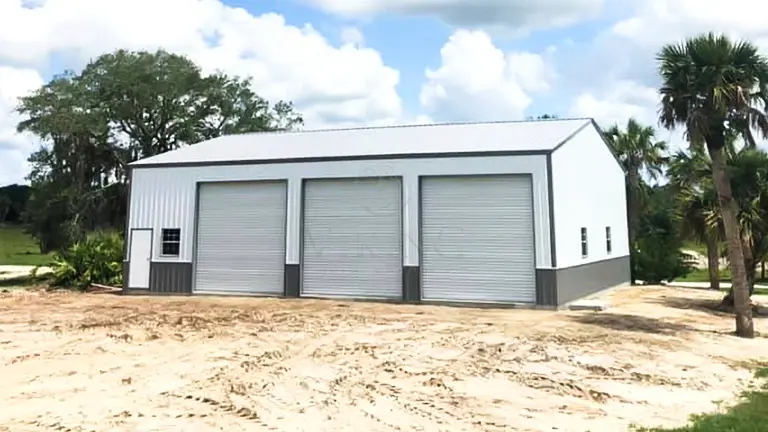
You must have heard that steel garage installation is quick and sturdy, but it's true when you install a structure after considering soil and weather conditions in your area. No soil inspection, and your garage's foundation turns out to be weak; no weather elements checking, and your prefab garage turns out to be shaky!
It means that soil determines how you build the foundation, and weather determines how the foundation and the steel behave over time. We will walk you through some typical soils in the USA and explain how specific soil and weather conditions affect the structural integrity of a metal garage.
Quick Soil Basics You Need to Know
Soils are mostly a mix of sand, silt, and clay. The USDA defines 12 texture classes (things like sandy loam, clay, silt loam), and these textures control drainage, compaction, and how much the ground moves with moisture. Knowing your texture class tells you how the foundation will behave.
How Different Soil Types Affect Installation
Here are some most common and widely spread soils in the USA. Let's study them and understand how their nature affects the installation of a metal garage building.
1. Sandy soils
Sandy soils are mainly found in coastal plains, deserts (Southwest), parts of the Southeast, and the Atlantic coast. This type of soil drains fast, doesn't hold water, and doesn't stick together. It is poor at supporting heavy loads unless compacted.
How it affects installation:
A shallow footing on loose sand can settle unevenly, causing twisting or gaps at the base of your garage. Fast drainage is good, but if the sand is loose, anchors can become unstable.
What to do:
- First of all, compact the base strongly.
- Use a compacted gravel pad (4–8 inches) under the concrete slab or pier base.
- Consider wider footings or a concrete slab-on-grade with perimeter reinforcement to spread loads.
- Use helical anchors or long concrete piers for better pullout resistance.
Sand is forgiving for drainage but needs effort for compaction. Don't skip a proper compacted base; that's the cheapest insurance.
2. Loam and loamy soils
These soils are found in most of the Midwest and parts of the East. This is also called a nice garden soil. It is a kind of balanced mix; it holds moisture and nutrients. Moreover, loamy soils drain reasonably and compact well.
How it affects installation:
Loamy soil is generally suitable for standard slab foundations. You don't have to worry much if site grading prevents pooling for the garage building.
What to do:
- Install a standard concrete slab or shallow footings.
- Make sure surface grading directs water away from the garage.
- Compact well and add a gravel subbase for extra drainage and stability.
Well, Loam is the easiest to work with. But ensure regular preparation and good drainage, as they will make your garage structure more reliable.
3. Clay soils
These soils are found in large parts of the South, the Gulf Coast, and some inland basins. Some clay soils are expansive; they swell when wet and shrink when dry. These soils show up in many states and cause a lot of foundation problems. USGS studies explain how clay minerals like montmorillonite cause these behaviors. This type of soil holds water and can expand and contract a lot with moisture changes. This is why it can be sticky and hard to compact to a stable base.
How it affects installation:
As you know, the soil is expansive, it can lift or tilt slab edges, pop anchor bolts, or create gaps that let wind pry on panels. Even non-expansive clays can settle unevenly when soft.
What to do:
- Consider deeper footings or piers that reach below the active zone.
- Use structural piers or helical piles where clay movement is severe.
- Ensure proper site grading and drainage to avoid water pooling near the foundation.
- Use reinforced concrete slabs with control joints and turned-down footings.
So, Clay is the trickiest common soil. If you suspect expansive clay, plan for deeper or pier foundations. It will be worth the cost compared to repairs later
4. Organic soils and peat
Peat soils are primarily found in areas such as wetland margins and poorly drained coastal or inland depressions. The soils are highly compressible, have low bearing capacity, and hold a lot of water. So, you need to be careful when installing a metal garage building on this soil.
How it affects installation:
Organic soils are very poor for direct slab foundations. You might face a big risk of settlement and uneven sinking to installing a steel building on this soil.
What to do:
- Remove and replace organic material with engineered fill.
- Or build on deep piles/piers that bypass the organic layer.
- Improve drainage around the site to lower the moisture content.
As a result, don't build on organic soil without removing or bypassing it. Because short-term savings can lead to long-term failure.
5. Rocky or shallow soils
As the name suggests, rocky soils are found in mountainous areas, especially in the West and parts of New England, as well as in rocky outcrops nationwide. These soils have high bearing capacity but can be uneven and hard to grade.
How it affects installation:
Good support where solid rock is present, but unevenness makes slab work and anchor placement harder. Drilling for piers can be expensive.
What to do:
- Use rock anchors or drill/piers.
- Level using concrete pads or use sectional footings anchored to bedrock where possible.
Rocky sites are stable but sometimes costly to prep. If you have bedrock, you get a lifetime of stability.
6. Permafrost / frost-susceptible soils
Alaska and Arctic coastal areas are covered mostly with Permafrost soils. It underlies a huge portion of Alaska, around 80-85% in parts. These areas have permanently frozen ground with ice-rich layers, and because of this, thawing causes dramatic settlement and instability.
How it affects installation:
Thawing permafrost can cause massive foundation failure and tilting. Freeze-thaw cycles also heave foundations in cold regions. So, be careful while installing prefabricated parking spaces.
What to do:
- Avoid disturbing the frozen ground where possible.
- Use elevated foundations, thermosiphons, or pile systems that keep heat away from the ground.
- Work with experienced local engineers.
If you are building where permafrost exists, call an expert because this is not a DIY problem.
Soil Water and Why It Matters
While reading the above, you might have noticed that it is mainly about soil water consistency across different parts. This is why it's crucial to understand why it matters.
Soil water-holding differs by texture: the permanent wilting point (how dry the soil can get before plants suffer) varies widely. It is roughly 7% in sandy soils to about 24% in clay soils by volume, showing how much water clay can hold compared with sand. This is why clays change volume so much with moisture.
Weather Effects on Steel Garage Installations
So, you have understood the soil effect. Now, let's take one step further and learn about the impact of weather on metal building installation.
-
Heavy Rain and Flooding
Saturated soils lose bearing capacity and lead to settlement and soft edges due to heavy rain. Standing water speeds corrosion where steel touches the ground.
What to do:
- Ensure a 2-6% slope away from the building for drainage.
- Install French drains or gravel trenches to move water away.
- Use treated concrete footings and raise any steel 2-3 inches above the slab, or use protective coatings.
Example: A garage placed in a low spot without grading will collect stormwater; after a heavy storm, footings in clay might heave and settle, cracking the slab.
-
Freeze–thaw Cycles and Frost Heave
Water in soil freezes, expands, then thaws. And then repeated cycles pull and push on foundations. The EPA notes that freeze/thaw patterns are changing across the U.S., affecting construction needs in many areas.
What to do:
- Use frost-protected shallow foundations or dig below the frost depth for footings. Local codes list frost depth by region.
- Avoid shallow footings in frost-susceptible soils.
- Keep soil moisture consistent to reduce freeze–thaw extremes.
If you are in a region with regular freezes, follow local frost-depth rules. Cutting corners here causes movement that's expensive to fix.
-
High Heat and Drought
If there is high heat and drought, soils can shrink and leave gaps under slabs or pull on anchor bolts. Heat can also accelerate some corrosion when paired with salty environments.
What to do:
- Maintain moderate, even moisture near foundations if practical for you. Avoid planting water-hungry trees right next to the steel garage.
- In arid zones, use wider footings and skip lightweight anchors that rely on soil cohesion alone.
-
Snow and Ice Load
Heavy snow adds roof load, and it starts sagging. As a result, the structure of the building becomes weak over time. It can affect your property's curb appeal. Moreover, ice dams can channel water to vulnerable spots.
What to do:
- Build to local snow-load codes for roof framing.
- Ensure gutters and drainage move meltwater away from the foundation.
-
Humidity and Coastal Salt Air
High humidity and salt accelerate rust if you have not protected your metal garage building. Coastal locations speed up corrosion dramatically. So, before installation, consider issues caused by a humid environment.
What to do:
- Use galvanized or painted/epoxy-coated steel panels and anchors.
- Use stainless or hot-dipped galvanized fasteners in coastal zones.
- Maintain seals and repaint/retouch exposed metal as needed.
If you are near the ocean, invest in corrosion-resistant materials up front. It's crucial to focus in advance, because replacing corroded anchors later gets expensive.
-
High Winds, Hurricanes, Tornadoes
These weather conditions weaken the structure over time because of pressure. Often, high uplift forces on roofs make them collapse. It can result in financial lose and affect your business growth. Moreover, poor anchoring in weak soil makes garages vulnerable to partial or full lifting.
What to do:
- Use wind-rated designs and stronger anchor patterns (per manufacturer or local codes).
- Tie the roof to the walls and the walls to the foundation with through-bolts or engineered anchor systems.
- In sandy or loose soils, use deep screw piles or concrete piers.
Practical Installation Checklist
Here is a quick checklist for your comfort. Use it to save your time and ensure the structural integrity of your car parking space.
-
Test your soil: A basic soil test or probe gives texture and depth of organic layers; if you suspect clay or permafrost, get a geotech consult.
-
Grade for drainage: Slope ground away from the garage, 2-6% and add gutters.
-
Compact the base: Mechanical compaction of the subgrade and gravel layer prevents settlement.
-
Pick the right foundation: Slab-on-grade for loams; deeper piers or helical piles for clay, sand, or permafrost.
-
Protect steel: Galvanize or coat steel, and raise it off the ground slightly where possible.
-
Follow local codes: Frost depth, wind loads, and snow loads vary by county; this is why you should obey them.
-
Plan for maintenance: Check anchors and coatings every few years, especially in wet or coastal climates.
Final Thoughts
Soil and weather don't let you get away with shortcuts. If you invest a little more time and money preparing the ground and choosing a foundation that matches your soil and local climate, your metal garage will be sturdy and affordable. As per our view, the single best move is proper site preparation, compacted gravel, correct grading, and anchors sized for your soil. It's the same cost across most regions, but pays off every year.