Repair Small Hole in Roof
I’ll walk you through how to repair small hole in roof properly, whether you’re working from the outside or need to repair hole in roof from inside.
How to Repair a Small Hole in Roof Quickly and Effectively
I’ve been repairing roofs for over 15 years, and if there’s one issue homeowners consistently underestimate, it’s a small hole in the roof. It looks harmless at first. A little daylight. Maybe a drip. But trust me, every major roof failure I’ve repaired started as a tiny, ignored opening.
This guide is based on real job-site experience, mistakes I’ve fixed for others, and repairs I’ve done on my own home. I’ll walk you through how to repair small hole in roof properly, whether you’re working from the outside or need to repair hole in roof from inside.
Why a Small Hole in the Roof Is a Big Problem
A small roof hole never stays small. Water follows gravity, wind pressure, and capillary action. I once inspected a roof with a hole no bigger than a quarter, yet the attic insulation below was soaked across six feet.
Moisture leads to rot, mold, and structural damage faster than most people realize. That’s why hole in roof repair should be handled immediately, not “next weekend.”
Common Causes of Small Roof Holes
Most of the roof hole repair jobs I handle come from predictable sources.
Loose or missing shingles after storms are the biggest culprit. Nails popping up through shingles is another frequent issue, especially on older roofs.
I’ve also seen holes caused by squirrels, raccoons, satellite dish removals, and poorly installed vents. Knowing the cause helps you decide how to patch hole in roof correctly.
Safety First Before Any Repair
Before you try to fix hole in roof, pause. Roofs are dangerous, especially if the decking underneath is compromised.
I always wear soft-soled boots, use a harness on steep pitches, and never work alone. If you’re unsure, working from inside the attic may be safer, which we’ll cover shortly.
Tools and Materials I Actually Use
Forget the endless tool lists online. Here’s what I rely on for most small repairs.
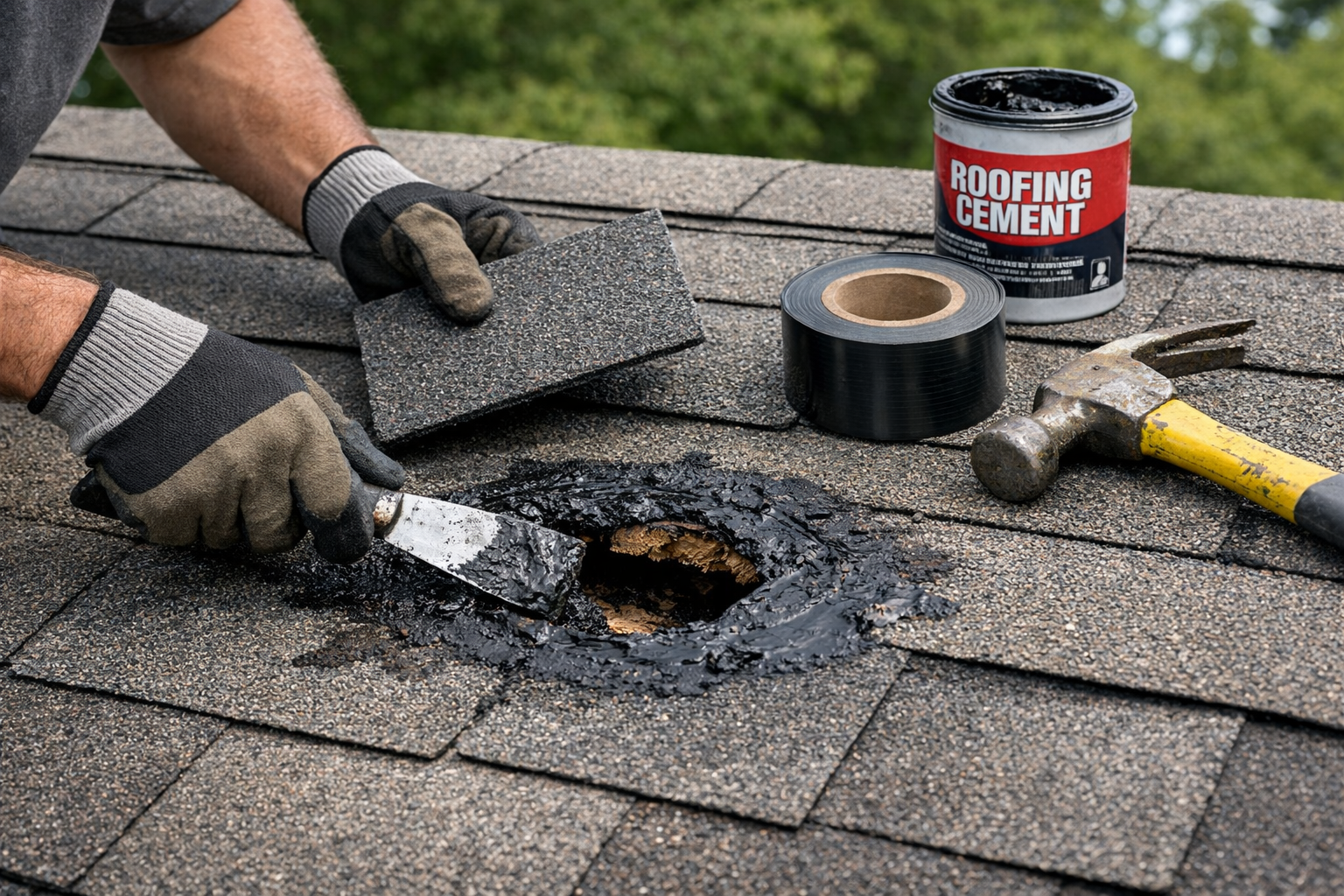
Roofing cement, a putty knife, replacement shingles, galvanized nails, a hammer, and roofing tape handle 90% of jobs. For emergency fixes, flashing and a small plywood patch can save the day.
Using the right materials matters when you repair small hole in roof. Cheap sealants fail quickly.
How to Repair a Small Hole in Roof From the Outside
This is the most durable approach if the roof surface is accessible.
First, locate the damaged area and gently lift the surrounding shingles. Clear out debris, rot, or loose nails. If the decking is damaged, cut out the bad section and secure a plywood patch.
Apply roofing cement generously, slide a new shingle into place, nail it down, and seal the nail heads. That’s the core method I’ve used hundreds of times to patch hole in the roof successfully.
How to Patch a Hole in the Roof Using Roofing Tape
For tiny punctures, roofing tape works surprisingly well.
I’ve used it during emergency repairs in the rain. Clean and dry the area, apply roofing cement, lay the tape firmly, then coat it again.
This method won’t replace shingles long-term, but it’s a reliable short-term how to patch a hole in roof solution.
Repair Hole in Roof From Inside: When Exterior Access Isn’t Possible
Sometimes snow, steep pitches, or safety concerns mean you must repair hole in roof from inside.
From the attic, locate the hole using daylight or moisture trails. Dry the area thoroughly. Attach a small metal or plywood patch over the hole using screws, then seal it with roofing cement or epoxy.
This internal fix reduces water intrusion immediately, but I always recommend a permanent exterior repair later.
How to Fix Hole in Roof Caused by Nail Pops
Nail pops are sneaky. I see them constantly on roofs older than 10 years.
Pull the nail out, fill the hole with roofing cement, and secure the shingle with a new nail placed slightly higher. Seal everything well.
This simple technique prevents leaks and extends roof life dramatically.
Patch Hole in Roof: Emergency Temporary Fixes
Storm damage doesn’t wait for good weather.
I’ve tarped roofs at midnight using plastic sheeting and furring strips. Roofing cement and flashing also work in a pinch.
These aren’t pretty, but they stop water immediately. Temporary fixes buy time until proper hole in roof repair can be completed.
Real Case Study From My Own Home
A few years ago, I ignored a small hole near my chimney flashing. I knew better. Life got busy.
Three months later, I replaced water-damaged drywall and insulation that cost ten times more than the original repair small hole in roof would have.
That mistake reinforced my rule: fix it now or pay later.
Mistakes Homeowners Commonly Make
The biggest mistake is using caulk instead of roofing cement. Caulk cracks under UV exposure.
Another mistake is sealing over wet wood. Moisture trapped underneath accelerates rot.
Finally, many people skip replacing damaged shingles, relying only on sealant. That always fails eventually.
How Long a Proper Roof Hole Repair Should Last
A correctly done repair should last as long as the surrounding roof.
I’ve revisited repairs 10 years later that still looked solid. Longevity depends on surface prep, material quality, and proper installation.
Shortcuts never last on a roof.
When to Call a Professional
If the hole is larger than a fist, near structural elements, or repeated leaks occur, call a pro.
Some repairs require flashing replacement or decking reinforcement. Knowing when to step back is part of responsible homeownership.
Final Thoughts From the Field
Learning how to patch a hole in the roof is one of the most valuable homeowner skills you can have. Small problems escalate fast, but they’re also the easiest to fix when caught early.
Whether you repair hole in roof from inside, patch it from the outside, or use a temporary solution, action matters more than perfection.