Paid Social Media Advertising Explained: A Beginner’s Guide to Growing Faster Online
Paid social media advertising helps businesses reach targeted audiences quickly by promoting content on platforms like Facebook, Instagram, and LinkedIn. With smart targeting, testing, and tracking metrics like CTR and ROAS, even beginners can grow traffic, leads, and sales efficiently.
Key Takeaways
- Paid social media advertising accelerates growth by placing your business directly in front of a targeted audience instead of relying only on limited organic reach.
- Success depends on smart targeting and clear goals: define your objective (traffic, leads, or sales), choose the right platform, and focus on a specific audience for better results.
- Different ad formats serve different purposes: image, video, carousel, story, and lead ads each support unique marketing goals and customer journeys.
- Continuous testing and performance tracking are essential monitor metrics like CTR, conversion rate, and ROAS to optimize campaigns and scale winning ads efficiently.
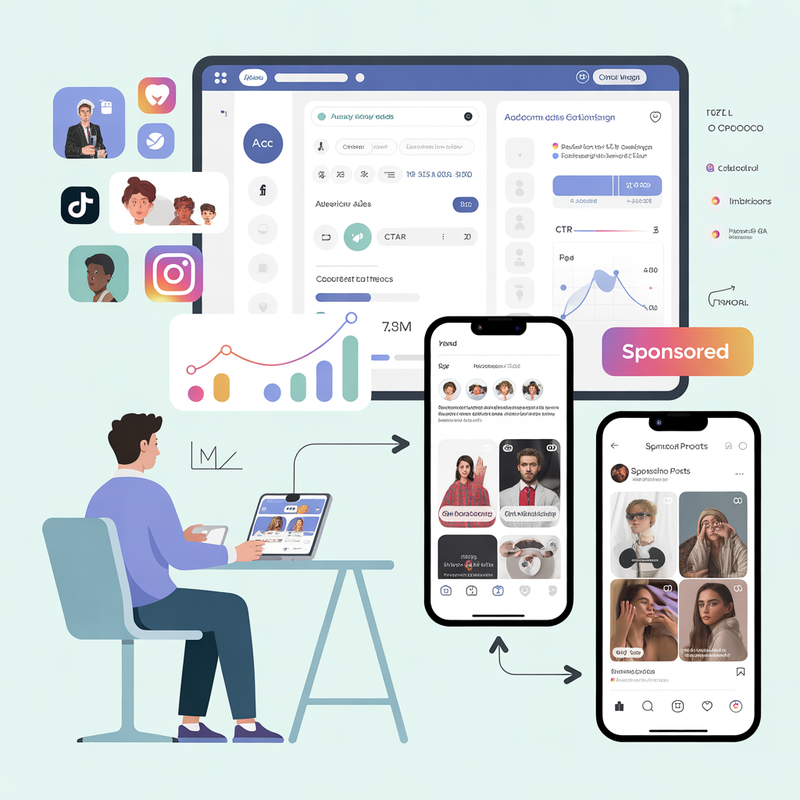
If you have ever posted on Facebook or Instagram and waited for likes, shares, or customers but saw little response, you are not alone. Today, social media platforms show organic posts to only a small percentage of followers. That means even great content may not reach the right people.
This is where paid social media advertising becomes powerful.
Paid social media advertising allows businesses to promote their content, products, or services by paying platforms like Facebook, Instagram, LinkedIn, or TikTok to show ads to targeted audiences. Instead of waiting for people to find you, your business appears directly in front of potential customers.
In this beginner-friendly guide, you will learn what paid social media advertising is, how it works, why it matters, and how you can start using it effectively even with a small budget.
What Is Paid Social Media Advertising?
Simple Definition for Beginners
Paid social media advertising is the process of paying social media platforms to display your content as advertisements to specific users.
Unlike organic posts, which rely on free reach, paid ads are promoted content designed to reach a larger and more targeted audience.
These ads can appear as:
- Sponsored posts in news feeds
- Story advertisements
- Video ads between content
- Promoted reels or short videos
- Lead generation forms
Most users do not notice they are ads because they look similar to regular posts.
How Paid Social Media Ads Work
Social platforms use advanced algorithms to match ads with users who are most likely to be interested. Advertisers control three main things:
- Audience targeting
- Choose users based on age, location, interests, and behavior.
- Budget control
- Decide daily or monthly spending limits.
- Ad delivery optimization
- Platforms automatically show ads to users likely to click or convert.
Why Paid Social Media Advertising Matters for Businesses
Paid social media advertising helps businesses grow faster because it improves visibility and targeting.
Key benefits include:
- Faster brand exposure compared to organic posting
- Precise audience targeting
- Better lead generation opportunities
- Increased website traffic
- Measurable performance results
For small businesses and startups, this creates opportunities to compete with larger brands.
Types of Paid Social Media Advertising
Different ad formats support different marketing goals.
Image Ads
- Use one strong image with short text.
- Best for promotions and announcements.
Video Ads
- Capture attention quickly.
- Ideal for storytelling and product demonstrations.
Carousel Ads
- Show multiple images or videos in one ad.
- Perfect for showcasing product collections.
Story Ads
- Appear between user stories.
- Highly engaging for mobile users.
Lead Generation Ads
- Include built-in forms.
- Help collect customer information easily.
Popular Platforms for Paid Social Media Advertising
Choosing the right platform depends on your audience.
Facebook Ads
- Best for local businesses.
- Strong targeting and analytics tools.
Instagram Ads
- Ideal for visual brands.
- Works well for lifestyle and product marketing.
LinkedIn Ads
- Perfect for B2B marketing.
- Effective for professional services.
TikTok Ads
- Great for brand awareness.
- Popular among younger audiences.
YouTube Ads
- Best for tutorials and video storytelling.
Beginner tip: Start with one platform and master it before expanding.
Key Elements of a Successful Paid Social Media Campaign
A strong campaign includes:
- Clear campaign goal
- Audience research
- High-quality visuals
- Simple and compelling ad copy
- Optimized landing page
- Smart budget management
Step-by-Step Guide to Starting Paid Social Media Advertising
- Define your objective
- Traffic, leads, or sales.
- Choose the right platform
- Focus where your audience is active.
- Set audience targeting
- Use demographics and interests.
- Create ad creatives
- Design engaging visuals and headlines.
- Set budget and schedule
- Start small for testing.
- Launch your campaign
- Monitor early performance.
- Optimize and scale
- Increase budget for winning ads.
Paid Social Media Advertising Costs for Beginners
Advertising does not require a large budget.
Common pricing models:
- CPC (Cost Per Click)
- Pay when someone clicks your ad.
- CPM (Cost Per Thousand Impressions)
- Pay for ad views.
Beginner cost tips:
- Start with a small daily budget.
- Test multiple ads before scaling.
- Focus on performance, not spending.
Common Beginner Mistakes to Avoid
Avoid these common errors:
- Targeting everyone instead of a niche audience
- Using poor-quality visuals
- Running only one ad version
- Ignoring performance analytics
- Sending users to weak landing pages
Continuous testing improves results over time.
Paid Social Media Advertising vs Organic Social Media Marketing
Both strategies are important.
Organic social media
- Builds trust and engagement slowly.
Paid social media advertising
- Creates immediate reach and faster growth.
Best approach:
- Use organic content to educate and engage.
- Use paid ads to scale visibility and conversions.
How to Measure Success in Paid Social Media Advertising
Track these key metrics:
- Reach Number of people who saw your ad.
- Click-through rate (CTR) Percentage of users who clicked.
- Conversion rate Users who completed actions.
- Cost per result Cost per lead or sale.
- Return on ad spend (ROAS) Revenue compared to ad cost.
Regular analysis helps improve campaign performance.
Conclusion:
Paid social media advertising is one of the fastest ways to increase online visibility, attract customers, and grow sales. It gives businesses full control over targeting, budget, and performance tracking.
For beginners, success comes from starting small, testing consistently, and learning from results. You do not need a large budget to begin. A clear goal and smart optimization are enough to get started.
Frequently Asked Questions (FAQs)
How much budget do I need to start paid social media advertising?
You can start with a small daily budget, even $5–$10 per day. The key is to test different ads and audiences first. Once you identify what works, you can gradually increase your budget to scale results. Success depends more on strategy and optimization than on spending a large amount.
Which platform is best for beginners?
The best platform depends on your target audience.
- Facebook and Instagram are great for most small businesses and local brands.
- LinkedIn works best for B2B and professional services.
- TikTok is effective for younger audiences and creative content. Beginners should start with one platform and master it before expanding.
How do I choose the right target audience?
Start by defining your ideal customer. Consider:
- Age
- Location
- Interests
- Online behavior
- Job title (for B2B)
Most social media platforms provide detailed targeting tools that help you reach people who are most likely to engage or convert.
How long does it take to see results?
You can start seeing data within 24–72 hours after launching your campaign. However, meaningful performance insights usually take 1–2 weeks of testing and optimization. Consistent monitoring and adjustments improve long-term results.
How do I measure if my paid ads are successful?
Track key performance metrics such as:
- Click-Through Rate (CTR)
- Conversion Rate
- Cost Per Click (CPC)
- Cost Per Lead or Sale
- Return on Ad Spend (ROAS)
These metrics help you understand whether your campaign is generating profitable results and where improvements are needed.