Multi-cloud Networking Market: A Look at Public, Private, and Hybrid Deployments
The global multi-cloud networking market was valued at USD 2.03 billion in 2024 and is projected to reach USD 13.14 billion by 2033.
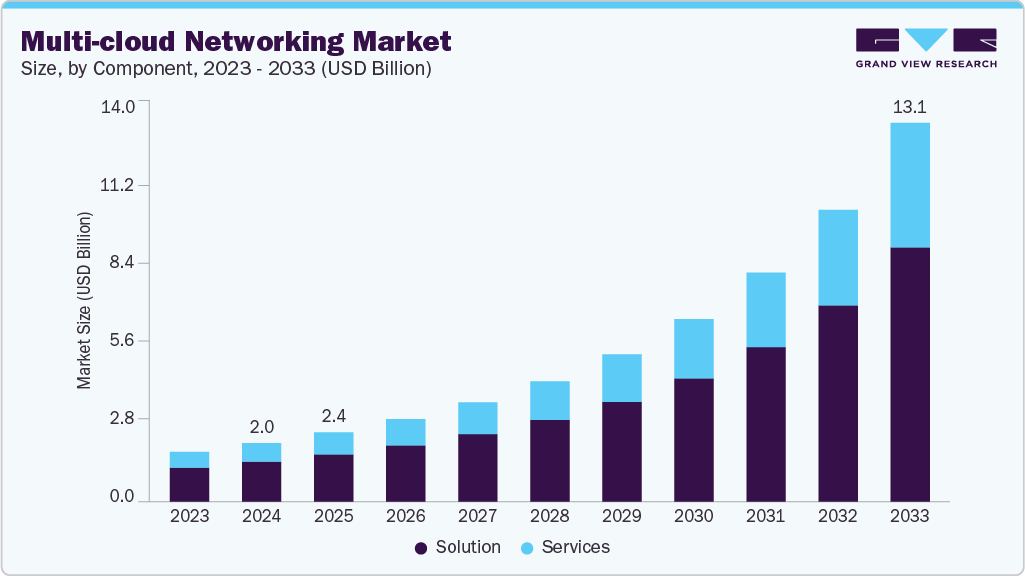
The global multi-cloud networking market was valued at USD 2.03 billion in 2024 and is projected to reach USD 13.14 billion by 2033, growing at a CAGR of 23.7% from 2025 to 2033. This growth is being driven by the rapid rise of edge computing, which is increasing demand for agile, scalable, and resilient multi-cloud networking frameworks.
A key growth catalyst is the widespread adoption of DevOps methodologies and cloud-native development practices. As organizations scale their use of containers, microservices, and CI/CD pipelines across diverse cloud platforms, the need for unified networking policies and real-time observability becomes critical. Developers and IT teams require network infrastructures that support automated service discovery, dynamic workload scaling, and reliable east-west traffic routing across distributed services.
To meet these demands, modern multi-cloud networking platforms are increasingly integrating with container orchestration systems such as Kubernetes. These integrations enable native support for networking functions, helping teams accelerate development while maintaining application performance, security, and compliance—key requirements in today’s digital-first economy.
In addition, as businesses pursue digital transformation, they often turn to multiple cloud platforms to serve specialized needs. For example, a company may use Microsoft Azure for collaboration, Amazon Web Services (AWS) for analytics, and Google Cloud for AI-driven applications. While this multi-cloud approach enhances operational capabilities, it introduces complex networking challenges.
Multi-cloud networking solutions address these challenges by offering orchestration and abstraction layers that simplify inter-cloud connectivity and policy management. This enables organizations to remain agile while scaling their digital operations—an increasingly vital factor in achieving long-term business competitiveness.
Order a free sample PDF of the Multi-cloud Networking Market Intelligence Study, published by Grand View Research.
Key Market Trends & Insights
- By Region: North America led the market in 2024, accounting for a 35.9% share. The widespread use of DevOps and agile development methodologies in the region supports rapid application deployment across multi-cloud environments, further fueling demand for unified networking solutions.
- By Component: The solution segment dominated the market with a 68.5% share in 2024. This is attributed to the rising need for network automation, security, and observability in dynamic cloud environments, especially those reliant on microservices and container-based architectures.
- By Deployment: The public cloud segment led the market in 2024. The increasing use of Software-as-a-Service (SaaS) applications hosted on public clouds has driven organizations to implement multi-cloud networking architectures to ensure efficient access and user experience across multiple platforms.
- By Enterprise Size: Large enterprises held the largest market share in 2024. Their adoption of Kubernetes, containerized applications, and hybrid cloud strategies demands more sophisticated networking approaches to manage connectivity, security, and policy across cloud boundaries.
- By End Use: The BFSI (Banking, Financial Services, and Insurance) sector led the market in 2024. The growth of digital and mobile banking has increased the need for scalable and highly available IT infrastructure, making multi-cloud networking essential for delivering seamless services.
Market Size & Forecast
- 2024 Market Size: USD 2.03 Billion
- 2033 Projected Market Size: USD 13.14 Billion
- CAGR (2025-2033): 23.7%
- North America: Largest market in 2024
- Asia Pacific: Fastest growing market
Key Companies & Market Share Insights
Leading players in the global multi-cloud networking market are focusing on expansion, strategic partnerships, and product innovation to strengthen their market position and meet growing enterprise demand. Companies are also investing in integrations with cloud-native and DevOps ecosystems to stay competitive in a rapidly evolving technological landscape.
Key Players
- Alkira, Inc.
- Arrcus Inc.
- Aviatrix, Inc.
- Carahsoft Technology Corp.
- Cisco Systems, Inc.
- Equinix, Inc.
- F5, Inc.
- HCL Technologies Limited
- Hewlett Packard Enterprise Development LP
- IBM Corporation
- Microsoft Corporation
- Netskope
- Tata Communications Limited
- VMware, Inc.
- Zenlayer
Explore Horizon Databook – The world's most expansive market intelligence platform developed by Grand View Research.
Conclusion
The global multi-cloud networking market is experiencing robust growth driven by the convergence of edge computing, DevOps practices, and digital transformation across industries. As organizations expand their use of multiple cloud environments to optimize performance and capabilities, the need for seamless, secure, and automated networking is becoming critical. With the integration of multi-cloud platforms into containerized and cloud-native infrastructures, and rising investments in SaaS and public cloud services, the demand for intelligent multi-cloud networking solutions is poised to surge. Vendors that offer scalable, automated, and secure platforms will play a pivotal role in supporting enterprises as they scale operations and compete in the global digital economy.