
Food Delivery Mobile App Development: Key Insights for Businesses
Discover key insights for Food Delivery Mobile App Development to grow your business, improve customer experience, and streamline operations with a reliable app.
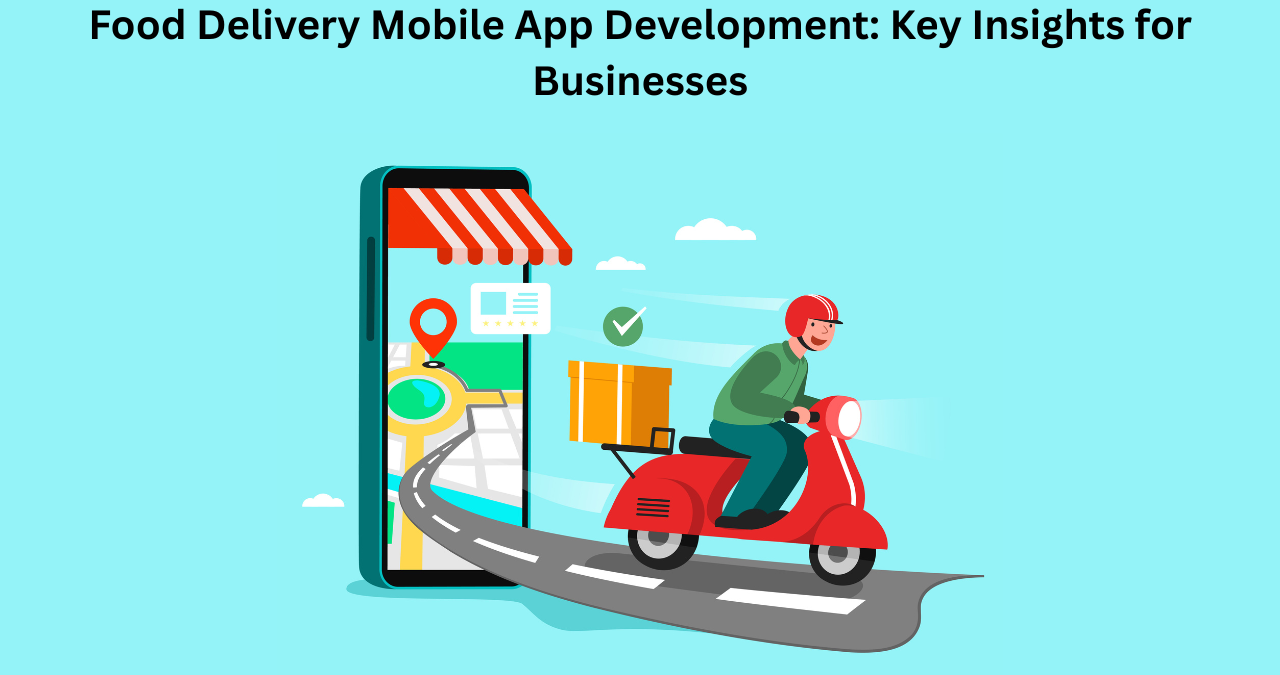
The food delivery business has seen huge growth over the past few years. More people are using mobile apps to order food because it is fast, convenient, and easy to track. For businesses, having a mobile app for food delivery is no longer just an option, it is essential to compete, attract more customers, and increase revenue. In this guide, we will share key insights on food delivery mobile app development for businesses, explained in simple language so anyone can understand.
Why Businesses Need a Food Delivery App
Food delivery mobile apps are becoming a must-have for modern businesses. Customers prefer apps for quick and easy ordering, which makes it important for restaurants and startups to provide this service. Here are some reasons why businesses need a food delivery app:
Meeting Customer Expectations
Today’s customers expect convenience. They want to browse menus, place orders, and pay with just a few taps on their phone. A food delivery app provides all of this and allows customers to track their orders in real time, making their experience more satisfying.
Staying Competitive
Many businesses already offer food delivery through apps. Without an app, you risk losing customers to competitors who provide a faster, more convenient service. Having your own app helps you stay relevant in the market.
Improving Operational Efficiency
Manual order management can be time-consuming and prone to errors. A mobile app automates order processing, updates inventory, manages payments, and tracks delivery, making operations smoother and more efficient.
Using Data to Make Decisions
Food delivery apps collect valuable data about customer behavior, popular items, peak ordering times, and preferences. This data can help businesses make informed decisions to improve services, marketing, and menu planning.
Steps in Food Delivery Mobile App Development
Developing a food delivery app is a structured process. Each step ensures that the final product meets user needs and business goals.
Step 1: Research and Planning
The first step is to understand your target audience and the market. Research helps identify what customers want and what competitors are offering. Key tasks in this stage include:
- Identifying your target users such as students, working professionals, or families
- Studying competitor apps to see which features work well
- Deciding the unique selling points of your app, like faster delivery or exclusive deals
A clear plan reduces mistakes during development and ensures the app serves its purpose effectively.
Step 2: Choosing the Type of App
A complete food delivery solution usually involves three separate apps:
Customer App
This app allows customers to browse menus, place orders, make payments, and track deliveries. It should be simple and user-friendly.
Restaurant App
Restaurants use this app to manage orders, update menus, monitor performance, and communicate with customers or delivery staff.
Delivery Partner App
Delivery personnel use this app to receive orders, navigate routes, update delivery status, and track earnings.
Choosing the right type of app is crucial for smooth operations and better user experience.
Step 3: Selecting the Technology
The technology used for the app impacts its speed, security, and scalability. Some common technologies include:
- Frontend: Flutter, React Native, Swift, or Kotlin
- Backend: Node.js, Python, Ruby on Rails
- Database: MySQL, MongoDB
- Cloud hosting: AWS, Google Cloud
A good development partner can help you choose the best combination based on your business requirements.
Step 4: Designing User Interface and Experience
The app’s design plays a major role in keeping users engaged. Focus on:
- Clear and simple navigation so users can order quickly
- Attractive visuals like high-quality images of food
- Personalized recommendations based on previous orders
An intuitive design reduces the chances of customers leaving the app before completing an order.
Step 5: Including Core Features
A successful food delivery app should have essential features for customers, restaurants, and delivery partners.
Features for Customers
- Easy registration and login
- Menu browsing with filters and search
- Multiple payment methods
- Real-time order tracking
- Ratings and reviews
Features for Restaurants
- Dashboard to manage orders
- Menu management
- Notifications for new orders
- Reports and analytics
Features for Delivery Partners
- Task list of deliveries
- GPS navigation
- Status updates
- Earnings tracker
Extra features like loyalty programs, discount coupons, and chat support improve engagement and retention.
Step 6: Development Process
The development process is divided into several stages:
- Wireframe and prototype: Sketching the app layout to visualize the user journey
- Frontend and backend development: Building the user interface and server logic
- Testing and quality assurance: Checking for bugs, performance issues, and usability problems
Careful development ensures a smooth and reliable app.
Read More: Step-by-Step Guide to Food Delivery Mobile App Development for Businesses
Step 7: Launch and Deployment
After development and testing, the app is ready for launch. It can be deployed on:
- Google Play Store for Android
- Apple App Store for iOS
Marketing efforts such as social media promotion, referral programs, and app store optimization help attract users and encourage downloads.
Step 8: Maintenance and Updates
Maintaining the app after launch is essential. This includes:
- Fixing bugs and crashes promptly
- Adding new features based on user feedback
- Ensuring security updates and compliance
- Monitoring app performance with analytics
Regular updates keep the app functional, secure, and engaging for users.
Benefits of Food Delivery Mobile App Development
Developing a mobile app for food delivery provides several advantages:
Increased Customer Reach
An app makes it easier for customers to order from anywhere, increasing your potential audience.
Improved Customer Experience
Features like real-time tracking, easy payment, and personalized recommendations improve satisfaction and loyalty.
Streamlined Operations
Restaurants can manage orders efficiently, reduce errors, and optimize delivery times.
Data Insights
Apps provide data that helps businesses understand customer preferences, identify popular items, and improve marketing strategies.
Choosing the Right Development Partner
Not every business has the technical expertise to build an app from scratch. Partnering with a clone app development company can save time, reduce costs, and ensure a high-quality app. A development partner can handle:
- Customization of pre-built solutions
- Integration of all necessary features
- Design and user experience improvements
- Maintenance and post-launch support
This allows businesses to focus on operations while experts handle app development.

Marketing Your Food Delivery App
Even the best app needs proper marketing to succeed. Strategies include:
- App store optimization to improve visibility
- Social media campaigns to reach potential customers
- Referral programs to encourage users to invite friends
- Push notifications to inform users about new deals and offers
Effective marketing drives downloads, engagement, and long-term success.
Conclusion
Investing in a food delivery mobile app can significantly improve your business operations and help you reach more customers. A properly developed app allows your customers to place orders easily, track deliveries in real time, and make payments conveniently. Restaurants can manage their menu, orders, and delivery efficiently, while delivery partners can navigate routes and update order statuses smoothly. Working with a clone app development company ensures that your app is built professionally, is scalable, and includes all necessary features to meet your business goals. With the right app, your business can grow faster, retain more customers, and operate efficiently in a highly competitive market.
FAQ
What is the cost of developing a food delivery app?
The cost varies depending on features, platform, and complexity. Simple apps may cost a few thousand dollars, while advanced apps with more features will be more expensive.
How long does it take to develop a food delivery app?
Typically, it takes around 3–6 months. Apps with more complex features may require more time.
Can one app serve both Android and iOS users?
Yes. Using cross-platform frameworks like Flutter or React Native allows you to build one app for both platforms.
Do businesses need a backend for their food delivery app?
Yes. The backend handles orders, user data, payments, and ensures the app functions properly and securely.
How can a clone app development company help my business?
They provide ready-made solutions that can be customized, saving time and money while delivering a reliable, fully functional app.