Europe Pharmaceutical Market: Regional Performance and Market Dynamics
The Europe pharmaceutical market is poised for sustained growth through 2030, supported by demographic shifts, rising chronic disease prevalence, strong innovation pipelines, and favorable regulatory frameworks.
The Europe pharmaceutical market was estimated at USD 488.05 billion in 2024 and is projected to expand at a CAGR of 5.90% from 2025 to 2030. Market growth is driven by several structural factors, including an aging population, continuous advancements in medical technologies, and rising healthcare expenditures across European countries. Additionally, the increasing burden of chronic diseases, improved access to innovative medicines, expedited regulatory pathways, and growing emphasis on preventive healthcare are accelerating market expansion. Supportive government initiatives and the rapid adoption of digital health solutions further reinforce this growth trajectory.
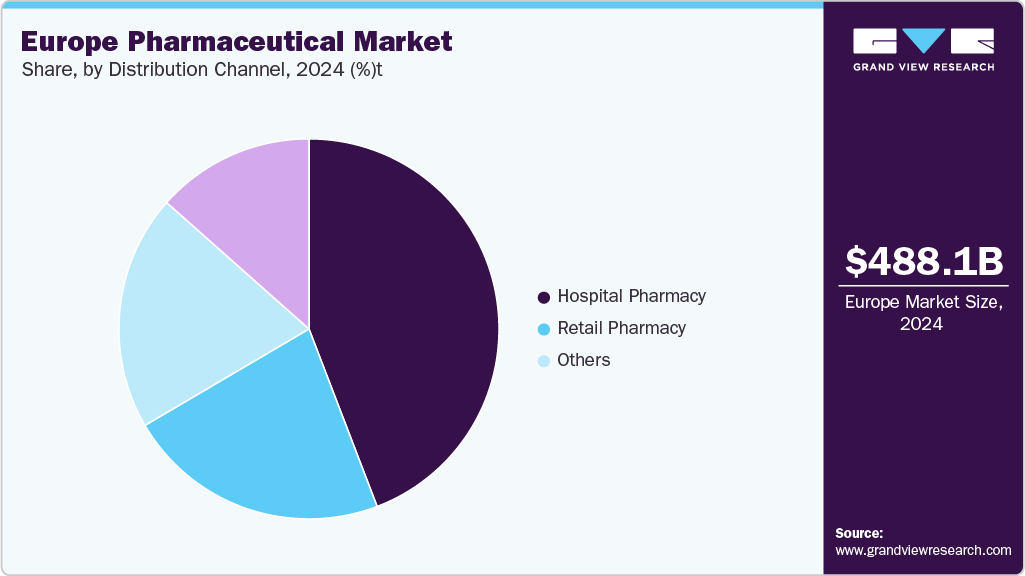
Strategic partnerships, mergers, and sustained investments in research and development remain central to driving pharmaceutical innovation and strengthening competitive positioning. The European pharmaceutical industry is being reshaped by breakthroughs in biotechnology and drug development, particularly in advanced therapeutic areas. Innovations such as CAR-T cell therapy, gene therapy, and next-generation biologics are transforming disease management by enabling more targeted, effective, and minimally invasive treatment options.
Biopharmaceuticals—including monoclonal antibodies, immunotherapies, and cell-based therapies—have significantly expanded treatment possibilities for complex conditions such as cancer, autoimmune diseases, and rare genetic disorders. A strong focus on pipeline development continues across therapeutic areas, with growing emphasis on biologics, biosimilars, immunotherapies, and novel drug delivery systems. Continuous launches of vaccines, targeted therapies, and personalized medicines are improving patient outcomes by enabling timely and precision-driven treatment approaches.
Furthermore, the increasing focus on orphan drugs for rare and underserved conditions is fueling innovation across the region. An expanding pipeline of drug candidates addressing these diseases, supported by favorable regulatory incentives, is accelerating approval timelines and improving patient access to specialized therapies.
The rising prevalence of chronic conditions such as diabetes, hypertension, cancer, and cardiovascular diseases remains a critical driver of the European pharmaceutical market. Lifestyle shifts across Europe have contributed to higher incidences of obesity, metabolic disorders, gastrointestinal diseases, and cardiovascular conditions. These trends continue to generate sustained demand for long-term pharmacological therapies and preventive treatment solutions.
Download a free sample PDF of the Europe Pharmaceutical Market Intelligence Study by Grand View Research.
Competitive Landscape
The competitive environment of the European pharmaceutical market is characterized by continuous product launches, regional expansions, and collaborations aimed at strengthening portfolios and addressing unmet medical needs. Recent developments include:
- In February 2025, Fennec Pharmaceuticals Inc. announced that Norgine Pharmaceuticals Ltd. commercially launched PEDMARQSI (sodium thiosulfate injection) in Germany.
- In February 2025, Tiefenbacher Pharmaceuticals successfully prepared the launch of Varenicline, a smoking cessation medication, in the United Kingdom.
- In January 2025, Lupin Limited and Avas Pharmaceuticals SRL announced the launch of Lupin’s orphan drug NaMuscla (mexiletine) in Italy, with Avas responsible for commercialization for the treatment of non-dystrophic myotonic disorders in adults.
Some of the key players operating in the Europe pharmaceutical market include:
- F. Hoffmann-La Roche Ltd.
- Bristol-Myers Squibb Company
- AstraZeneca plc
- Novartis AG
- Johnson & Johnson Services, Inc.
- Gilead Sciences, Inc.
- GlaxoSmithKline plc
- Merck & Co., Inc.
- Pfizer Inc.
- Sanofi
- Boehringer Ingelheim GmbH
Explore Horizon Databook – the world’s most comprehensive market intelligence platform by Grand View Research.
Conclusion
The Europe pharmaceutical market is poised for sustained growth through 2030, supported by demographic shifts, rising chronic disease prevalence, strong innovation pipelines, and favorable regulatory frameworks. Advances in biopharmaceuticals, personalized medicine, and orphan drug development are redefining treatment standards across the region. Companies that continue to invest in R&D, strategic collaborations, and digital health integration are expected to maintain a competitive edge while addressing evolving patient and healthcare system needs across Europe.