
Concrete Cutting vs. Traditional Demolition: Key Differences
The two primary methods used for this purpose are concrete cutting and traditional demolition. While both aim to remove concrete by demolishing yet they are different in methods, precision, safety, cost, and environmental impact.
In modern construction and renovation projects, removing or modifying concrete structures is a common requirement. The two primary methods used for this purpose are concrete cutting and traditional demolition. While both aim to remove concrete by demolishing yet they are different in methods, precision, safety, cost, and environmental impact. Understanding these types of differences helps contractors, engineers, and property owners choose the most suitable solution for their project.
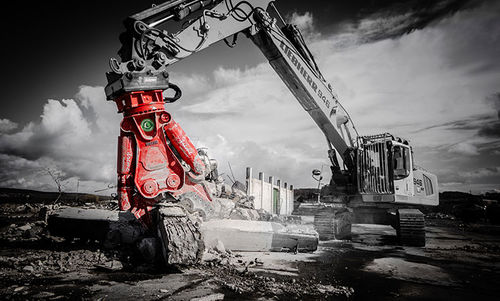
Concrete cutting is a specialized process that uses advanced tools to slice through concrete in a controlled and precise manner. A concrete cutter is designed to create clean lines and demolish concrete without disturbing the whole structure. Traditional demolition, on the other hand, relies on heavy force using tools such as jackhammers, wrecking balls, or explosives to break concrete apart. This fundamental difference in approach sets the tone for how each method performs in real-world applications.
One of the most important distinctions is precision. Concrete cutting allows for highly accurate results, making it ideal for projects that require exact dimensions, such as creating doorways, windows, expansion joints, or utility openings. Using a concrete cutter, operators can follow precise measurements and minimize damage to adjacent areas. Traditional demolition lacks this level of control, as it breaks concrete unevenly, often resulting in cracks, overbreak, or unintended structural damage. For projects in occupied buildings or dense urban environments, precision is often non-negotiable.
Another key difference lies in the equipment used. Concrete cutting employs specialized machinery such as wall saws, flat saws, wire saws, and handheld saws fitted with diamond blades. These tools are engineered to cut through reinforced concrete efficiently. A concrete cutter can handle thick slabs and steel-reinforced sections with ease. Traditional demolition equipment, by contrast, is generally heavier and more aggressive, relying on impact rather than precision. While effective for large-scale tear-downs, such equipment is less suitable for selective or detailed work.
Safety is also a major factor when comparing the two methods. Concrete cutting is generally safer for workers and nearby occupants because it produces less vibration and structural stress. Controlled cutting reduces the risk of unexpected collapses and secondary damage. When properly operated, a concrete cutter also generates lower noise levels compared to jackhammers or breakers, which can be disruptive and hazardous over long periods. Traditional demolition, due to its forceful nature, poses higher risks such as flying debris, excessive vibration, and increased chances of injury if not carefully managed.
Environmental impact and cleanliness further differentiate the two approaches. Concrete cutting produces significantly less dust, especially when wet-cutting techniques are used. Many modern cutting systems incorporate water or vacuum attachments to control silica dust, improving air quality on-site. Using a concrete cutter also results in cleaner edges and less rubble, simplifying cleanup and waste management. Traditional demolition tends to create large volumes of debris and dust, which can increase disposal costs and environmental concerns.
Cost and efficiency vary depending on the project scope. While concrete cutting equipment and skilled operators may seem more expensive upfront, the overall cost can be lower due to reduced repair work, faster completion times, and minimal collateral damage. For selective removal, retrofitting, or renovation, concrete cutting is often the more economical choice. Traditional demolition can be cost-effective for complete structure removal but may lead to higher indirect costs if surrounding elements are damaged or if additional cleanup is required.
In conclusion, concrete cutting and traditional demolition serve different purposes within the construction industry. Concrete cutting excels in precision, safety, cleanliness, and control, making it ideal for renovation and modification projects. Traditional demolition remains useful for large-scale, total removals where precision is less critical. Choosing the right method depends on project goals, site conditions, and budget. For many modern construction needs, the efficiency and accuracy offered by a concrete cutter make concrete cutting the preferred solution.