
A Comprehensive Guide to DeFi Lending: How to Borrow, Lend, and Earn Through Crypto
Discover a comprehensive guide to DeFi lending and learn how to borrow, lend, and earn through cryptocurrency. Explore popular protocols, investment strategies, and the benefits of working with a defi lending platform development company to build secure and scalable solutions.
Decentralized finance has transformed access to financial services by removing the barriers that once limited participation in global markets. Through blockchain networks and open protocols, individuals can lend, borrow, and earn yields without relying on banks or traditional intermediaries. The growth of DeFi lending has been driven by transparent smart contracts, algorithmic interest rate models, and an ecosystem that encourages open participation from users across the globe. Whether someone wants to unlock liquidity from existing crypto assets or earn steady returns by supplying tokens, DeFi provides an accessible path to financial activity that operates continuously and autonomously. This guide explores how the lending landscape works, the steps involved in using various platforms, and the factors that matter most when evaluating opportunities. Businesses entering the space often collaborate with a defi lending platform development company to build secure, scalable systems, but users themselves benefit from understanding the core mechanics behind these innovative networks.
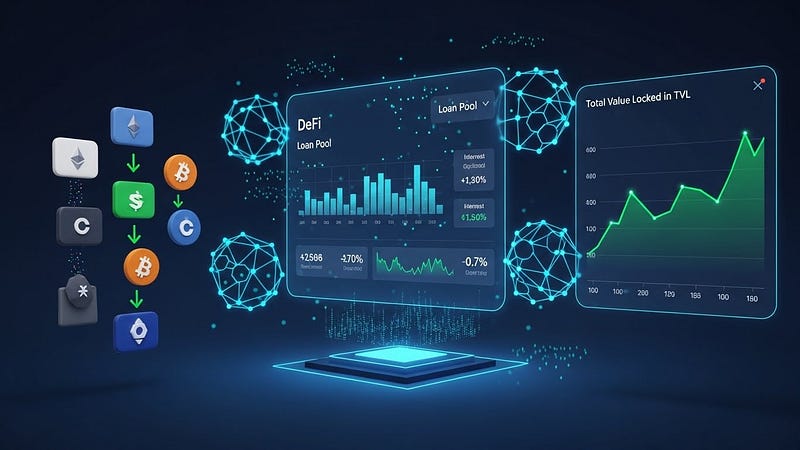
Understanding the Fundamentals of DeFi Lending
Decentralized lending protocols allow participants to interact with financial tools through permissionless smart contracts. These systems eliminate manual approval processes, relying instead on transparent algorithms to manage deposits, collateral, and interest rates. By understanding the underlying structure, users gain clarity on how assets circulate, what determines borrowing power, and how lenders earn returns.
- Smart contracts manage all core operations These automated scripts replace traditional intermediaries by handling deposits, collateral storage, interest calculations, and liquidation events. Their transparency helps users evaluate risks, as every contract function is visible and verifiable.
- Collateralized borrowing ensures stability Most protocols require users to deposit assets worth more than the loan amount, creating a secure buffer. This prevents lenders from exposure to unsecured losses and upholds the sustainability of the lending pool.
- Interest rates adjust algorithmically Borrowing costs and lending rewards shift according to market demand and liquidity availability. When demand rises, interest rates increase to balance usage between borrowers and suppliers.
- Liquidity pools enable collective participation Deposited assets are pooled together and made available to borrowers. This system supports constant liquidity flow, allowing users to withdraw or borrow without waiting for a direct counterparty.
How DeFi Borrowing Works
Borrowing in decentralized finance involves unlocking liquidity by using cryptocurrency as collateral. The smart contract enforces rules that preserve system stability, ensuring borrowers maintain healthy collateral ratios throughout the transaction. This structured process provides access to funds without the need to sell existing assets.
- Collateral deposits determine borrowing limits Borrowers supply tokens such as ETH, stablecoins, or other supported assets. The protocol calculates how much can be borrowed based on the value and volatility of the collateral.
- Overcollateralization protects the lending pool Borrowers must maintain a collateral ratio above a certain threshold. If the market value of collateral drops, a liquidation process may occur to secure the pool’s funds.
- Borrowed funds can be used for various strategies Users often borrow stablecoins against volatile assets to hedge risks, pursue arbitrage, or invest in other yield-generating platforms without relinquishing ownership of their initial holdings.
- Repayment unlocks the collateral Once borrowers repay the principal and interest, the smart contract releases the collateral automatically. This streamlined workflow simplifies transaction management and removes manual intervention.
How DeFi Lending Works for Passive Income
Supplying assets to lending pools gives users an opportunity to earn interest without actively managing trades. The decentralized nature of these systems creates a predictable and transparent environment for generating passive income.
- Deposits immediately start earning yield Once assets enter a lending pool, the protocol begins allocating interest based on the current utilization rate. Users receive a continuous return as long as their tokens remain supplied.
- Interest is distributed proportionally Earnings depend on the amount contributed relative to the entire pool. Larger deposits receive a greater share of the interest generated by borrowing activity.
- Rewards vary based on market activity Higher borrowing demand leads to increased yields for lenders. Users often monitor market conditions to identify pools with attractive returns balanced against acceptable risk levels.
- Some platforms offer additional incentive tokens Beyond standard interest, certain protocols distribute governance or reward tokens. This mechanism encourages participation and can elevate the total annual percentage yield.
Key Benefits of DeFi Lending
DeFi lending has attracted individuals and businesses seeking alternatives to centralized financial systems. The combination of automation, transparency, and open participation makes it a compelling model for modern economic activity.
- Global access without gatekeepers Anyone with a digital wallet can borrow or lend assets, regardless of geography or credit history. This inclusive structure broadens participation in financial markets.
- Transparent operations enhance trust Since all rules and mechanics are embedded in smart contracts, users can review them at any time. This clarity reduces uncertainty and strengthens confidence in the system.
- Flexible asset selection and usage Participants can interact with a wide range of tokens, stablecoins, and governance assets. Borrowers can access liquidity without selling long-term holdings.
- Continuous availability and automation Protocols operate around the clock with no dependency on business hours. Automated processes reduce delays and support a seamless user experience.
Popular DeFi Lending Protocols
A variety of well-established platforms provide lending and borrowing services, each with unique mechanisms. Understanding their core features helps users choose systems that align with their goals and risk tolerance.
- Aave: known for flexible features Aave supports both stable and variable interest rates, flash loans, and a broad set of collateral options. Its liquidity pools attract substantial participation from lenders and borrowers.
- Compound: focused on algorithmic markets This protocol introduced a dynamic interest model that adjusts rates based on supply and demand. Users receive cTokens representing their deposits, which increase in value over time.
- MakerDAO: enabling decentralized stablecoin loans MakerDAO allows users to lock collateral and mint DAI, a widely used decentralized stablecoin. The system employs robust collateralization rules to maintain DAI stability.
- Platforms built by a defi lending platform development company Many emerging protocols are created with professional support to ensure optimized security and scalability. Working with a defi lending platform development company helps projects launch stable and compliant systems that meet industry expectations.
Leveraging DeFi Lending for Investment Strategies
Beyond simple borrowing and lending, DeFi platforms offer opportunities to execute advanced financial strategies. Investors can combine protocols and asset types to maximize returns or hedge positions effectively.
- Yield farming and liquidity mining By strategically lending tokens across multiple pools, users can earn additional rewards and optimize yield. This approach leverages interest and bonus tokens for compounded returns.
- Collateral swaps for portfolio management Borrowers can adjust collateral types without withdrawing funds, allowing flexibility to manage market exposure and reduce risk in volatile periods.
- Arbitrage opportunities DeFi lending opens avenues to exploit interest rate differences between protocols. Investors can borrow from one pool and lend in another to capture short-term gains.
- Integration with decentralized derivatives Some platforms enable combining lending with derivatives contracts, allowing sophisticated users to hedge positions, speculate on price movements, or secure long-term growth.
How Businesses Benefit from Building DeFi Lending Platforms
Organizations are increasingly exploring decentralized finance as a way to expand their service offerings. By developing custom lending solutions, businesses can deliver financial tools that appeal to a broad range of crypto users.
- Custom platforms strengthen brand presence Companies launching their own lending systems can design user interfaces, reward structures, and security mechanisms tailored to their audience. This gives them a competitive edge in the evolving blockchain sector.
- In-house platforms create new revenue models Businesses can earn fees from borrowing activity, token issuance, and liquidity‐based rewards. A well-designed protocol supports sustainable income without relying on a central authority.
- Strategic partnerships accelerate development Collaborating with a defi lending platform development company ensures access to expert engineers who understand regulatory standards, smart contract architecture, and risk modeling.
- Scalable architecture supports long-term growth Proper development practices allow platforms to handle increasing transaction volumes and integrate new features. This prepares businesses for expanding user demand in the future.
The Future of DeFi Lending and Evolving Opportunities
The landscape of decentralized lending continues to expand as innovation reshapes how people interact with digital assets. New models, improved risk tools, and advanced security practices promise to elevate the user experience across protocols.
- Integration with real-world assets broadens utility As tokenized bonds, equities, and commodities enter the blockchain ecosystem, lending pools will support a more diverse range of collateral.
- Improved governance enhances protocol stability Voting frameworks are evolving to encourage responsible decision-making. Better checkpoint systems and incentive models create more resilient communities.
- Layer-2 networks reduce transaction costs Scaling solutions improve affordability and speed for both lenders and borrowers. This encourages widespread adoption across user groups.
- Enterprise-grade platforms become more common Many businesses pursue tailored solutions developed by a defi lending platform development company to offer secure, compliant, and high-performance systems suited for institutional use.
Conclusion
DeFi lending continues to open new opportunities for individuals and businesses to participate in decentralized financial systems. Through transparent smart contracts, accessible borrowing mechanisms, and flexible earning models, users can interact with assets in ways that were previously unavailable in traditional finance. Understanding how these platforms function empowers participants to make informed decisions, manage risk effectively, and explore the expanding ecosystem of decentralized services. With the support of experienced partners such as a defi lending platform development company, organizations can enter the sector with secure, scalable lending solutions that contribute to the ongoing growth of the digital economy.